
- Home
- Industries
Industries
Enabling transformation and progress across a wide range of industries globally, fostering innovation and growth in every sector.
Explore all → - Solutions
Connectivity
Connecting industries worldwide with reliable satellite internet solutions, driving innovation, efficiency, and growth across all sectors globally.
Explore all → - Services
Professional VSAT & IT Services
Delivering expert VSAT and IT solutions for seamless connectivity, reliability, and performance across all sectors.
Explore all → - Products
Superior Connectivity, Trusted Solutions
Offering premium Satcom products that guarantee reliable connectivity and boost innovation across industries.
Explore all → - Coverage
WorldWide Coverage
Delivering tailored satellite services that enhance connectivity, foster innovation, and support growth in every industry.
Explore all → - About
- Blog
- Contact
XMW T1380 / T1480 Ku-Band 80W GaN BUC
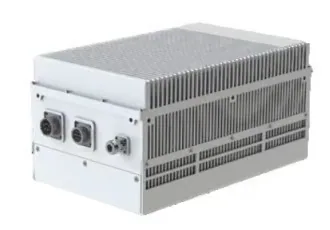
XMW T1380 / T1480 Ku-Band 80W GaN BUC
The XMW T1380 and T1480 are 80 W (49 dBm) Ku-band block upconverters using GaN amplifier technology. The T1380 converts a 950-1700 MHz L-band input to 13.75-14.50 GHz with a 12.80 GHz local oscillator; the T1480 converts 950-1450 MHz to 14.00-14.50 GHz with a 13.05 GHz LO. Each model offers 73 dB of gain with plus or minus 15 dB of adjustment in 1 dB steps, -73 dBc phase noise at 1 kHz, and runs from +48 VDC at 540 W - a practical high-power option for fixed and transportable Ku-band terminals.
Key Features
- 80 W (49 dBm) Ku-band output from a GaN power amplifier stage
- T1380 covers 13.75-14.50 GHz, T1480 covers the 14.00-14.50 GHz uplink band
- 73 dB gain with +/-15 dB adjustment in 1 dB steps for accurate level setting
- Extended 950-1700 MHz L-band input on the T1380 for wide-band IF plans
- -73 dBc phase noise at 1 kHz for stable carrier lock on demanding waveforms
- +48 VDC, 540 W operation eases outdoor DC distribution design
- GaN technology delivers high power density in a field-serviceable package
Technical Specifications
Typical Applications
- Fixed VSAT hub and remote terminals carrying wideband carriers
- Satellite news gathering and outside broadcast uplinks
- Offshore platforms, FPSOs and support vessels
- Mining, exploration and remote construction camps
- Government and emergency communications networks
- Transportable and quick-deploy Ku-band terminals
Selecting an 80W Ku-Band BUC for Your Terminal
Eighty watts is a common step for terminals that need more EIRP than a 40 W or 50 W unit can supply but do not justify a 100 W amplifier and its associated power draw. The T1380 and T1480 both deliver 80 W (49 dBm), so the selection between them is driven purely by frequency plan. Use the T1380 where the network operates across the extended 13.75-14.50 GHz uplink with a 950-1700 MHz L-band interface, and the T1480 where the service sits in the conventional 14.00-14.50 GHz band on a 950-1450 MHz IF. Before you fix the power class, run the link budget against the real antenna aperture, the modulation and coding you plan to use, and the availability figure the customer has contracted for.
GaN Amplification and Why It Suits Gulf Deployments
Gallium nitride power devices offer high power density and tolerate elevated junction temperatures, which is why they have become standard in modern high-power BUCs. In practical terms that lets the T1380 and T1480 package 80 W of Ku-band output into a unit intended to live outdoors at the antenna. That matters in the Gulf, where ambient temperatures, solar loading and dust all conspire against outdoor electronics. Thermal design remains your responsibility as an integrator: mount the BUC so that convection and any forced airflow are unobstructed, avoid trapping it in a hot pocket behind the reflector, and keep dust off cooling surfaces with a scheduled clean. Confirm the environmental limits published on the XMW datasheet before finalising an enclosure or radome arrangement.
Integration Notes for the T1380 and T1480
Both models draw +48 VDC at up to 540 W, so size the supply, cabling and protection accordingly, allowing for voltage drop across the run to the antenna. On the RF side, plan the interfacility link so the modem can drive the BUC to the required output within the 73 dB gain figure and its plus or minus 15 dB of adjustment. That adjustment range is the tool you use during commissioning to set carrier levels precisely and to normalise settings across a fleet of similar terminals. Waveguide alignment and gasket condition at the feed interface deserve attention, since a poor flange joint wastes hard-won transmit power. Seal every outdoor connector against humidity, and record the final gain setting in the site commissioning file for future fault-finding.
Why Buy the XMW 80W Ku-Band BUC from GCCSAT in the UAE
GCCSAT is a UAE-based satellite communications integrator supplying XMW BUCs and complete outdoor unit chains across the Emirates, the GCC and the wider Middle East. We treat the T1380 and T1480 as part of a system rather than as a standalone box, so our team can help you align the BUC with the antenna, feed, waveguide, DC supply and modem you intend to use. We support specification review, system design, installation and commissioning, and regional after-sales technical assistance. Share your satellite and band plan, antenna size and carrier requirements and we will confirm whether the 80 W class fits, or recommend a different power point if the link budget says otherwise. Pricing for the T1380 and T1480 is quoted on request.
Frequently Asked Questions
What is the difference between the XMW T1380 and the T1480?
Both are 80 W (49 dBm) Ku-band GaN BUCs with 73 dB of gain and -73 dBc phase noise at 1 kHz. They differ in frequency coverage. The T1380 pairs a 950-1700 MHz input with a 12.80 GHz local oscillator to produce 13.75-14.50 GHz. The T1480 pairs a 950-1450 MHz input with a 13.05 GHz LO to produce 14.00-14.50 GHz. Your satellite operator's uplink plan determines which you need.
How much gain adjustment does the 80W BUC provide?
Gain is 73 dB with plus or minus 15 dB of adjustment in 1 dB steps on both the T1380 and the T1480. Installers use that range to compensate for interfacility cable loss, to set the operating point of each carrier accurately, and to reproduce identical configurations across multiple terminals without adding fixed attenuator pads at the feed.
What DC power does the XMW T1380 or T1480 require?
Both models operate from +48 VDC and consume up to 540 W. Size the DC supply, cable cross-section and protective devices for that continuous load, with allowance for voltage drop over the cable run to a mast, deck or roof-mounted antenna. On vessels, vehicles and generator-fed remote sites, confirm the platform can carry the load alongside the rest of the terminal equipment.
Should I choose an 80W or a 100W Ku-band BUC?
The honest answer comes from a link budget rather than a rule of thumb. Antenna aperture, carrier symbol rate, modulation and coding, the number of carriers sharing the amplifier and the rain-fade margin you need all shift the answer. XMW offers 80 W in the T1380 and T1480, and other power classes in separate models. GCCSAT can review your figures and advise which power class suits your service.
Does GCCSAT supply and support the T1380 across the GCC?
Yes. GCCSAT supplies XMW Ku-band BUCs throughout the UAE, the GCC and the wider Middle East, and supports customers with specification review, terminal integration, installation support and commissioning. We can also provide the manufacturer datasheet so your engineering team can verify the specification independently. Contact us with your terminal details and we will confirm whether the T1380 or the T1480 is the correct variant.
Enquire About XMW T1380 / T1480 Ku-Band 80W GaN BUC
Our sales team will provide pricing, availability, and shipping details.
Request a QuoteWhatsAppMore VSAT BUC
- Amplus AM-9335 Series 5W Palapa C-Band BUC
- Amplus Series AM-9335 10W Full C-Band BUC
- iDirect 3W Universal BUC Ku-Band
- iDirect 4W Universal BUC Ku-Band
- NJRC NJT8302UF 3W Universal BUC Ku-Band
- NJRC NJT8306UF 6W Universal BUC Ku-Band
- NJRC NJT8318UF 8W Universal BUC Ku-Band
- NJRC NJT8319UF 16W Universal BUC Ku-Band
- NJRC NJT8370UF 25W GaN Universal BUC Ku-Band
- Terrasat 4W to 50W iBUC 2 Ku-Band
- Terrasat 5W to 80W iBUC 2 C-Band
- XMW M-T2940 / M-T29E40 / M-T3040 Ka-Band 40W Mobility BUC
- XMW M-TT2930 Ka Tri-Band 30W BUC
- XMW M-T2920 / M-T29E20 / M-T3020 Ka-Band 20W Mobility BUC
- XMW M-T2916 / M-T29E16 / M-T3016 Ka-Band 16W Mobility BUC
- XMW M-TD3010 Ka Dual-Band 10W Mobility BUC
- XMW M-T2908 / M-T29E08 / M-T3008 Ka-Band 8W Mobility BUC
- XMW T2705 / T2805 Ka-Band 5W Fanless BUC
- XMW TQ3001 Ka-Band Quad-Band 1W BUC
- XMW T13100 / T14100 Ku-Band 100W GaN BUC
- XMW T1360 / T1460 Ku-Band 60W BUC
- XMW T1350 / T1450 Ku-Band 50W BUC
- XMW T1240 Ku-Band 40W BUC
- XMW M-T1225 Ku-Band 25W Mobility BUC
- XMW M-T1216 Ku-Band 16W Mobility BUC
- XMW T1208 Ku-Band 8W BUC
- XMW T1306-A Ku-Band 6W BUC
- XMW T1304-A Ku-Band 4W BUC
- XMW T1303-A Ku-Band 3W BUC
- XMW T Series C-Band 100W BUC (T50100 / T51100 / T52100 / T53100)
- XMW C-Band 50W BUC (T5050 / T5150 / T5250 / T5350 / T5450 / T6050)
- XMW C-Band 40W BUC (Block Upconverter)
- XMW M-T5030 Series C-Band 30W Mobility BUC
- XMW M-T5020 Series C-Band 20W Mobility BUC
- XMW T5010 Series C-Band 10W BUC
- Terrasat IBUC G 200W & 400W C-Band GaN BUC
- Terrasat IBUC R 100W-400W C-Band GaAs BUC/SSPA
- Terrasat IBUC G 150W-200W Ku-Band GaN BUC
- Terrasat IBUC R Ku-Band BUC 60W to 200W
- Teledyne Paradise SSPA C-Band and Ku-Band (Indoor and Outdoor)
- Nisshinbo NJT8316L 4W Lower Ku-Band BUC
- Nisshinbo NJT8315L 2W Lower Ku-Band BUC
- Nisshinbo NJT8371 40W Ku-Band BUC
- Nisshinbo NJT8370 25W Ku-Band BUC
- Nisshinbo NJT8319 16W Ku-Band BUC
- Nisshinbo NJT8318 8W Ku-Band BUC
- Nisshinbo NJT8376 6W Ku-Band BUC
- Nisshinbo NJT8304 4W Ku-Band BUC
- Nisshinbo NJT8302 3W Ku-Band BUC
- Nisshinbo NJT5762 10W C-Band BUC
- Nisshinbo NJT5669 5W C-Band BUC
- Nisshinbo NJT8102 2W C-Band BUC
- Nexgenwave Low Ku-Band G Series BUC 2W-80W Block Upconverter
- Amplus 3W-400W C-Band Block Upconverter (BUC)
- Amplus 4W-200W Ku-Band Block Upconverter (BUC)
- Actox 2W-250W Low Ku-Band BUC
- Actox 2W-400W C-Band Block Upconverter (BUC)
- Actox 2W-300W Ku-Band Block Upconverter (BUC)
Product Categories
- VSAT BUC
- VSAT LNB
- VSAT Antennas
- VSAT Fixed Antennas
- VSAT Flyaway Antennas
- VSAT Maritime Antennas
- VSAT KingSat Antennas
- L-Band Satellite Terminals
- Cobham BGAN Terminals
- Thuraya L-Band Terminals
- VSAT Satellite Modems
- Satellite Phones
- Teltonika Products
- Sangfor Firewall & SD-WAN
- Thuraya Accessories
- Excelerate Hybrid Connectivity
- Peplink Products
- VSAT RF Components
- VSAT Hub & Test Equipment
- Remote Site Power Systems