
- Home
- Industries
Industries
Enabling transformation and progress across a wide range of industries globally, fostering innovation and growth in every sector.
Explore all → - Solutions
Connectivity
Connecting industries worldwide with reliable satellite internet solutions, driving innovation, efficiency, and growth across all sectors globally.
Explore all → - Services
Professional VSAT & IT Services
Delivering expert VSAT and IT solutions for seamless connectivity, reliability, and performance across all sectors.
Explore all → - Products
Superior Connectivity, Trusted Solutions
Offering premium Satcom products that guarantee reliable connectivity and boost innovation across industries.
Explore all → - Coverage
WorldWide Coverage
Delivering tailored satellite services that enhance connectivity, foster innovation, and support growth in every industry.
Explore all → - About
- Blog
- Contact
Nisshinbo NJT8102 2W C-Band BUC
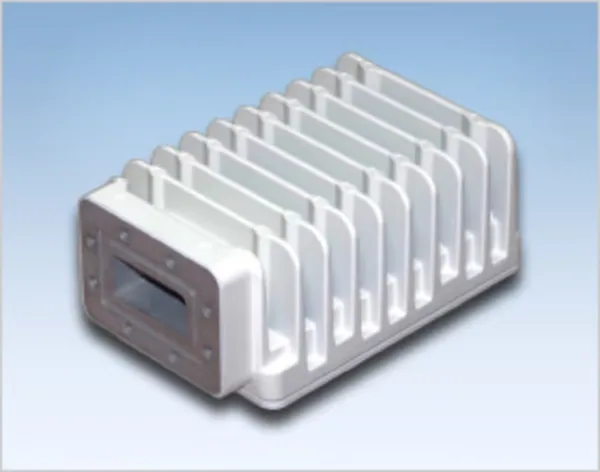
Nisshinbo NJT8102 2W C-Band BUC
The Nisshinbo NJT8102 is a 2 W C-band block upconverter offered with full C-band coverage from 5.85 to 6.725 GHz as well as a standard C-band version spanning 5.85 to 6.425 GHz. It delivers +33.0 dBm minimum P1dB over temperature with -24 dBc ACPR at the same output level, and draws only 18 W. Small, light and fitted with an LED indicator, the NJT8102 is well matched to small-aperture C-band terminals, portable links and low-rate remote sites needing rain-resilient connectivity.
Key Features
- Available in full C-band 5.85 to 6.725 GHz or standard 5.85 to 6.425 GHz coverage
- 2 W class output with +33.0 dBm minimum P1dB held over temperature
- Linearity specified at -24 dBc ACPR when driven to +33.0 dBm output
- Low 18 W consumption suits battery, solar and vehicle-powered terminals
- Smaller and lighter package than conventional C-band outdoor units
- LED indicator provides instant local status during install and alignment
- RoHS compliant construction for international projects and tenders
Technical Specifications
Typical Applications
- Small-aperture C-band remotes in tropical climates
- Portable and rapid-deploy C-band field terminals
- Rural telephony, SCADA and telemetry backhaul
- Maritime and coastal vessel satellite links
- NGO, humanitarian and disaster response networks
- Remote camp, plantation and exploration site connectivity
Full C-Band Versus Standard C-Band Coverage
The NJT8102 is offered in two frequency variants, and choosing correctly matters. The standard C-band version covers 5.85 to 6.425 GHz, which is the classic uplink allocation used by most established networks worldwide. The full C-band version extends coverage to 6.725 GHz, opening access to extended uplink allocations that some satellite operators use, particularly across parts of Asia and Africa. If your service is assigned a carrier above 6.425 GHz, only the full C-band variant will reach it, and no configuration change to a standard unit will bridge that gap. Confirm the assigned uplink frequency with the satellite operator before ordering, because the coverage choice is fixed in the hardware rather than selectable in the field.
Where a 2 W C-Band BUC Fits in a VSAT Network
Two watts is a deliberately modest rating, and that is the point. Many C-band remotes carry low-rate traffic such as telephony trunks, SCADA telemetry, point-of-sale data or basic broadband, and they sit behind antennas with enough gain that a small amplifier meets the required EIRP comfortably. The NJT8102 produces +33.0 dBm minimum P1dB over temperature while drawing only 18 W, so the whole outdoor unit stays small, cool and cheap to power. That opens up deployments a larger BUC would make impractical: solar-powered village sites, portable kits carried into remote areas, and small vessels where deck space and generator capacity are limited. The link budget decides whether 2 W is sufficient, so run it before committing.
Linearity, Drive Level and Commissioning
Nisshinbo specifies adjacent channel power ratio for the NJT8102 at -24 dBc when the unit is driven to +33.0 dBm output. That figure describes how much energy leaks into neighbouring channels as the amplifier approaches compression, which is exactly what satellite operators check during carrier line-up. On single-carrier links you can work relatively close to that point. On multi-carrier services, back off several decibels so intermodulation products stay within the assigned spectral mask. Set the operating point with a spectrum analyser during commissioning rather than trusting nominal modem settings, and record the modem attenuation value that produced the approved EIRP so the terminal can be restored quickly after any equipment swap or maintenance visit.
Why Source Nisshinbo C-Band BUCs from GCCSAT in the UAE
GCCSAT supplies Nisshinbo C-band BUCs including the NJT8102 from the UAE across the GCC, the wider Middle East and Africa. Working with a regional integrator means your technical questions reach engineers who handle this equipment daily, and your logistics are managed by a team familiar with regional import and documentation requirements. We can confirm whether the full C-band or standard C-band variant matches your assigned uplink, check that the 2 W class satisfies your link budget, and supply the antenna, LNB, modem and cabling that complete the terminal. Bench testing, integration support, commissioning and spares planning are all available. Pricing for the NJT8102 is quoted on request, based on variant, configuration and quantity.
Frequently Asked Questions
What frequency range does the NJT8102 C-band BUC cover?
It depends on the variant. The full C-band version of the NJT8102 covers 5.85 to 6.725 GHz, while the standard C-band version covers 5.85 to 6.425 GHz. Check the uplink frequency assigned by your satellite operator before ordering, because the coverage is set by the hardware variant and cannot be changed in the field.
How much output power does the NJT8102 deliver?
Nisshinbo specifies +33.0 dBm minimum at the 1 dB compression point over temperature, which is the 2 W class. ACPR is quoted at -24 dBc at that same +33.0 dBm output. In service the unit is normally operated with back-off from P1dB to preserve linearity, so treat +33.0 dBm as a ceiling rather than a continuous working level.
Is a 2 W C-band BUC enough for my terminal?
That depends on antenna gain, the satellite operating point, carrier size and the modulation and coding scheme in use. Low-rate services such as telephony, telemetry and small data carriers behind a reasonable C-band aperture are often well served by a 2 W unit. Run a link budget for your specific network before deciding, and allow margin for rain events.
How much power does the NJT8102 consume?
Power consumption is 18 W, which is low for a C-band outdoor unit. That makes the NJT8102 practical for solar and battery-powered remote sites, portable kits and vehicle installations where DC capacity is limited. Lower consumption also produces less waste heat, an advantage at sites with high ambient temperatures and no forced cooling at the feed.
Does GCCSAT ship the NJT8102 across the GCC and Africa?
Yes. GCCSAT operates from the UAE and supplies Nisshinbo C-band BUCs to customers across the Emirates, Saudi Arabia, Oman, Qatar, Kuwait, Bahrain, the wider Middle East and Africa. We can quote the NJT8102 alone or within a complete C-band terminal, and assist with integration and commissioning. Contact us and pricing will be provided on request.
Enquire About Nisshinbo NJT8102 2W C-Band BUC
Our sales team will provide pricing, availability, and shipping details.
Request a QuoteWhatsAppMore VSAT BUC
- Amplus AM-9335 Series 5W Palapa C-Band BUC
- Amplus Series AM-9335 10W Full C-Band BUC
- iDirect 3W Universal BUC Ku-Band
- iDirect 4W Universal BUC Ku-Band
- NJRC NJT8302UF 3W Universal BUC Ku-Band
- NJRC NJT8306UF 6W Universal BUC Ku-Band
- NJRC NJT8318UF 8W Universal BUC Ku-Band
- NJRC NJT8319UF 16W Universal BUC Ku-Band
- NJRC NJT8370UF 25W GaN Universal BUC Ku-Band
- Terrasat 4W to 50W iBUC 2 Ku-Band
- Terrasat 5W to 80W iBUC 2 C-Band
- XMW M-T2940 / M-T29E40 / M-T3040 Ka-Band 40W Mobility BUC
- XMW M-TT2930 Ka Tri-Band 30W BUC
- XMW M-T2920 / M-T29E20 / M-T3020 Ka-Band 20W Mobility BUC
- XMW M-T2916 / M-T29E16 / M-T3016 Ka-Band 16W Mobility BUC
- XMW M-TD3010 Ka Dual-Band 10W Mobility BUC
- XMW M-T2908 / M-T29E08 / M-T3008 Ka-Band 8W Mobility BUC
- XMW T2705 / T2805 Ka-Band 5W Fanless BUC
- XMW TQ3001 Ka-Band Quad-Band 1W BUC
- XMW T13100 / T14100 Ku-Band 100W GaN BUC
- XMW T1380 / T1480 Ku-Band 80W GaN BUC
- XMW T1360 / T1460 Ku-Band 60W BUC
- XMW T1350 / T1450 Ku-Band 50W BUC
- XMW T1240 Ku-Band 40W BUC
- XMW M-T1225 Ku-Band 25W Mobility BUC
- XMW M-T1216 Ku-Band 16W Mobility BUC
- XMW T1208 Ku-Band 8W BUC
- XMW T1306-A Ku-Band 6W BUC
- XMW T1304-A Ku-Band 4W BUC
- XMW T1303-A Ku-Band 3W BUC
- XMW T Series C-Band 100W BUC (T50100 / T51100 / T52100 / T53100)
- XMW C-Band 50W BUC (T5050 / T5150 / T5250 / T5350 / T5450 / T6050)
- XMW C-Band 40W BUC (Block Upconverter)
- XMW M-T5030 Series C-Band 30W Mobility BUC
- XMW M-T5020 Series C-Band 20W Mobility BUC
- XMW T5010 Series C-Band 10W BUC
- Terrasat IBUC G 200W & 400W C-Band GaN BUC
- Terrasat IBUC R 100W-400W C-Band GaAs BUC/SSPA
- Terrasat IBUC G 150W-200W Ku-Band GaN BUC
- Terrasat IBUC R Ku-Band BUC 60W to 200W
- Teledyne Paradise SSPA C-Band and Ku-Band (Indoor and Outdoor)
- Nisshinbo NJT8316L 4W Lower Ku-Band BUC
- Nisshinbo NJT8315L 2W Lower Ku-Band BUC
- Nisshinbo NJT8371 40W Ku-Band BUC
- Nisshinbo NJT8370 25W Ku-Band BUC
- Nisshinbo NJT8319 16W Ku-Band BUC
- Nisshinbo NJT8318 8W Ku-Band BUC
- Nisshinbo NJT8376 6W Ku-Band BUC
- Nisshinbo NJT8304 4W Ku-Band BUC
- Nisshinbo NJT8302 3W Ku-Band BUC
- Nisshinbo NJT5762 10W C-Band BUC
- Nisshinbo NJT5669 5W C-Band BUC
- Nexgenwave Low Ku-Band G Series BUC 2W-80W Block Upconverter
- Amplus 3W-400W C-Band Block Upconverter (BUC)
- Amplus 4W-200W Ku-Band Block Upconverter (BUC)
- Actox 2W-250W Low Ku-Band BUC
- Actox 2W-400W C-Band Block Upconverter (BUC)
- Actox 2W-300W Ku-Band Block Upconverter (BUC)
Product Categories
- VSAT BUC
- VSAT LNB
- VSAT Antennas
- VSAT Fixed Antennas
- VSAT Flyaway Antennas
- VSAT Maritime Antennas
- VSAT KingSat Antennas
- L-Band Satellite Terminals
- Cobham BGAN Terminals
- Thuraya L-Band Terminals
- VSAT Satellite Modems
- Satellite Phones
- Teltonika Products
- Sangfor Firewall & SD-WAN
- Thuraya Accessories
- Excelerate Hybrid Connectivity
- Peplink Products
- VSAT RF Components
- VSAT Hub & Test Equipment
- Remote Site Power Systems