
- Home
- Industries
Industries
Enabling transformation and progress across a wide range of industries globally, fostering innovation and growth in every sector.
Explore all → - Solutions
Connectivity
Connecting industries worldwide with reliable satellite internet solutions, driving innovation, efficiency, and growth across all sectors globally.
Explore all → - Services
Professional VSAT & IT Services
Delivering expert VSAT and IT solutions for seamless connectivity, reliability, and performance across all sectors.
Explore all → - Products
Superior Connectivity, Trusted Solutions
Offering premium Satcom products that guarantee reliable connectivity and boost innovation across industries.
Explore all → - Coverage
WorldWide Coverage
Delivering tailored satellite services that enhance connectivity, foster innovation, and support growth in every industry.
Explore all → - About
- Blog
- Contact
XMW T1360 / T1460 Ku-Band 60W BUC
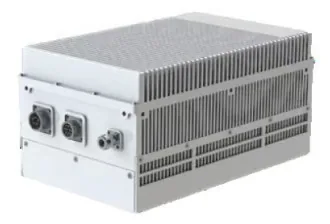
XMW T1360 / T1460 Ku-Band 60W BUC
The XMW T1360 and T1460 are 60 W Ku-band block upconverters rated at 47.8 dBm output power. The T1360 converts a 950-1700 MHz L-band input to 13.75-14.50 GHz using a 12.80 GHz local oscillator, while the T1460 converts 950-1450 MHz to 14.00-14.50 GHz using a 13.05 GHz LO. Both models provide 73 dB of gain with plus or minus 15 dB of adjustment in 1 dB steps and -73 dBc phase noise at 1 kHz, making the T1360 and T1460 a practical mid-power choice for fixed and transportable Ku-band VSAT terminals.
Key Features
- 60 W (47.8 dBm) Ku-band output power for mid-to-high power VSAT terminals
- T1360 covers 13.75-14.50 GHz; T1460 targets the standard 14.00-14.50 GHz uplink
- Extended 950-1700 MHz L-band input on the T1360 for wide IF band plans
- 73 dB gain with +/-15 dB adjustment in 1 dB steps for precise carrier levelling
- -73 dBc phase noise at 1 kHz supports stable lock on demanding waveforms
- Two frequency variants share one form of operation, simplifying fleet training and spares
Technical Specifications
Typical Applications
- Enterprise VSAT remote sites and branch connectivity
- Oil, gas and offshore support vessel terminals
- Broadcast contribution and regional SNG vehicles
- Cellular backhaul from remote and rural cell sites
- Government, border and disaster recovery communications
- Transportable quick-deploy antennas for field operations
How the T1360 and T1460 Fit Into a Ku-Band VSAT Terminal
A block upconverter is the bridge between the indoor and outdoor halves of a VSAT terminal. The modem generates a modulated L-band carrier; the BUC upconverts it against a fixed local oscillator and amplifies it to the level the antenna needs. In the T1360 that means taking 950-1700 MHz up to 13.75-14.50 GHz with a 12.80 GHz LO, and in the T1460 taking 950-1450 MHz up to 14.00-14.50 GHz with a 13.05 GHz LO. Both are rated at 60 W (47.8 dBm) with 73 dB of gain. Because the BUC mounts at the feed, the interfacility link between modem and BUC carries only L-band, which keeps cable loss manageable and lets the transmit path stay short and efficient at microwave frequencies.
Choosing the Right Ku-Band BUC Power Class
Sixty watts sits in the middle of the Ku-band BUC range and is often the sweet spot for terminals that need real transmit capability without the power draw and mechanical bulk of an 80 W or 100 W unit. The right choice depends on your link budget, not on habit. Antenna aperture, target data rate, the modulation and coding scheme, the number of carriers sharing the amplifier and the rain-fade margin required for regional availability all move the answer. Remember that multi-carrier operation demands back-off from the saturated rating, so a 60 W BUC does not deliver 60 W per carrier when several are combined. If your calculation lands close to the limit, step up rather than plan to operate permanently near saturation.
Installation and Commissioning Notes
Mount the T1360 or T1460 at the feed with clear airflow around the housing and enough clearance for service access. Check the waveguide flange interface carefully: gasket condition and alignment there directly affect how much of the 60 W actually reaches the feed. On the IF side, confirm that the L-band drive from the modem, after interfacility cable loss, puts the BUC at the operating point you intend within its 73 dB gain and plus or minus 15 dB adjustment range. Use that adjustment rather than fixed pads wherever possible, and record the setting in the commissioning file. Seal outdoor connectors thoroughly against humidity and wind-blown dust, and verify the powering and reference arrangement for your configuration against the XMW datasheet.
Why Buy XMW Ku-Band BUCs from GCCSAT in the UAE
GCCSAT supplies XMW block upconverters and complete VSAT outdoor unit chains to integrators, operators and end users across the UAE, the GCC and the wider Middle East. We can help you confirm that the T1360 or T1460 is the right power and frequency choice for your service, and match it to an antenna, feed, waveguide and modem that work together properly. Our support covers specification review, system design, installation assistance, commissioning and regional after-sales technical help, and we can supply the manufacturer datasheet so your engineers can validate the specification themselves. Send us your satellite, band plan, antenna aperture and carrier profile, and pricing for the XMW 60 W Ku-band BUC will be quoted on request.
Frequently Asked Questions
What frequencies do the XMW T1360 and T1460 cover?
The T1360 accepts a 950-1700 MHz L-band input and, with a 12.80 GHz local oscillator, transmits across 13.75-14.50 GHz. The T1460 accepts 950-1450 MHz and, with a 13.05 GHz local oscillator, transmits across 14.00-14.50 GHz. Choose the model that matches the uplink plan issued by your satellite operator and the L-band range your modem supports.
What output power does the 60W Ku-band BUC deliver?
Both the T1360 and the T1460 are rated at 60 W, equivalent to 47.8 dBm, with 73 dB of gain adjustable by plus or minus 15 dB in 1 dB steps. That rating is a saturated figure. When several carriers share the amplifier, back-off is required to keep intermodulation products within limits, so the usable power per carrier is lower than the headline number.
What is the difference between a BUC and an SSPA?
A BUC performs two jobs in one assembly: it upconverts an L-band signal from the modem to the transmit band using a local oscillator, then amplifies it. An SSPA amplifies only and needs a signal already at the final frequency, so it is usually paired with a separate upconverter. The T1360 and T1460 are BUCs, which is why their specifications list both an LO frequency and an output power.
Why does phase noise matter when choosing a Ku-band BUC?
Close-in phase noise determines how cleanly the local oscillator translates your carrier. Poor phase noise smears carrier energy, degrades the modem's ability to hold lock on narrow carriers, and adds implementation loss on higher-order modulation. XMW specifies -73 dBc at 1 kHz offset for the T1360 and T1460. If your network runs spectrally efficient waveforms, phase noise deserves as much attention as output power.
Does GCCSAT ship the T1360 and T1460 across the Middle East?
Yes. GCCSAT is based in the UAE and supplies XMW Ku-band BUCs across the Emirates, the GCC and the wider Middle East, together with the antennas, feeds and modems that surround them. We can support terminal integration, installation and commissioning as well as supply. Contact our team with your application details and we will confirm which of the two variants your network needs.
Enquire About XMW T1360 / T1460 Ku-Band 60W BUC
Our sales team will provide pricing, availability, and shipping details.
Request a QuoteWhatsAppMore VSAT BUC
- Amplus AM-9335 Series 5W Palapa C-Band BUC
- Amplus Series AM-9335 10W Full C-Band BUC
- iDirect 3W Universal BUC Ku-Band
- iDirect 4W Universal BUC Ku-Band
- NJRC NJT8302UF 3W Universal BUC Ku-Band
- NJRC NJT8306UF 6W Universal BUC Ku-Band
- NJRC NJT8318UF 8W Universal BUC Ku-Band
- NJRC NJT8319UF 16W Universal BUC Ku-Band
- NJRC NJT8370UF 25W GaN Universal BUC Ku-Band
- Terrasat 4W to 50W iBUC 2 Ku-Band
- Terrasat 5W to 80W iBUC 2 C-Band
- XMW M-T2940 / M-T29E40 / M-T3040 Ka-Band 40W Mobility BUC
- XMW M-TT2930 Ka Tri-Band 30W BUC
- XMW M-T2920 / M-T29E20 / M-T3020 Ka-Band 20W Mobility BUC
- XMW M-T2916 / M-T29E16 / M-T3016 Ka-Band 16W Mobility BUC
- XMW M-TD3010 Ka Dual-Band 10W Mobility BUC
- XMW M-T2908 / M-T29E08 / M-T3008 Ka-Band 8W Mobility BUC
- XMW T2705 / T2805 Ka-Band 5W Fanless BUC
- XMW TQ3001 Ka-Band Quad-Band 1W BUC
- XMW T13100 / T14100 Ku-Band 100W GaN BUC
- XMW T1380 / T1480 Ku-Band 80W GaN BUC
- XMW T1350 / T1450 Ku-Band 50W BUC
- XMW T1240 Ku-Band 40W BUC
- XMW M-T1225 Ku-Band 25W Mobility BUC
- XMW M-T1216 Ku-Band 16W Mobility BUC
- XMW T1208 Ku-Band 8W BUC
- XMW T1306-A Ku-Band 6W BUC
- XMW T1304-A Ku-Band 4W BUC
- XMW T1303-A Ku-Band 3W BUC
- XMW T Series C-Band 100W BUC (T50100 / T51100 / T52100 / T53100)
- XMW C-Band 50W BUC (T5050 / T5150 / T5250 / T5350 / T5450 / T6050)
- XMW C-Band 40W BUC (Block Upconverter)
- XMW M-T5030 Series C-Band 30W Mobility BUC
- XMW M-T5020 Series C-Band 20W Mobility BUC
- XMW T5010 Series C-Band 10W BUC
- Terrasat IBUC G 200W & 400W C-Band GaN BUC
- Terrasat IBUC R 100W-400W C-Band GaAs BUC/SSPA
- Terrasat IBUC G 150W-200W Ku-Band GaN BUC
- Terrasat IBUC R Ku-Band BUC 60W to 200W
- Teledyne Paradise SSPA C-Band and Ku-Band (Indoor and Outdoor)
- Nisshinbo NJT8316L 4W Lower Ku-Band BUC
- Nisshinbo NJT8315L 2W Lower Ku-Band BUC
- Nisshinbo NJT8371 40W Ku-Band BUC
- Nisshinbo NJT8370 25W Ku-Band BUC
- Nisshinbo NJT8319 16W Ku-Band BUC
- Nisshinbo NJT8318 8W Ku-Band BUC
- Nisshinbo NJT8376 6W Ku-Band BUC
- Nisshinbo NJT8304 4W Ku-Band BUC
- Nisshinbo NJT8302 3W Ku-Band BUC
- Nisshinbo NJT5762 10W C-Band BUC
- Nisshinbo NJT5669 5W C-Band BUC
- Nisshinbo NJT8102 2W C-Band BUC
- Nexgenwave Low Ku-Band G Series BUC 2W-80W Block Upconverter
- Amplus 3W-400W C-Band Block Upconverter (BUC)
- Amplus 4W-200W Ku-Band Block Upconverter (BUC)
- Actox 2W-250W Low Ku-Band BUC
- Actox 2W-400W C-Band Block Upconverter (BUC)
- Actox 2W-300W Ku-Band Block Upconverter (BUC)
Product Categories
- VSAT BUC
- VSAT LNB
- VSAT Antennas
- VSAT Fixed Antennas
- VSAT Flyaway Antennas
- VSAT Maritime Antennas
- VSAT KingSat Antennas
- L-Band Satellite Terminals
- Cobham BGAN Terminals
- Thuraya L-Band Terminals
- VSAT Satellite Modems
- Satellite Phones
- Teltonika Products
- Sangfor Firewall & SD-WAN
- Thuraya Accessories
- Excelerate Hybrid Connectivity
- Peplink Products
- VSAT RF Components
- VSAT Hub & Test Equipment
- Remote Site Power Systems