
- Home
- Industries
Industries
Enabling transformation and progress across a wide range of industries globally, fostering innovation and growth in every sector.
Explore all → - Solutions
Connectivity
Connecting industries worldwide with reliable satellite internet solutions, driving innovation, efficiency, and growth across all sectors globally.
Explore all → - Services
Professional VSAT & IT Services
Delivering expert VSAT and IT solutions for seamless connectivity, reliability, and performance across all sectors.
Explore all → - Products
Superior Connectivity, Trusted Solutions
Offering premium Satcom products that guarantee reliable connectivity and boost innovation across industries.
Explore all → - Coverage
WorldWide Coverage
Delivering tailored satellite services that enhance connectivity, foster innovation, and support growth in every industry.
Explore all → - About
- Blog
- Contact
Satellite Phones
Satellite Phones
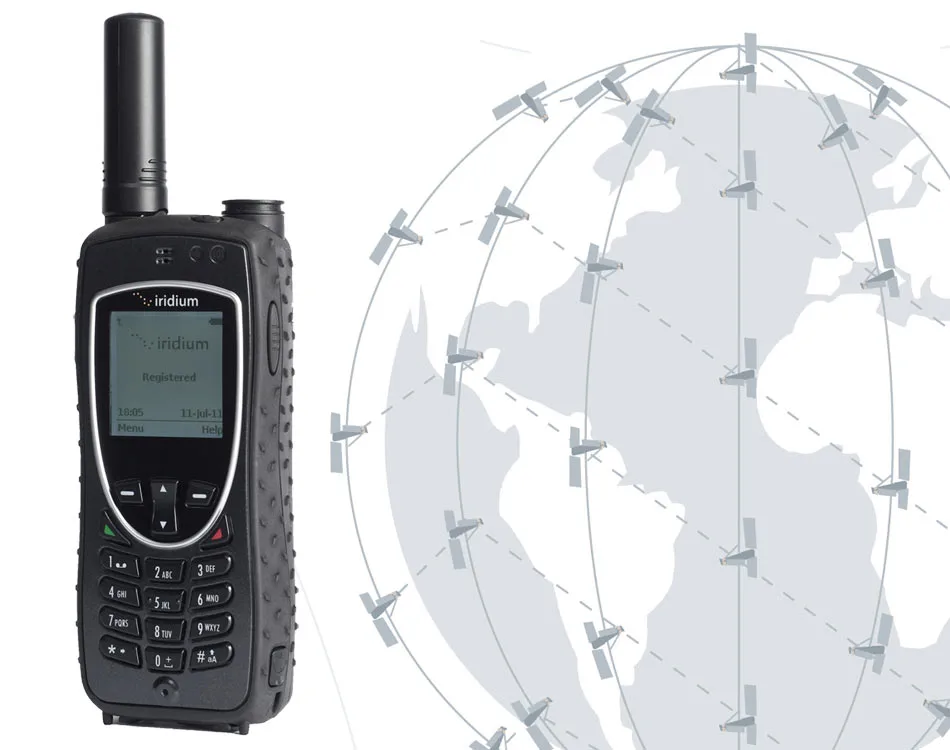
Satellite phones providing global voice and messaging from anywhere on Earth. Our range includes Iridium phones with true global coverage, Thuraya devices for Middle East, Africa, and Asia, and Inmarsat maritime phones.




How to Choose a Satellite Phone
Coverage decides the shortlist and everything else refines it. Map the actual area of operation, including transit routes and sea areas, then compare it against each network's published coverage rather than a general impression that a network is global. Once one or two networks remain, consider the user. Someone who spends most of their working life in mobile coverage and only occasionally leaves it is well served by a dual-mode handset that switches between GSM and satellite. A lone worker in remote terrain needs an emergency button, tracking and a rugged casing more than a large screen. A vessel or vehicle needs a docked unit with an external antenna, not a handheld left in a drawer. Then decide whether data matters at all: most satellite phones offer only a very low rate suitable for messaging and position reports, and anything heavier belongs on a broadband terminal instead of a handset.
Iridium vs Thuraya vs Inmarsat: What the Constellation Changes
Iridium uses a low earth orbit constellation, so satellites move quickly across the sky and coverage extends to the poles. The practical effect is that you rarely need to face a particular direction, a call can survive in a narrow valley where a stationary satellite would be blocked, and the network works in polar waters that geostationary systems cannot reach. Inmarsat and Thuraya use geostationary satellites. Those sit fixed above the equator, so the handset must have line of sight towards that part of the sky, but the link is stable and predictable and the signal over the served region is strong. Thuraya adds a regional footprint across Europe, much of Africa, the Middle East, Central and South Asia and Australia, with dual-mode handsets that also take a GSM SIM. As a rule: global and polar work points to Iridium, while maritime and regional operations often favour the geostationary networks.
Key Features to Compare Before You Buy
Look past the headline and check the features that change how a satellite phone is actually used. Battery talk and standby times matter for lone workers with no charging for days. Ingress protection and drop rating decide whether the handset survives a rig deck or a desert convoy. An SOS button that reports position to a monitoring service is a safety case in itself, and some organisations are obliged to provide one. Check the antenna port: a phone with an external antenna connector can be docked in a vehicle, cabin or building, which transforms usability. GPS, location reporting and tracking intervals matter for duty of care and journey management. Dual-mode handsets that also accept a GSM SIM save staff carrying two devices. Finally, confirm that the accessory ecosystem exists for the model you pick, because docking kits, antennas, cables and chargers are what turn a handset into an installed system.
Airtime, SIMs and Regulatory Points to Check
Hardware is only half the purchase. Every satellite phone needs an active SIM and an airtime plan, and the plan structure matters more than most buyers expect. Prepaid units suit occasional travellers and emergency kits, but they carry a validity period, and a phone with expired credit is a paperweight at the exact moment it is needed. Monthly plans suit permanently deployed users and fleets, and they make pooled minutes and central management possible. Decide who owns and monitors the SIMs, because unmanaged handsets quietly drift out of validity. On the regulatory side, several countries in the region and beyond restrict the import or use of satellite phones, or require the end user to obtain approval or a licence from the national telecommunications regulator. Rules vary and change, so confirm the current position for each destination before shipping equipment or travelling with a handset.
Buying Satellite Phones in the UAE and Wider GCC
GCCSAT supplies Iridium, Thuraya and Inmarsat handsets, airtime, docking kits, antennas and repeaters, shipping from our UAE base to buyers across the Gulf, the Levant, Africa and South Asia. When you enquire, the useful information is where the phones will be used, how many users there are, whether they will be handheld, vehicle mounted, docked in a building or used at sea, and whether a tracking or emergency monitoring service is required. If the phones are for a project site with several users, an indoor repeater and one well sited external antenna often work better than issuing more handsets. We quote on request and can supply devices, airtime and installation as a package, or hardware alone if you already hold airtime with an operator. Tell us the destination country early so that any regulatory approvals move alongside the order rather than after it.
Satellite Phones — Frequently Asked Questions
How does a satellite phone work?
A satellite phone connects directly to a satellite rather than a terrestrial mast, so it works where there is no mobile network at all. The handset needs a clear view of the sky: for low earth orbit networks that means open sky generally, and for geostationary networks it means line of sight towards the satellite arc. Calls are relayed from the satellite to a ground gateway and into the ordinary telephone network. That is why satellite phones do not work indoors, under dense canopy or inside a vehicle unless an external antenna is fitted.
Which satellite phone is best for the Middle East and Africa?
For operations that stay within the Middle East, much of Africa, Europe and Central or South Asia, a Thuraya handset is a strong choice because the regional network offers compact devices and dual-mode models that also register on GSM. If staff travel worldwide, cross oceans or work at high latitude, an Iridium handset is the safer standard, since its low earth orbit constellation covers the whole planet including the polar regions. Maritime users often choose Inmarsat where the vessel already carries Inmarsat services. Match the network to your real routes.
What is the difference between Iridium and Thuraya?
Iridium uses a low earth orbit constellation and provides truly global coverage, including oceans and polar regions, with no need to point towards a particular part of the sky. Thuraya uses geostationary satellites and covers a regional footprint across Europe, much of Africa, the Middle East, South and Central Asia and Australia, but not the Americas. Thuraya handsets are typically slimmer and often offer dual-mode GSM operation. Choose Iridium for worldwide and polar operations, and Thuraya for regional work inside its footprint.
Do satellite phones work indoors?
Not usually. The handset needs an unobstructed path to the satellite, and building materials, steel structures, vehicle roofs and ship superstructure block the signal. The standard solutions are a docking station wired to an externally mounted antenna, which gives one user a reliable indoor position, or an indoor repeater that receives outside and re-radiates coverage into an office, accommodation block or control room so several handsets work normally inside. Both depend on siting the outdoor antenna with a clear view of the sky.
Do I need a licence to use a satellite phone?
In many countries, yes. A number of jurisdictions in the Middle East, Africa and Asia regulate the import and use of satellite terminals and require the end user to hold an approval or licence from the national telecommunications regulator, and a few prohibit them outright. The obligation normally sits with the end user or importer rather than the supplier, and the rules change. Confirm the current position for every destination before shipping equipment or travelling with a handset, and allow time for the process.
Can GCCSAT supply satellite phones and airtime in the UAE?
Yes. Iridium, Thuraya and Inmarsat handsets, airtime, docking kits, external antennas, repeaters and accessories are all supplied by GCCSAT from the UAE, with shipping across the Gulf states, the Levant, Africa and South Asia. We quote on request. To get an accurate quotation quickly, tell us how many users you have, where the phones will be operated, whether they are handheld or installed in vehicles, vessels or buildings, and whether you need tracking or emergency monitoring alongside voice.
Product Categories
- VSAT BUC
- VSAT LNB
- VSAT Antennas
- VSAT Fixed Antennas
- VSAT Flyaway Antennas
- VSAT Maritime Antennas
- VSAT KingSat Antennas
- L-Band Satellite Terminals
- Cobham BGAN Terminals
- Thuraya L-Band Terminals
- VSAT Satellite Modems
- Satellite Phones
- Teltonika Products
- Sangfor Firewall & SD-WAN
- Thuraya Accessories
- Excelerate Hybrid Connectivity
- Peplink Products
- VSAT RF Components
- VSAT Hub & Test Equipment
- Remote Site Power Systems
Need a Quote?
Contact our sales team for pricing, availability, and shipping to your location.
Request QuoteWhatsApp