
- Home
- Industries
Industries
Enabling transformation and progress across a wide range of industries globally, fostering innovation and growth in every sector.
Explore all → - Solutions
Connectivity
Connecting industries worldwide with reliable satellite internet solutions, driving innovation, efficiency, and growth across all sectors globally.
Explore all → - Services
Professional VSAT & IT Services
Delivering expert VSAT and IT solutions for seamless connectivity, reliability, and performance across all sectors.
Explore all → - Products
Superior Connectivity, Trusted Solutions
Offering premium Satcom products that guarantee reliable connectivity and boost innovation across industries.
Explore all → - Coverage
WorldWide Coverage
Delivering tailored satellite services that enhance connectivity, foster innovation, and support growth in every industry.
Explore all → - About
- Blog
- Contact
Cellular and Satellite Hybrid
4G and 5G Routers with Satellite Backup and Bonding
Cellular and satellite fail for different reasons, which is exactly why they work so well together. 4G and 5G deliver high capacity and low latency wherever towers reach, while satellite keeps a site, vessel or vehicle online when it moves beyond coverage or a terrestrial network goes down. GCCSAT designs these hybrids with Peplink SD-WAN, as an authorized Peplink partner, and with Teltonika industrial routers, which we supply, integrate and support, combined with VSAT, OneWeb or Starlink.
This page covers when cellular should be primary and when it should be backup, how failover and bonding differ, which hardware suits fixed, mobile and maritime use, and what makes cellular reliable at remote sites. Our Peplink solutions page goes deeper into SpeedFusion, and our Starlink and OneWeb pages cover the satellite side.
At a glance
Primary or backup, by policy
Cellular can carry everyday traffic with satellite on standby, or the reverse offshore, and routing policies switch roles automatically as a vessel or vehicle moves in and out of coverage.
Bonded for critical sessions
With Peplink SpeedFusion, 5G and satellite links can be bonded into one tunnel, so VPNs and calls continue even while one connection drops or changes.
Resilience across mobile operators
Dual-SIM and multi-modem routers can use different mobile operators, avoiding dependence on a single network when an operator suffers an outage or weak coverage.
Antennas that make the difference
Roof, mast and directional cellular antennas, mounted high with short, low-loss cables, can matter as much to remote 4G and 5G performance as the router itself.
Failover, Load Balancing or Bonding: Picking the Right Hybrid
A simple LTE failover router watches its primary link and switches to cellular when health checks fail, which protects basic connectivity but drops active sessions during the switch. Load balancing uses both links at once and spreads sessions between them. Bonding, available with Peplink SpeedFusion, splits individual sessions across links inside a tunnel so they survive a failure. For an office with fiber and a 5G backup, failover may be enough; for a vessel moving between coastal 5G and offshore satellite, or a site running voice and remote control, bonding is usually worth it.
Choosing 4G and 5G Routers for Sites, Vehicles and Vessels
For fixed sites, a 5G router such as the dual-SIM Teltonika RUTX50 or the Peplink MAX BR1 Pro 5G can serve as failover or primary link, managed remotely through Teltonika's RMS platform or Peplink InControl. Vehicles and field teams benefit from compact, rugged routers with GNSS for location, while busy sites and ships can use multi-modem units such as the Peplink MBX, which takes two or four cellular modems. On masts and decks, Peplink Dome series routers place the 5G modem outdoors next to its antennas, avoiding long coaxial cable runs.
- Fixed sites: Teltonika RUTX50 or Peplink MAX BR1 Pro 5G
- Fleets and field teams: Peplink MAX BR and Transit routers
- High-demand sites: Peplink MBX with multiple modems
- Vessels and masts: Peplink Dome series outdoor routers
Adding Satellite Backup to a 5G Router
Satellite connects to a cellular router as an Ethernet WAN. With Starlink, the kit's Ethernet output goes to the router's WAN port, with any Starlink router placed in bypass mode; with OneWeb or VSAT, the satellite modem's LAN port feeds the router in the same way. We then set link priorities, health checks and data policies, for example keeping software updates off a data-capped satellite plan, and test failover in both directions. Teltonika publishes guidance for Starlink failover on its routers, and Peplink adds Starlink monitoring in InControl, so either platform can manage the hybrid.
Making Cellular Reliable at Remote and Offshore Sites
Remote 4G and 5G performance depends on signal quality more than headline speeds. Our surveys measure coverage from each available operator, and we select external omnidirectional or directional antennas, mount them as high as practical and keep cable losses low. Cellular reach offshore is limited and varies with antenna height and terrain, so for vessels we treat it as a bonus near the coast rather than a guarantee. Roaming rules, SIM provisioning and data allowances are planned up front, and our 24/7 NOC monitors signal, usage and failover events across every site.
Cellular and hybrid routers
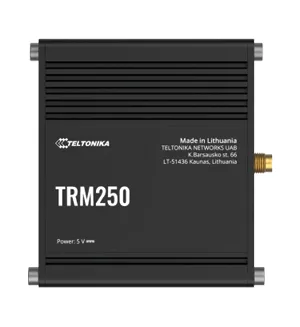 Teltonika TRB250Teltonika TRB250 industrial LTE gateway for IoT and M2M cellular connectivity in remote environments.
 Teltonika TRB256Teltonika TRB256 compact LTE-M/NB-IoT gateway for low-power IoT monitoring applications.
 Excell 4G LTE AntennaExcell 4G LTE antenna for enhanced cellular reception in remote and maritime satellite-cellular hybrid deployments.
 Excelerate Enhanced Cellular RoamingExcelerate Enhanced Cellular Roaming: an unsteered roaming SIM service that keeps devices on the strongest available cellular network.
 Excelerate Hybrid Edge ApplianceExcelerate Hybrid Edge Appliance bonding satellite, cellular and fibre links into one resilient connection for vessels and remote sites.
 Peplink Balance 310 Fiber 5GPeplink Balance 310 Fiber 5G router for bonding fiber WAN with 5G cellular using SpeedFusion.
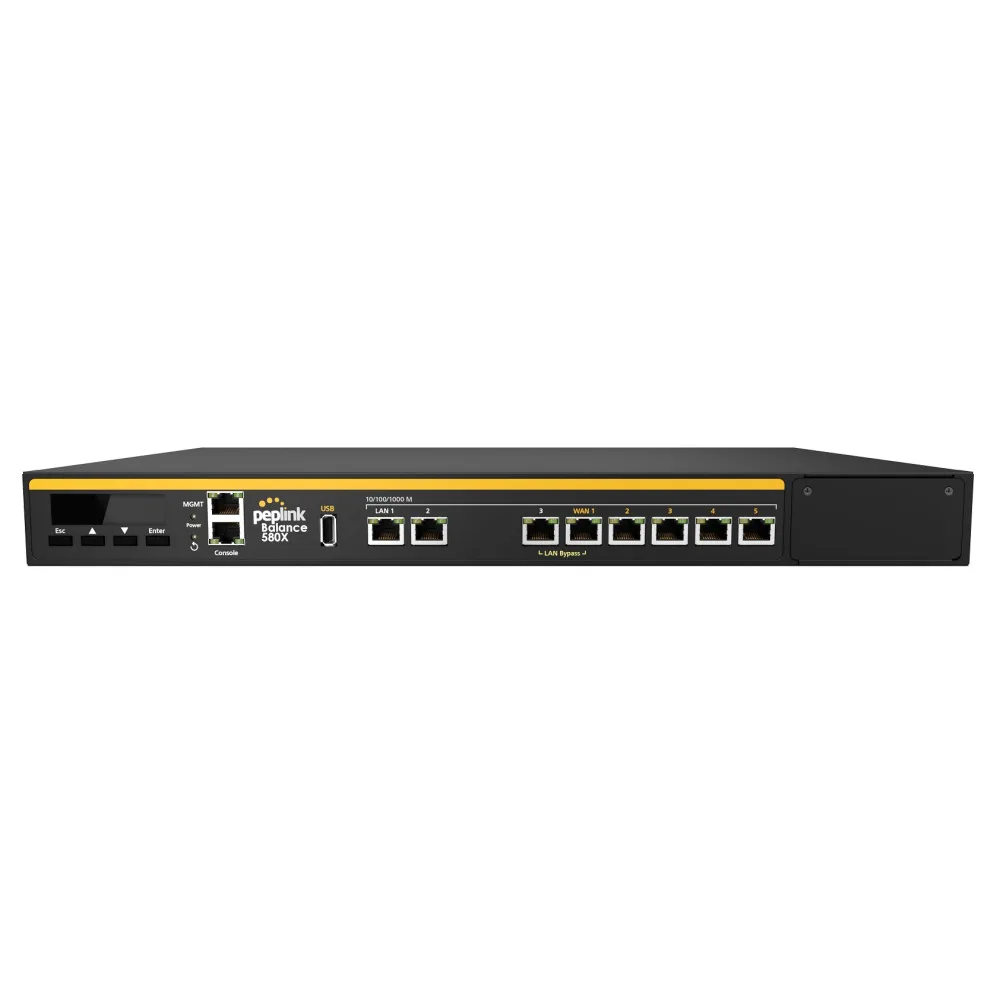 Peplink Balance 580XPeplink Balance 580X high-capacity multi-WAN router for maximum enterprise satellite and cellular throughput.
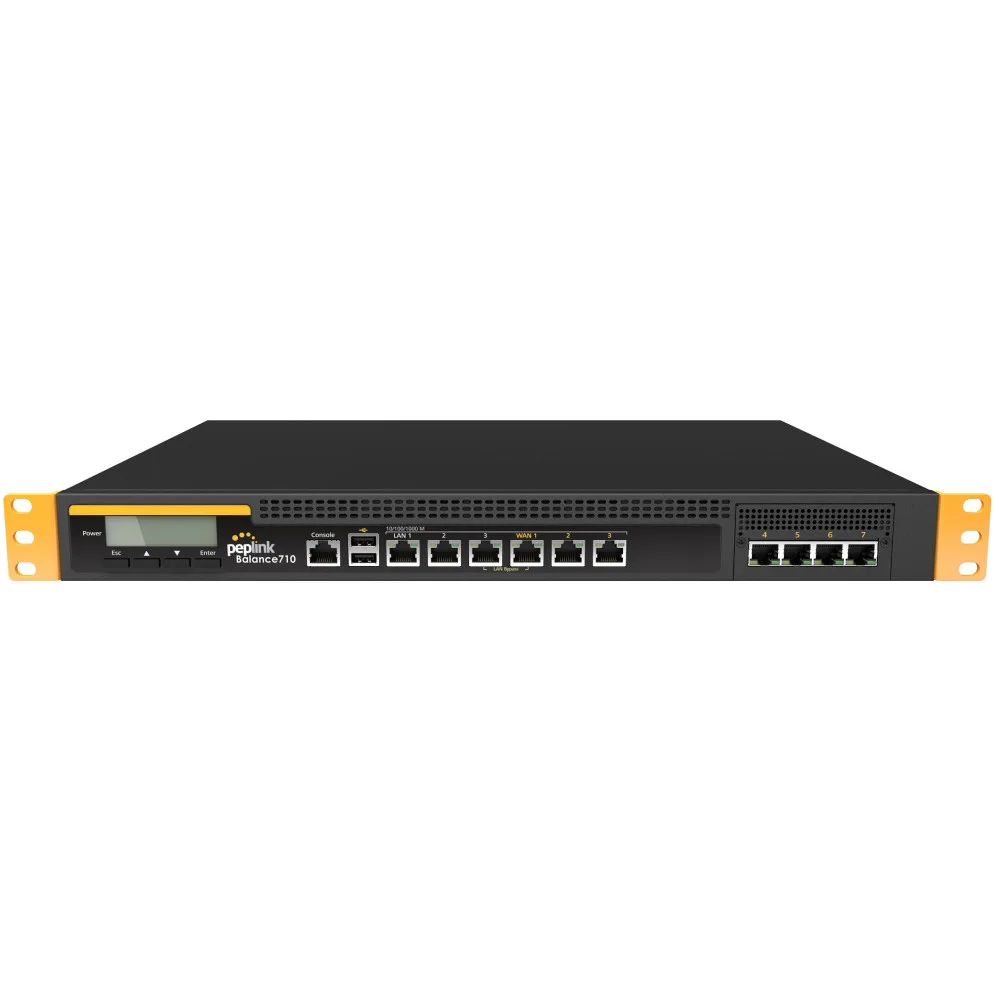 Peplink Balance 710Peplink Balance 710 carrier-grade multi-WAN router for large enterprises and ISPs with advanced failover.
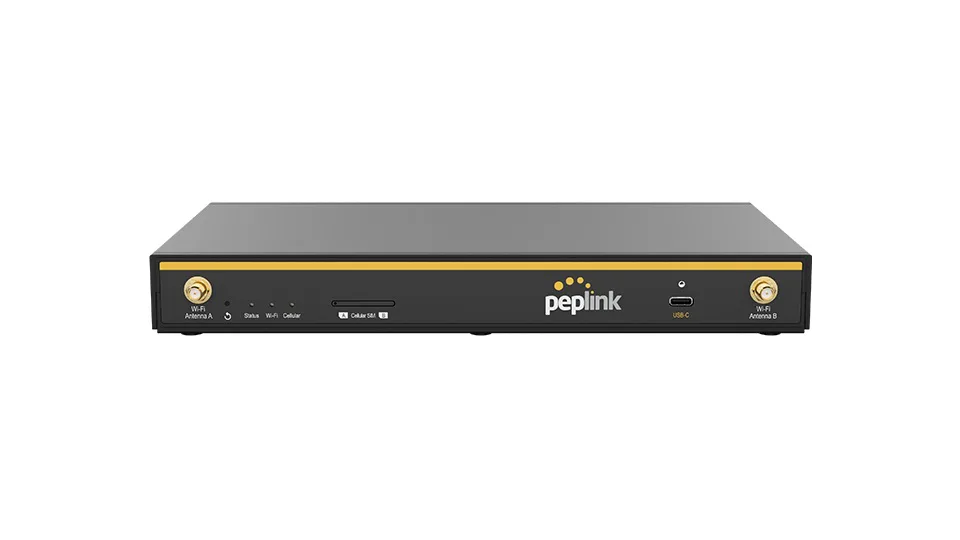 Peplink B OnePeplink B One compact SD-WAN branch router with Wi-Fi 6 and SpeedFusion; the B One 5G version adds an embedded 5G modem.
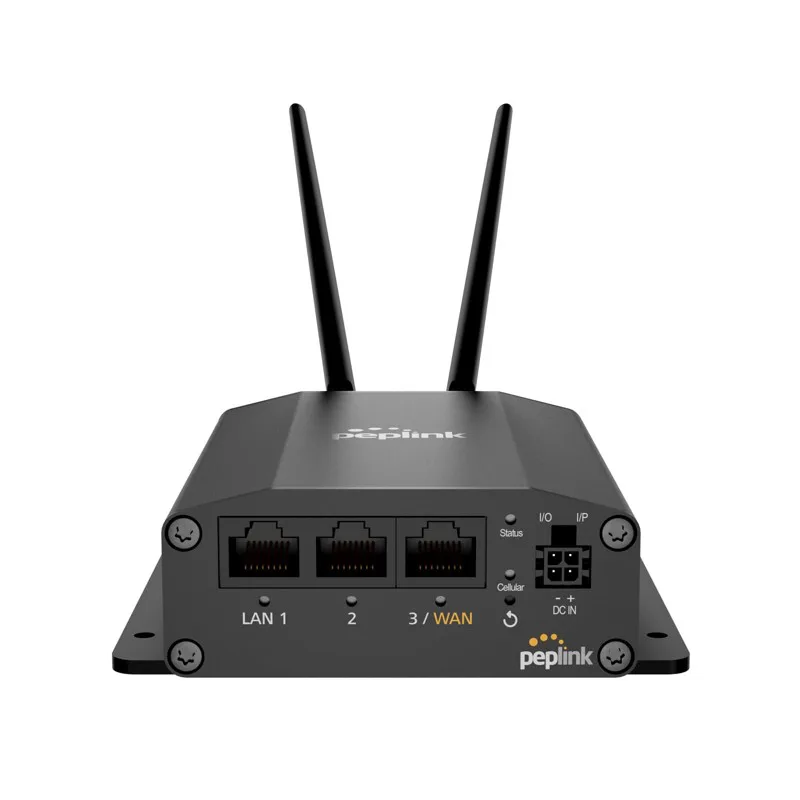 Peplink MAX BR1 MiniPeplink MAX BR1 Mini compact cellular router for vehicles and remote sites with SpeedFusion bonding.
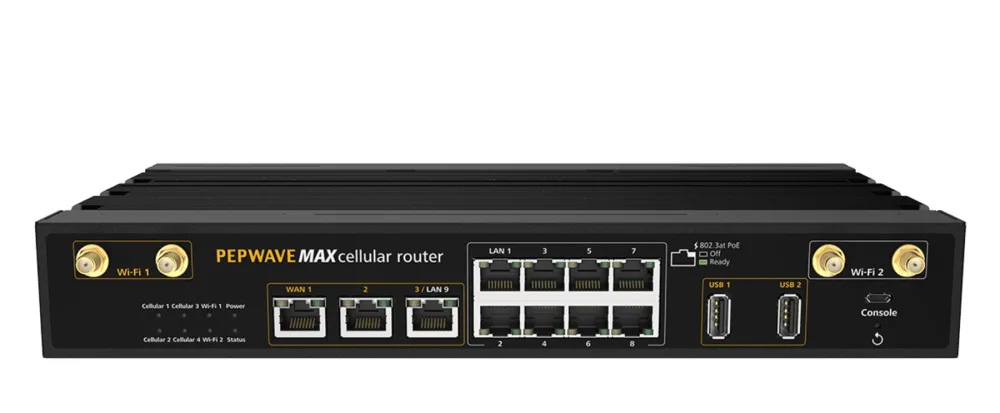 Peplink HD2 MBXPeplink HD2 MBX dual-LTE in-vehicle router with SpeedFusion bonding for mission-critical mobile operations.
Frequently Asked Questions
What is a 4G satellite hybrid network?
It is a network that uses 4G or 5G cellular and a satellite link together, managed by an SD-WAN or multi-WAN router. Cellular provides capacity and low latency where coverage exists, satellite covers everywhere else, and the router decides which link each application uses or bonds them for resilience.
How quickly does an LTE failover router switch to backup?
It depends on how fast the router detects a failure. Basic failover relies on health checks at configurable intervals, and active sessions usually have to reconnect after the switch. Peplink SpeedFusion avoids that by keeping sessions inside a bonded tunnel, so traffic moves to the remaining link without users reconnecting.
Can a 5G router use Starlink as backup?
Yes. Starlink connects to the router's WAN port over Ethernet, and the router fails over to it when cellular degrades, or the other way round. Teltonika and Peplink routers both support this. Starlink availability and licensing vary by country, and GCCSAT supplies Starlink only for sites outside the UAE.
Do I need 5G, or is 4G LTE enough?
For backup and telemetry, 4G LTE is often sufficient and is available in more places. 5G helps where coverage exists and you need higher capacity or lower latency for primary use, video or many users. Current 5G routers generally fall back to 4G automatically, so choosing 5G hardware keeps both options open.
Does GCCSAT monitor cellular links as well as satellite?
Yes. Routers we deploy can be placed under our 24/7 NOC monitoring through Peplink InControl or Teltonika RMS. We watch signal strength, data usage and failover events alongside your satellite links, alert you to problems and adjust policies or antennas when performance changes.
Related Solutions
Talk to a GCCSAT engineer
Tell us where you operate and what you need to connect. We reply within 24 hours with a recommended design.