
- Home
- Industries
Industries
Enabling transformation and progress across a wide range of industries globally, fostering innovation and growth in every sector.
Explore all → - Solutions
Connectivity
Connecting industries worldwide with reliable satellite internet solutions, driving innovation, efficiency, and growth across all sectors globally.
Explore all → - Services
Professional VSAT & IT Services
Delivering expert VSAT and IT solutions for seamless connectivity, reliability, and performance across all sectors.
Explore all → - Products
Superior Connectivity, Trusted Solutions
Offering premium Satcom products that guarantee reliable connectivity and boost innovation across industries.
Explore all → - Coverage
WorldWide Coverage
Delivering tailored satellite services that enhance connectivity, foster innovation, and support growth in every industry.
Explore all → - About
- Blog
- Contact
VSAT Satellite Modems
VSAT Satellite Modems
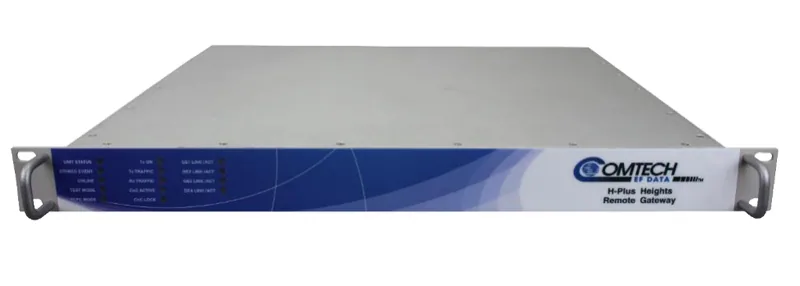
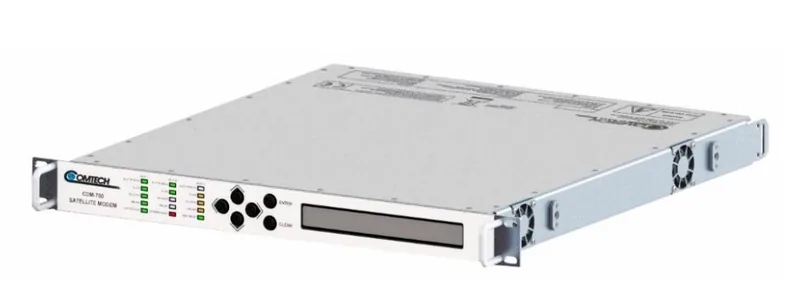
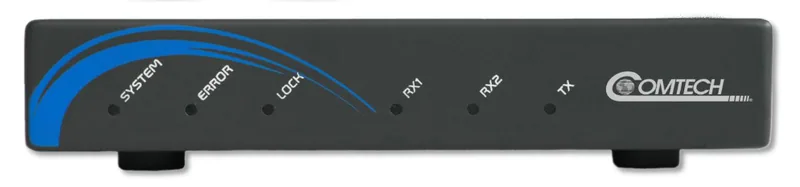
Professional-grade VSAT satellite modems from iDirect, Newtec, Comtech, and UHP. From compact desktop units for single-site VSAT to rackmount carrier-grade modems, our range covers every enterprise and operator requirement.



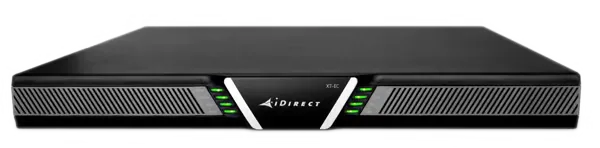
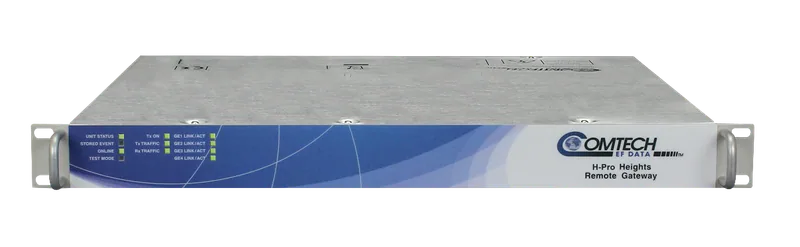
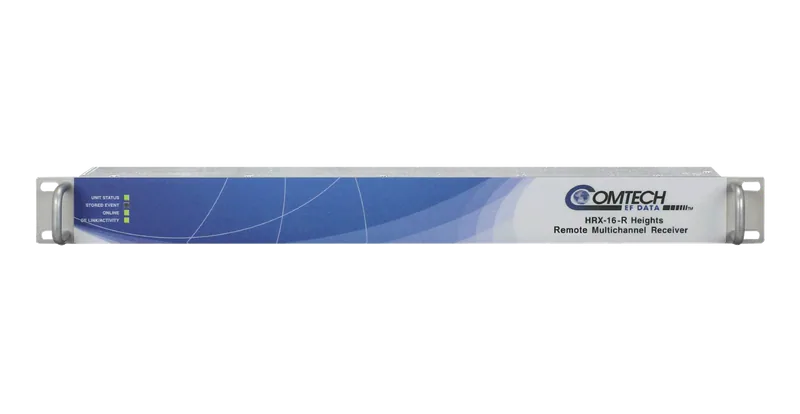
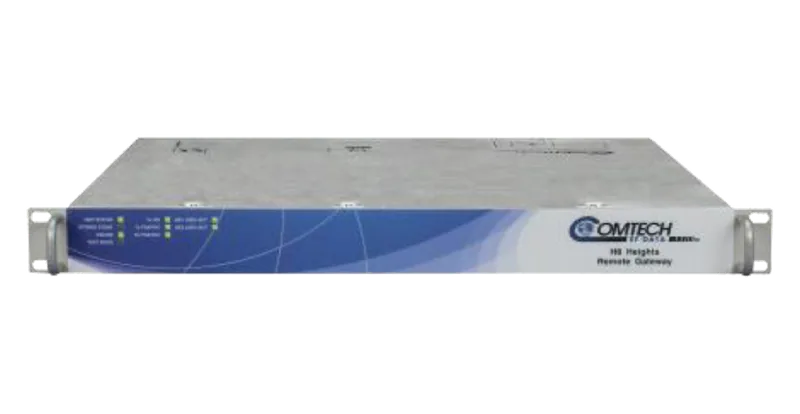

How to Choose a VSAT Satellite Modem
The first question is not which VSAT satellite modem is best; it is which network you are joining. If you are a remote site on an operator's shared platform, the hub dictates the modem, because a TDMA remote must be a type the hub line cards support and the operator will name it for you. If you are building your own point-to-point or point-to-multipoint link, the choice is open and turns on throughput, waveform efficiency and IP features. From there, work through four questions. How much information rate do you need at busy hour, in each direction? What availability does the site require, since that sets the fade margin and therefore the modulation and coding you can sustain? Which IP services must the modem provide itself, such as TCP acceleration, compression, QoS or encryption? And what does the rack look like: desktop or 1U, single unit or redundant pair, and which management interfaces your NOC already speaks.
TDMA vs SCPC: Matching the Modem to the Network Architecture
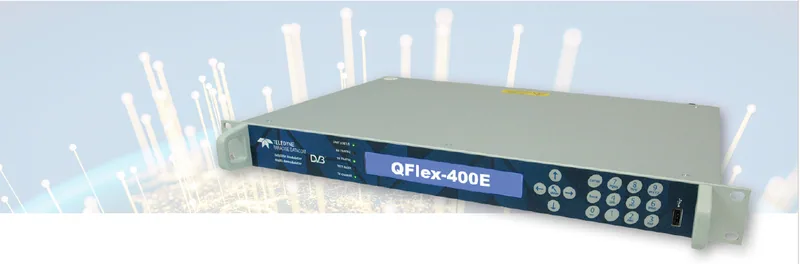
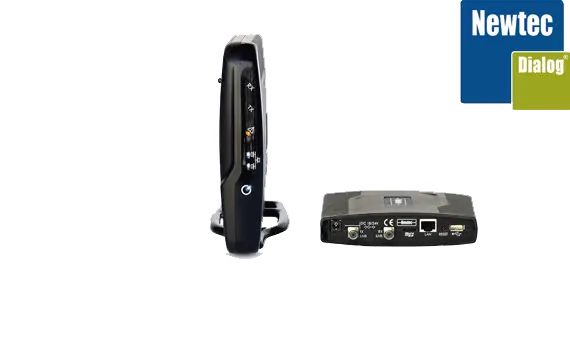
TDMA shares one outbound carrier and a pool of return capacity across many remotes, each transmitting in assigned time slots. It suits networks with many sites, bursty traffic and a central hub, because capacity is statistically multiplexed and the cost per site falls as the network grows. Platforms such as iDirect Evolution and iQ, and Newtec Dialog, work this way, which is precisely why the remote modem has to match the hub. SCPC gives a site its own dedicated carrier, always on, with deterministic latency and throughput. It suits cellular backhaul, trunking, broadcast contribution, offshore platforms and any link where a committed rate matters more than sharing. Comtech and Teledyne Paradise Datacom modems are typical of that class, and some ranges, including UHP, can operate in more than one mode. Carrier-in-carrier techniques let two SCPC carriers overlap in the same spectrum, which can meaningfully reduce the space segment a point-to-point link consumes.
Key Specifications to Compare: DVB-S2X, ACM and Throughput
DVB-S2X extends DVB-S2 with finer modulation and coding steps, higher order constellations and narrower roll-off factors, which together squeeze more bits into the same allocated bandwidth. ACM, adaptive coding and modulation, changes the MODCOD in real time as link margin varies, so a site runs an efficient scheme in clear sky and falls back gracefully during rain instead of dropping the carrier. Compare the maximum symbol rate the hardware supports, because that often caps throughput before modulation does, and check whether the capability is unlocked by licence rather than shipped enabled. Look at the IF as well: L-band at 950 to 2150 MHz is standard for modern block up and down conversion, while 70 or 140 MHz IF still appears in earth station and legacy chains. Finally, confirm whether the modem can supply DC and a 10 MHz reference to the BUC and LNB, or whether a separate power supply is required.
Installation, Licensing and Commissioning
A VSAT satellite modem is rarely a plug and play purchase. Most platforms use option keys or licences to enable information rate, feature sets and sometimes the waveform itself, so the licence has to be specified with the hardware or the unit arrives unable to run your service. Commissioning then involves the teleport or network operator: the antenna is peaked, cross-polarisation isolation and 1 dB compression are checked with the NOC, the modem is loaded with its options file or configuration, and the carrier is brought up under supervision. Cabling matters more than buyers expect, since IFL loss, connector quality and correct grounding decide whether a link is still stable a year later. GCCSAT supplies modems as part of a complete chain including antenna, BUC, LNB and cabling, and can support configuration, integration with your routing and firewall, and coordination with the operator during line-up.
Buying VSAT Satellite Modems in the UAE and Wider GCC
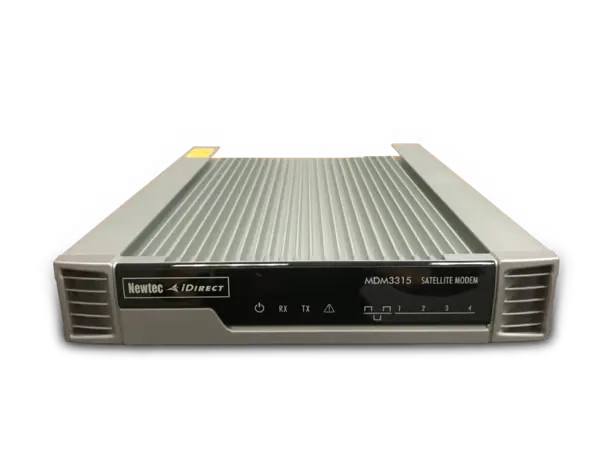
GCCSAT supplies iDirect, Newtec, Comtech, UHP and Teledyne Paradise Datacom modems from the UAE into the GCC, the wider Middle East, Africa and beyond. When you enquire, the details that let us quote accurately are the network you are joining or the operator you are contracting with, the required information rate in each direction, whether the site is fixed, transportable or maritime, and the form factor and redundancy the rack demands. Tell us if the modem must interoperate with an existing hub, because that usually removes the choice entirely and shortens the conversation. Note that the import and operation of satellite equipment is regulated in most countries in the region, and the licence normally sits with the operator or end user, so plan that in parallel with procurement. We quote on request and can supply the modem alone or as part of a complete VSAT terminal with antenna, BUC, LNB and installation support.
VSAT Satellite Modems — Frequently Asked Questions
What is a VSAT satellite modem and what does it do?
A VSAT satellite modem converts your IP traffic into a modulated carrier for transmission over satellite and demodulates the return path back into IP. It sits between your router or LAN and the outdoor unit, feeding the BUC on transmit and receiving from the LNB, usually over L-band coaxial cable. Modern units do far more than modulate: they handle forward error correction, adaptive coding and modulation, TCP acceleration, header and payload compression, QoS and encryption, which is why two modems on the same space segment can deliver very different useful throughput.
What is the difference between TDMA and SCPC?
TDMA shares capacity between many remote sites, each transmitting in assigned time slots on a common return channel, so bursty traffic from many locations is served efficiently and the cost per site falls with scale. SCPC gives one site its own dedicated carrier with a committed, always-on rate and predictable latency. Choose TDMA for large distributed networks such as branch offices, retail sites or remote sensors, and SCPC for backhaul, trunking, broadcast contribution and critical links where guaranteed throughput matters more than sharing.
Can I use any VSAT modem on any satellite network?
No. If you are joining a shared TDMA platform, the remote modem must be a type the hub supports and must normally be commissioned onto that specific network by the operator; an iDirect remote will not work on a Newtec Dialog hub, or the other way round. Point-to-point SCPC links are more open, but both ends still need compatible waveforms, framing and feature licences, so in practice they are bought as a matched pair. Confirm the platform with your service provider before ordering.
What do DVB-S2X and ACM actually give me?
DVB-S2X delivers more bits per hertz than DVB-S2 through finer MODCOD granularity, higher order modulation and narrower roll-off, so the same leased bandwidth carries more traffic, or the same traffic uses less bandwidth. ACM adds resilience: the modem shifts MODCOD frame by frame as conditions change, so the link degrades gracefully in rain instead of dropping. Together they let you design to a realistic average rather than a worst case, which is where most of the space segment saving on a modern network comes from.
Does the satellite modem power the BUC and LNB?
Most modern L-band modems can supply DC voltage and a 10 MHz reference over the IFL coaxial cable to the LNB and, within limits, to a small BUC. Higher power BUCs need a separate power supply or an outdoor power unit, because the current draw exceeds what a modem port can provide and long cable runs add voltage drop. Check the DC voltage and current available on each port against the outdoor unit specification, and confirm whether your BUC requires the external reference.
Can GCCSAT supply VSAT satellite modems in the UAE, Saudi Arabia and Africa?
Yes. iDirect, Newtec, Comtech, UHP and Teledyne Paradise Datacom modems are all available through GCCSAT, shipped from our UAE base into the GCC, the Middle East and Africa, either on their own or built into a full terminal with antenna, outdoor unit and cabling. Send us the platform or operator you are contracting with, because that usually fixes both the model and the option keys the modem needs, and name the destination country so any regulatory approval runs alongside the order. Pricing is quoted on request.
Product Categories
- VSAT BUC
- VSAT LNB
- VSAT Antennas
- VSAT Fixed Antennas
- VSAT Flyaway Antennas
- VSAT Maritime Antennas
- VSAT KingSat Antennas
- L-Band Satellite Terminals
- Cobham BGAN Terminals
- Thuraya L-Band Terminals
- VSAT Satellite Modems
- Satellite Phones
- Teltonika Products
- Sangfor Firewall & SD-WAN
- Thuraya Accessories
- Excelerate Hybrid Connectivity
- Peplink Products
- VSAT RF Components
- VSAT Hub & Test Equipment
- Remote Site Power Systems
Need a Quote?
Contact our sales team for pricing, availability, and shipping to your location.
Request QuoteWhatsApp