
- Home
- Industries
Industries
Enabling transformation and progress across a wide range of industries globally, fostering innovation and growth in every sector.
Explore all → - Solutions
Connectivity
Connecting industries worldwide with reliable satellite internet solutions, driving innovation, efficiency, and growth across all sectors globally.
Explore all → - Services
Professional VSAT & IT Services
Delivering expert VSAT and IT solutions for seamless connectivity, reliability, and performance across all sectors.
Explore all → - Products
Superior Connectivity, Trusted Solutions
Offering premium Satcom products that guarantee reliable connectivity and boost innovation across industries.
Explore all → - Coverage
WorldWide Coverage
Delivering tailored satellite services that enhance connectivity, foster innovation, and support growth in every industry.
Explore all → - About
- Blog
- Contact
Actox 2W-250W Low Ku-Band BUC
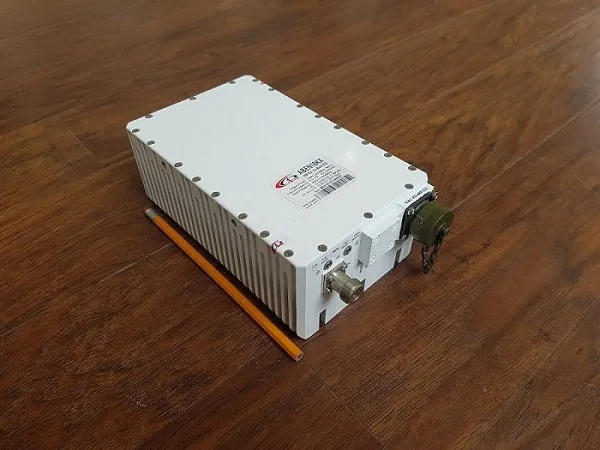
Actox 2W-250W Low Ku-Band BUC
The Actox 2W-250W Low Ku-Band BUC is a versatile and reliable satellite communication device offering power options from 2W right through to 250W. It provides efficient signal conversion with low phase noise and high linearity, which is what keeps uplink performance clear and consistent across a working day. A compact design and robust construction make the Actox 2W-250W Low Ku-Band BUC suitable for both fixed and mobile installations, from permanent earth stations to vehicle-mount and transportable terminals operating in demanding field conditions.
Key Features
- Wide 2W to 250W power range covers small remote terminals through to high-power uplinks
- Low phase noise supports narrow carriers and protects demodulator lock margin
- High linearity allows higher-order modulation without excessive intermodulation products
- Efficient signal conversion delivers clear and consistent uplink performance
- Compact design keeps feed-mounted integration practical on smaller antennas
- Robust construction suits both permanent earth stations and mobile field deployments
Technical Specifications
Typical Applications
- Fixed earth stations and hub uplinks operating in the low Ku-band segment
- Vehicle-mount and transportable terminals for broadcast and satellite news gathering
- Maritime and offshore energy VSAT installations on stabilised Ku-band antennas
- Government, defence and emergency services communications on the move
- Enterprise connectivity and cellular backhaul for remote sites and camps
- Disaster recovery and temporary network restoration deployments
What the Actox Low Ku-Band BUC Does in a VSAT Terminal
A block upconverter is the transmit heart of a VSAT terminal. It takes the modulated intermediate-frequency carrier produced by the satellite modem, shifts that entire block up to the Ku-band uplink frequency, and amplifies it to the power level the antenna needs to reach the spacecraft. The Actox 2W-250W Low Ku-Band BUC performs both functions in a single outdoor unit that mounts at the feed, so the amplified Ku-band signal does not have to travel down a lossy waveguide run. On the receive side the LNB mirrors this role, downconverting the satellite's transmission for the modem. Actox specifies efficient signal conversion with low phase noise and high linearity, which together are what deliver the clear and consistent uplink performance that operators expect from a terminal running continuously.
Choosing an Output Power Between 2W and 250W
Power selection follows the link budget rather than instinct. Antenna aperture, the satellite EIRP and G/T over your coverage point, the modulation and coding scheme, the symbol rate and the fade margin you need all combine to set the transmit power required at the feed. A larger dish reduces the BUC power you need; a compact vehicle-mount or maritime antenna pushes you up the range. The Actox 2W-250W Low Ku-Band BUC spans a very wide window, so the same product family can serve a small remote site and a high-power uplink without changing supplier. Whatever level you land on, size for the backed-off operating point rather than saturated output, because amplifiers driven close to compression produce spectral regrowth and intermodulation that can breach an operator's spectral mask.
Installation and Field Reliability Considerations
Mount the BUC at the feed with the correct polarisation orientation for your OMT, and support its mass on the feed arm rather than through the waveguide flange. Keep the intermediate-frequency coaxial run within the loss budget that your modem's DC feed and reference will tolerate, weatherproof every outdoor connector, and dress cable so water runs away from entry points rather than into them. Thermal headroom matters at the upper end of the 2W to 250W range, so leave clearance around the housing and avoid trapping the unit against a radome wall or under direct solar loading where the mount allows. Actox builds this unit with a robust construction intended for fixed and mobile use, but a mobile mount still needs shock and vibration isolation appropriate to the vehicle or vessel.
Why Buy Actox Ku-Band BUCs from GCCSAT in the UAE
GCCSAT supplies Actox amplifiers and complete satellite ground segment hardware from the UAE into the GCC, wider Middle East and Africa. Sourcing the Actox 2W-250W Low Ku-Band BUC regionally means the amplifier, antenna, feed components and modem come through one supplier with a single point of technical accountability, instead of several separate import routes for one project. Our engineers can help size the correct power point once you share antenna diameter, target satellite, coverage location and throughput requirement, and can review the mechanical and thermal aspects of your mount before you commit. We also support integration and commissioning, including cross-polarisation line-up with the satellite operator, plus spares planning across a deployed fleet. Full specifications are available on request, and pricing for any configuration is quoted on request.
Frequently Asked Questions
What power range does the Actox 2W-250W Low Ku-Band BUC cover?
Actox offers this Low Ku-Band BUC with power options from 2W up to 250W. That window covers everything from compact remote terminals on modest antennas through to high-power uplinks. The specific level you require is determined by your antenna size, the satellite you are accessing, your target data rate and the fade margin you need to maintain.
Why do low phase noise and high linearity matter in a BUC?
Phase noise directly affects a demodulator's ability to hold lock, particularly on narrow, low-symbol-rate carriers used in telephony and telemetry networks. Linearity governs how much intermodulation and spectral regrowth an amplifier produces when driven hard, which determines whether you can run higher-order modulation and stay inside the satellite operator's spectral mask.
Can the Actox Low Ku-Band BUC be used on mobile platforms?
Yes. Actox states that the compact design and robust construction of this BUC make it suitable for both fixed and mobile installations. As with any feed-mounted amplifier on a moving platform, the mechanical design of your mount should still address shock, vibration and, on vessels, salt exposure appropriate to the operating environment.
What is the difference between a BUC and an LNB?
They are opposite halves of the same terminal. A BUC upconverts and amplifies the modem's output for transmission to the satellite, while an LNB amplifies the very weak signal received from the satellite and downconverts it for the modem. Both mount at the antenna feed, and a two-way VSAT terminal needs one of each.
Does GCCSAT supply Actox BUCs across the Middle East?
GCCSAT is a UAE-based satellite communications integrator and supplies Actox Ku-band BUCs across the UAE, Saudi Arabia, Oman, Qatar, Kuwait, Bahrain and the wider Middle East and Africa region. Contact our team with your antenna, satellite and throughput details and we will recommend a suitable power level from the range and quote it on request.
Enquire About Actox 2W-250W Low Ku-Band BUC
Our sales team will provide pricing, availability, and shipping details.
Request a QuoteWhatsAppMore VSAT BUC
- Amplus AM-9335 Series 5W Palapa C-Band BUC
- Amplus Series AM-9335 10W Full C-Band BUC
- iDirect 3W Universal BUC Ku-Band
- iDirect 4W Universal BUC Ku-Band
- NJRC NJT8302UF 3W Universal BUC Ku-Band
- NJRC NJT8306UF 6W Universal BUC Ku-Band
- NJRC NJT8318UF 8W Universal BUC Ku-Band
- NJRC NJT8319UF 16W Universal BUC Ku-Band
- NJRC NJT8370UF 25W GaN Universal BUC Ku-Band
- Terrasat 4W to 50W iBUC 2 Ku-Band
- Terrasat 5W to 80W iBUC 2 C-Band
- XMW M-T2940 / M-T29E40 / M-T3040 Ka-Band 40W Mobility BUC
- XMW M-TT2930 Ka Tri-Band 30W BUC
- XMW M-T2920 / M-T29E20 / M-T3020 Ka-Band 20W Mobility BUC
- XMW M-T2916 / M-T29E16 / M-T3016 Ka-Band 16W Mobility BUC
- XMW M-TD3010 Ka Dual-Band 10W Mobility BUC
- XMW M-T2908 / M-T29E08 / M-T3008 Ka-Band 8W Mobility BUC
- XMW T2705 / T2805 Ka-Band 5W Fanless BUC
- XMW TQ3001 Ka-Band Quad-Band 1W BUC
- XMW T13100 / T14100 Ku-Band 100W GaN BUC
- XMW T1380 / T1480 Ku-Band 80W GaN BUC
- XMW T1360 / T1460 Ku-Band 60W BUC
- XMW T1350 / T1450 Ku-Band 50W BUC
- XMW T1240 Ku-Band 40W BUC
- XMW M-T1225 Ku-Band 25W Mobility BUC
- XMW M-T1216 Ku-Band 16W Mobility BUC
- XMW T1208 Ku-Band 8W BUC
- XMW T1306-A Ku-Band 6W BUC
- XMW T1304-A Ku-Band 4W BUC
- XMW T1303-A Ku-Band 3W BUC
- XMW T Series C-Band 100W BUC (T50100 / T51100 / T52100 / T53100)
- XMW C-Band 50W BUC (T5050 / T5150 / T5250 / T5350 / T5450 / T6050)
- XMW C-Band 40W BUC (Block Upconverter)
- XMW M-T5030 Series C-Band 30W Mobility BUC
- XMW M-T5020 Series C-Band 20W Mobility BUC
- XMW T5010 Series C-Band 10W BUC
- Terrasat IBUC G 200W & 400W C-Band GaN BUC
- Terrasat IBUC R 100W-400W C-Band GaAs BUC/SSPA
- Terrasat IBUC G 150W-200W Ku-Band GaN BUC
- Terrasat IBUC R Ku-Band BUC 60W to 200W
- Teledyne Paradise SSPA C-Band and Ku-Band (Indoor and Outdoor)
- Nisshinbo NJT8316L 4W Lower Ku-Band BUC
- Nisshinbo NJT8315L 2W Lower Ku-Band BUC
- Nisshinbo NJT8371 40W Ku-Band BUC
- Nisshinbo NJT8370 25W Ku-Band BUC
- Nisshinbo NJT8319 16W Ku-Band BUC
- Nisshinbo NJT8318 8W Ku-Band BUC
- Nisshinbo NJT8376 6W Ku-Band BUC
- Nisshinbo NJT8304 4W Ku-Band BUC
- Nisshinbo NJT8302 3W Ku-Band BUC
- Nisshinbo NJT5762 10W C-Band BUC
- Nisshinbo NJT5669 5W C-Band BUC
- Nisshinbo NJT8102 2W C-Band BUC
- Nexgenwave Low Ku-Band G Series BUC 2W-80W Block Upconverter
- Amplus 3W-400W C-Band Block Upconverter (BUC)
- Amplus 4W-200W Ku-Band Block Upconverter (BUC)
- Actox 2W-400W C-Band Block Upconverter (BUC)
- Actox 2W-300W Ku-Band Block Upconverter (BUC)
Product Categories
- VSAT BUC
- VSAT LNB
- VSAT Antennas
- VSAT Fixed Antennas
- VSAT Flyaway Antennas
- VSAT Maritime Antennas
- VSAT KingSat Antennas
- L-Band Satellite Terminals
- Cobham BGAN Terminals
- Thuraya L-Band Terminals
- VSAT Satellite Modems
- Satellite Phones
- Teltonika Products
- Sangfor Firewall & SD-WAN
- Thuraya Accessories
- Excelerate Hybrid Connectivity
- Peplink Products
- VSAT RF Components
- VSAT Hub & Test Equipment
- Remote Site Power Systems