
- Home
- Industries
Industries
Enabling transformation and progress across a wide range of industries globally, fostering innovation and growth in every sector.
Explore all → - Solutions
Connectivity
Connecting industries worldwide with reliable satellite internet solutions, driving innovation, efficiency, and growth across all sectors globally.
Explore all → - Services
Professional VSAT & IT Services
Delivering expert VSAT and IT solutions for seamless connectivity, reliability, and performance across all sectors.
Explore all → - Products
Superior Connectivity, Trusted Solutions
Offering premium Satcom products that guarantee reliable connectivity and boost innovation across industries.
Explore all → - Coverage
WorldWide Coverage
Delivering tailored satellite services that enhance connectivity, foster innovation, and support growth in every industry.
Explore all → - About
- Blog
- Contact
VSAT Maritime Antennas
VSAT Maritime Antennas
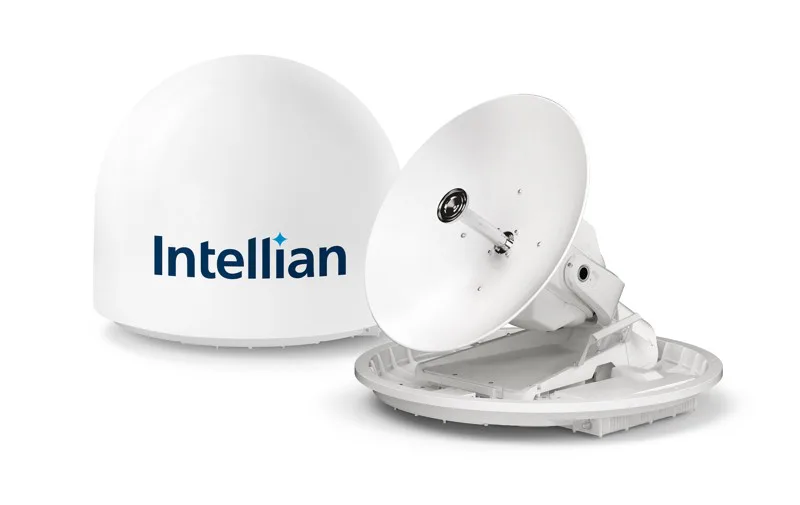
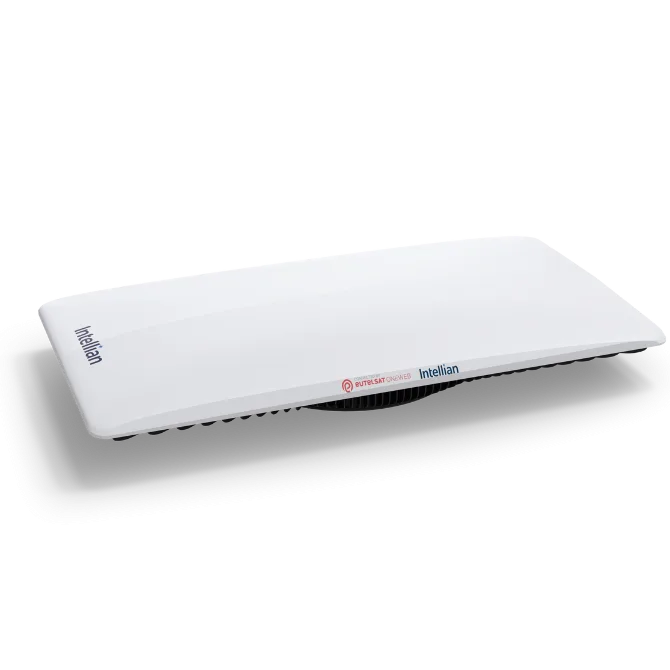
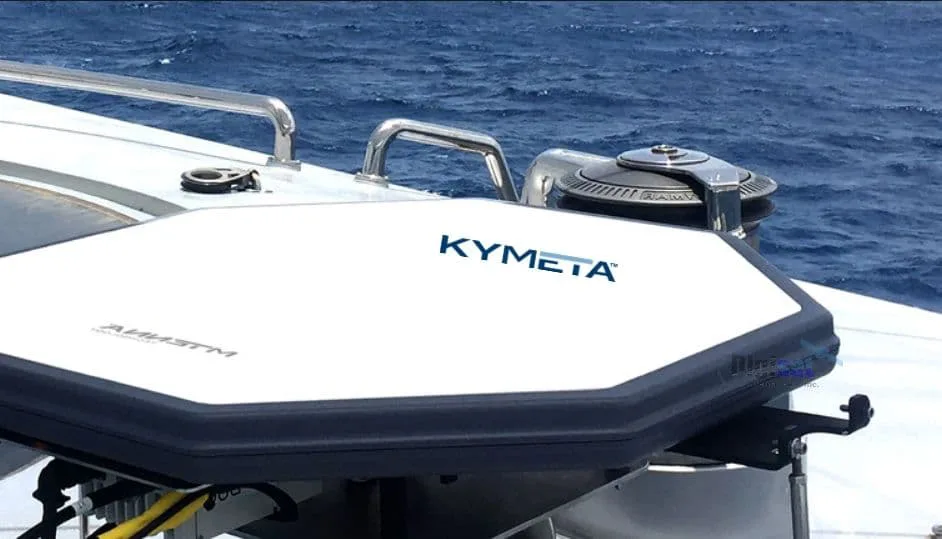
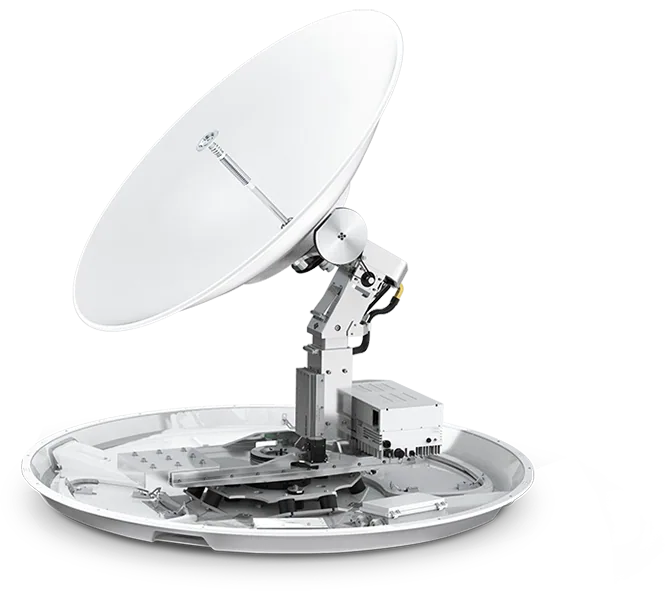
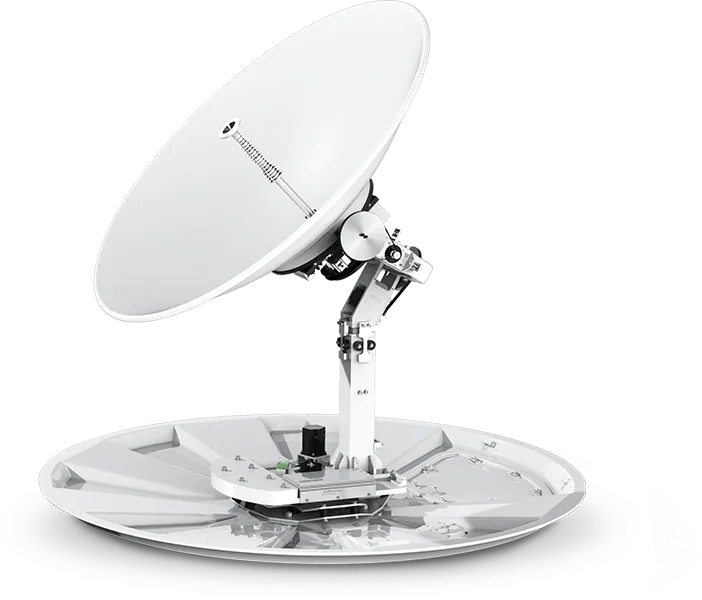
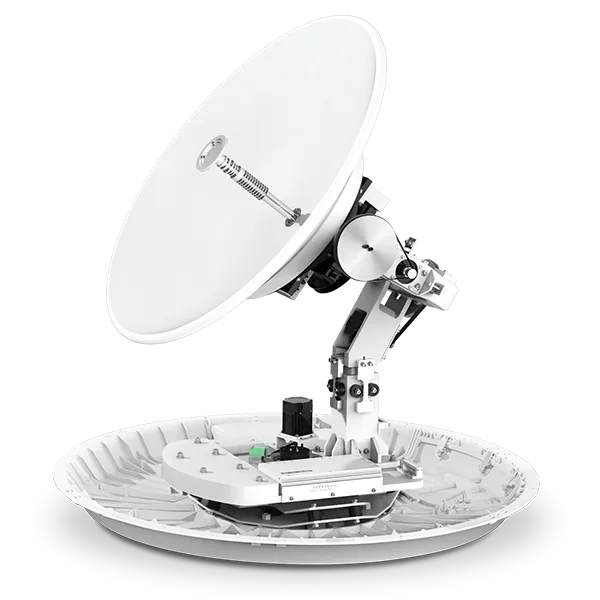
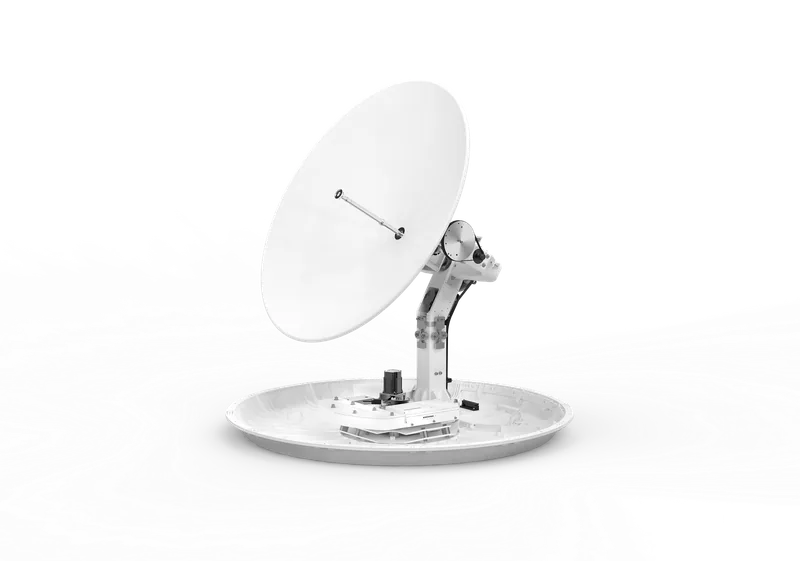
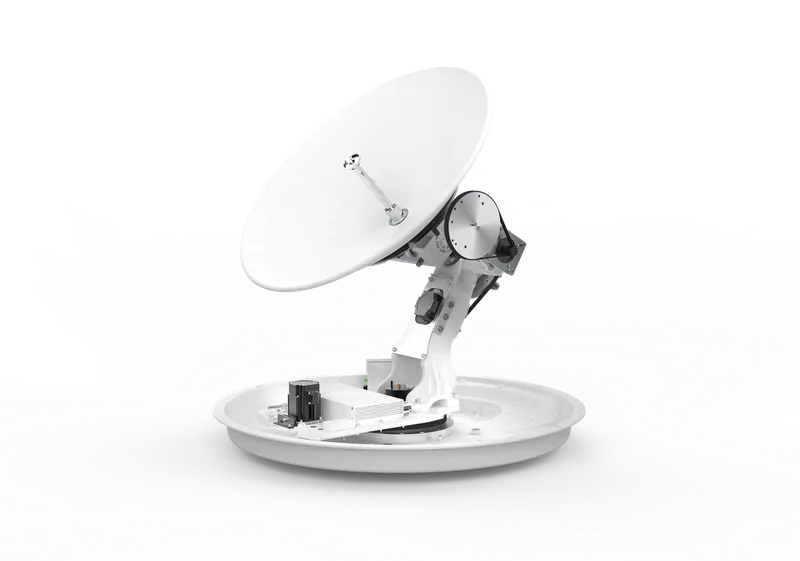
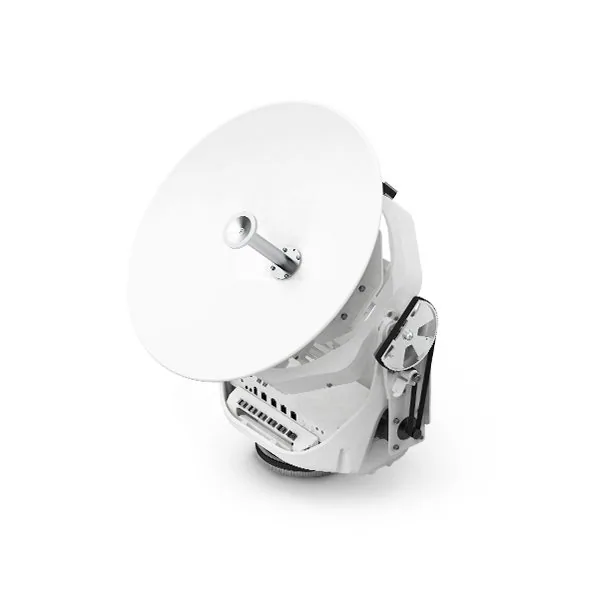
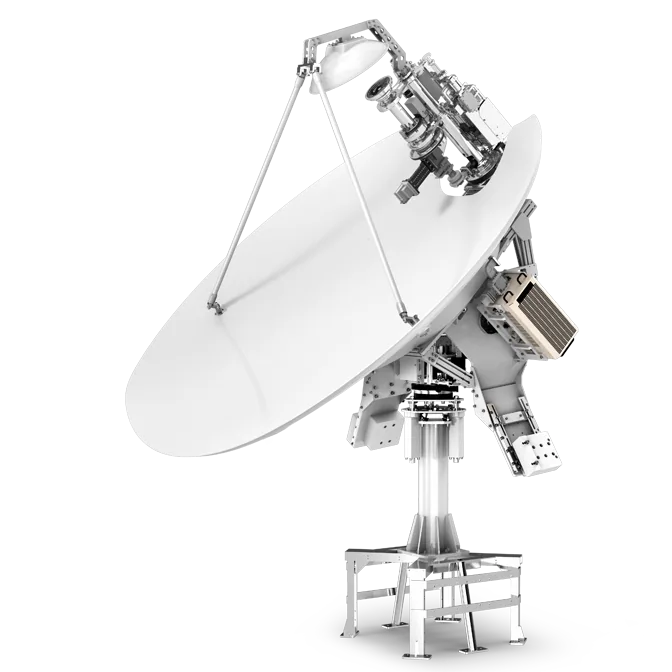
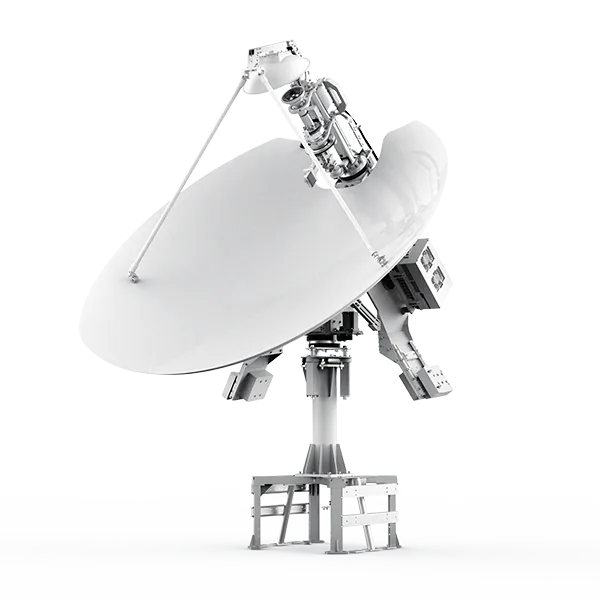
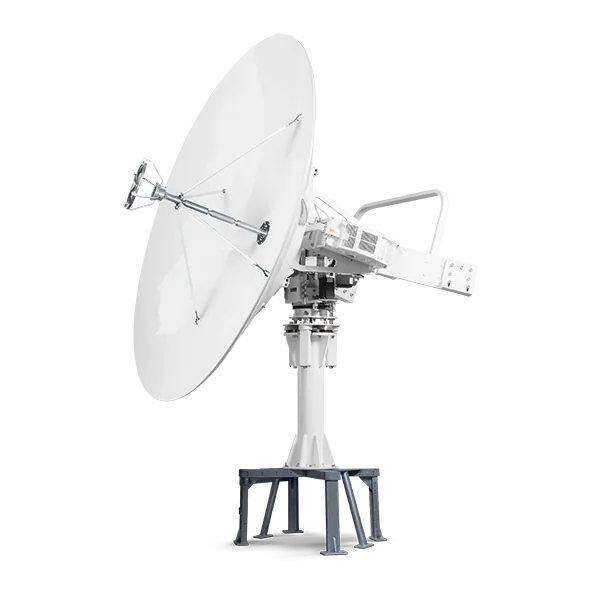
Professional maritime VSAT antennas for vessels of all sizes. From compact FleetBroadband terminals for small craft to high-throughput 1m Ku-Band stabilized antennas for large vessels, we supply and support the full maritime satellite range including OneWeb LEO flat panels.








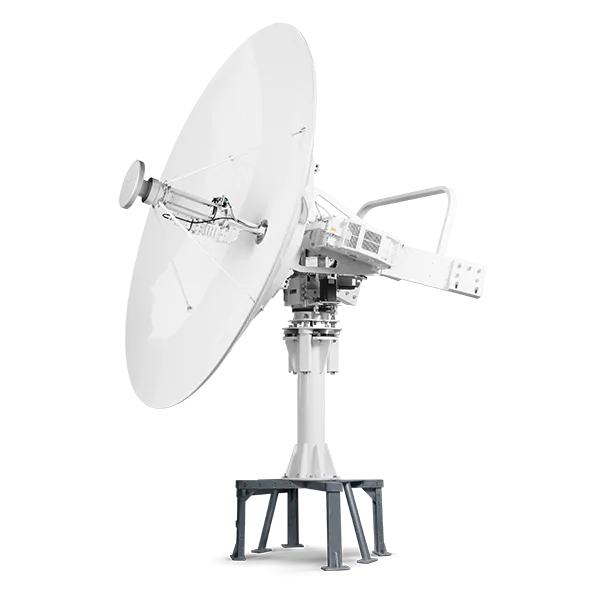
How to Choose a Maritime VSAT Antenna
Begin with the vessel and the service contract, not with the radome. Establish which satellite network the vessel will use, because a Ku-band service, an Inmarsat Global Xpress Ka-band service and a LEO service each imply a different terminal family. Then measure what the ship can physically accept: mast or monkey island space, radome diameter and weight, structural loading, blockage from masts and funnels, and the cable run back to the equipment room. Vessel motion sets the stabilisation requirement, and larger apertures demand tighter pointing in the same sea state. Consider the crew and passenger load as well, since a 2.4m maritime VSAT antenna exists to feed cruise or offshore accommodation demand rather than a coastal workboat. Finally, agree who owns commissioning and support, because these terminals need antenna control unit configuration, a modem or mediator matched to the service, and a documented line-up with the network operations centre before the vessel sails.
Ku-Band, Ka-Band and L-Band at Sea
Ku-band remains the workhorse of maritime VSAT. Coverage is broad and well established across the Gulf, Red Sea, Mediterranean and Indian Ocean, hardware is mature, and rain fade is manageable with adaptive coding and modulation. Ka-band delivers higher throughput from a smaller aperture because spot beams concentrate power, which is why a 60cm class Ka-band terminal can outperform a considerably larger Ku-band dish inside a strong beam, though it is more sensitive to heavy rain and coverage is beam by beam rather than continuous. L-band, through FleetBroadband and Fleet One, gives near-global availability from a small antenna and stays up in weather that fades higher bands, but at data rates measured in hundreds of kilobits per second. Most commercial fleets therefore run Ku- or Ka-band as primary capacity, keep an L-band terminal for safety obligations and fallback, and increasingly add a LEO flat panel for latency-sensitive traffic.
Stabilisation, Tracking and Blockage
A maritime antenna spends its life on a moving platform, so the mount matters as much as the reflector. Three-axis stabilised systems drive azimuth, elevation and cross-level, which keeps a narrow beam on the satellite through roll, pitch and yaw and lets the antenna work at the low elevation angles found away from the equator. The system takes heading and rate data from the vessel gyro or an internal sensor, and a poor NMEA feed is one of the most common causes of intermittent tracking. Survey blockage before installation, because masts, cranes, funnels and neighbouring radomes create shadow sectors; the antenna control unit can then be programmed to mute transmission across those azimuths to protect crew and satisfy the operator. Where blockage cannot be designed out, a dual antenna installation with automatic mediation between the two terminals is the standard answer.
Key Specifications to Compare
Radome diameter is the headline figure, but check the reflector size inside it, since two radomes of similar height can house different apertures. Compare elevation range and tracking rates in degrees per second against the motion your vessel actually experiences. Look at the BUC power supported and whether it can be uprated later, at the bands supported and whether the antenna is convertible between Ku- and Ka-band in the field, and at the LNB type and reference stability. Below decks, check what the antenna control unit requires: single coaxial or multi-cable interface, modem compatibility, a mediator or switching unit for dual antenna sites, and remote management over IP. Then check the figures that decide reliability at sea, including operational and survival wind speed, temperature and humidity range, vibration and shock compliance, and the maintenance interval for belts, slip rings, bearings and motors.
Installation, Commissioning and Support in the UAE and Wider GCC
Hardware is only half of a maritime VSAT project. A workable installation package covers a site survey with blockage analysis, foundation and mast design, cable routing and grounding, deck penetration, and a power budget that survives generator transients. Commissioning then covers the gyro interface, satellite line-up and cross-polarisation checks with the network operations centre, modem and mediator configuration, radiation hazard zoning around the radome, and crew handover with documentation. Work of this kind is normally completed during a routine port call in Dubai, Sharjah, Abu Dhabi, Fujairah or elsewhere in the Gulf, provided the survey is done in advance so that attendance is limited to mounting, cabling and line-up. GCCSAT supplies maritime VSAT antennas, FleetBroadband and Fleet One terminals, LEO flat panels and spares from the UAE for vessels trading across MENA, Africa and worldwide, quoting on request against your vessel details and service provider.
VSAT Maritime Antennas — Frequently Asked Questions
What is a maritime VSAT antenna?
A maritime VSAT antenna is a stabilised satellite terminal housed in a radome and mounted on a vessel, which keeps its beam locked on the satellite while the ship rolls, pitches and yaws. It provides two-way broadband for navigation data, crew welfare, remote monitoring and operational traffic. Unlike a fixed dish that is pointed once and bolted down, a maritime antenna continuously tracks the satellite using motors, inertial sensors and heading data from the vessel gyro.
What size maritime VSAT antenna does my vessel need?
Antenna size follows the satellite beam and the bandwidth you have contracted, not the length of the vessel. Ask your service provider for the EIRP and G/T across your trading area, then size the aperture to hold the required data rate at the availability you need. In practice, compact 45cm to 85cm class terminals suit workboats, yachts and coastal traffic, 1m class antennas suit most merchant vessels, and 2.4m systems are specified where crew numbers or offshore operations demand sustained high throughput.
What is the difference between maritime VSAT and FleetBroadband?
VSAT normally means a Ku-band or Ka-band stabilised antenna delivering megabit-class broadband, usually on a committed or shared capacity plan. FleetBroadband is an L-band service using a much smaller antenna, offering lower data rates but near-global coverage, rapid setup and strong resilience in heavy rain. Many vessels carry both: VSAT as the primary link for bulk data, and FleetBroadband or Fleet One as a backup path and for safety and voice services when the main link is unavailable.
Should I choose Ku-band or Ka-band for a vessel trading in the Gulf and Indian Ocean?
Ku-band is the safer default for wide-ranging trade, because coverage across the Gulf, Red Sea, Mediterranean and Indian Ocean is continuous and rain fade is moderate in most of that region. Ka-band is attractive where the vessel operates inside strong spot beams and needs high throughput from a compact radome, though heavy monsoon or tropical rain will bite harder. Convertible Ku- to Ka-band antennas exist precisely so the decision can be revisited without replacing the whole system.
Do LEO flat panel terminals replace a stabilised Ku-band VSAT antenna?
Not in most fleets yet. LEO flat panels deliver much lower latency, which improves voice, remote desktop, VPN and video calls, and they install easily because there is no moving reflector. However, coverage, capacity and service terms differ from established GEO networks, and blockage or beam handover can interrupt sessions. The common approach today is hybrid: keep the stabilised GEO antenna for assured capacity and add a LEO terminal for latency-sensitive traffic, with routing decided per application.
Can GCCSAT supply and support maritime VSAT antennas in the UAE?
Yes. GCCSAT supplies maritime VSAT antennas, FleetBroadband and Fleet One terminals, LEO flat panels, below-decks equipment and spares from the UAE, serving vessels operating across the Gulf, the wider MENA region, Africa and internationally. Provide the vessel type, available mounting position, trading area, service provider and the band you intend to use, and the requirement can be specified as a complete system. Configuration and pricing are confirmed by quotation on request.
Product Categories
- VSAT BUC
- VSAT LNB
- VSAT Antennas
- VSAT Fixed Antennas
- VSAT Flyaway Antennas
- VSAT Maritime Antennas
- VSAT KingSat Antennas
- L-Band Satellite Terminals
- Cobham BGAN Terminals
- Thuraya L-Band Terminals
- VSAT Satellite Modems
- Satellite Phones
- Teltonika Products
- Sangfor Firewall & SD-WAN
- Thuraya Accessories
- Excelerate Hybrid Connectivity
- Peplink Products
- VSAT RF Components
- VSAT Hub & Test Equipment
- Remote Site Power Systems
Need a Quote?
Contact our sales team for pricing, availability, and shipping to your location.
Request QuoteWhatsApp