
- Home
- Industries
Industries
Enabling transformation and progress across a wide range of industries globally, fostering innovation and growth in every sector.
Explore all → - Solutions
Connectivity
Connecting industries worldwide with reliable satellite internet solutions, driving innovation, efficiency, and growth across all sectors globally.
Explore all → - Services
Professional VSAT & IT Services
Delivering expert VSAT and IT solutions for seamless connectivity, reliability, and performance across all sectors.
Explore all → - Products
Superior Connectivity, Trusted Solutions
Offering premium Satcom products that guarantee reliable connectivity and boost innovation across industries.
Explore all → - Coverage
WorldWide Coverage
Delivering tailored satellite services that enhance connectivity, foster innovation, and support growth in every industry.
Explore all → - About
- Blog
- Contact
L-Band Satellite Terminals
L-Band Satellite Terminals
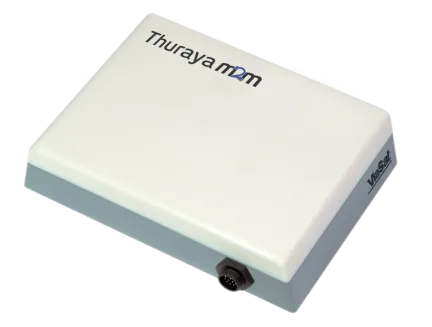
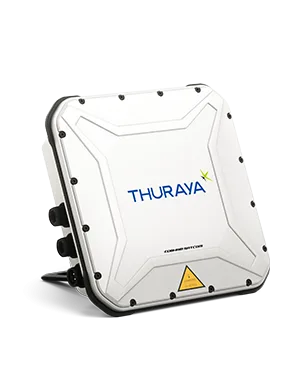
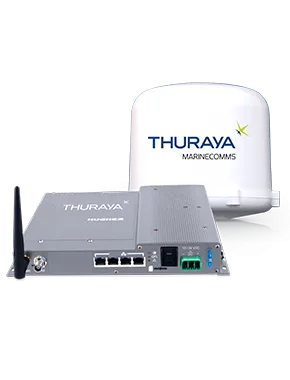
Professional L-Band satellite terminals and solutions from Cobham, Thuraya, Iridium, and Inmarsat. Covering BGAN portable broadband, satellite phones, maritime safety systems, and Wi-Fi hotspots for global mobile communications.








How to Choose an L-Band Satellite Terminal
L-band terminals are chosen for reach and resilience rather than raw speed, so start with coverage. Confirm that the network you are considering serves every country and sea area where the equipment will operate, because the geostationary L-band networks have defined footprints while the low earth orbit constellations cover the poles as well. Next, decide the form factor: a handheld or portable case terminal for staff who move, a vehicular or maritime terminal with an externally mounted antenna for permanent installation, or a fixed docking unit for a remote office or camp. Then match the service to the application, distinguishing between voice, low-rate telemetry, store-and-forward messaging and streaming IP. Only after those decisions do the electrical details matter, including antenna type, prime power, Ethernet and Wi-Fi interfaces, and whether the terminal supports a router or voice gateway. Finally, plan airtime, since the terminal and the subscription are bought together.
BGAN, Thuraya and Iridium Networks Compared
The three main L-band ecosystems behave quite differently. Inmarsat BGAN uses geostationary satellites and offers near-global coverage away from the poles, with portable terminals that give a standard IP channel plus guaranteed streaming rates, which suits broadcast contribution and field offices. Thuraya, also geostationary, covers Europe, the Middle East, Africa, Central and South Asia and Australia; its handheld, vehicular and IP terminals are widely used across MENA, and its footprint aligns well with regional operations. Iridium is a low earth orbit constellation with genuine pole-to-pole coverage and short satellite passes, which makes it the usual choice for high-latitude work, small tracking and telemetry devices and safety systems. All three are rain-fade resistant and work from small antennas. The practical decision usually comes down to where the equipment will operate, which handsets and terminals your organisation already supports, and the airtime commercially available to you.
Key Specifications to Compare on an L-Band Terminal
Look first at the supported data services: the standard IP rate, whether guaranteed streaming classes are available, and whether circuit-switched voice and fax are included. Then check the antenna arrangement, since portable terminals point manually with an audible or on-screen signal strength aid, vehicular units use a low-profile tracking antenna, and maritime units are enclosed. Compare power inputs and consumption, battery endurance where fitted, and whether the terminal can run from vehicle DC or solar without an inverter. Interfaces decide integration: Ethernet ports, Wi-Fi access point capability, RJ11 handset ports, serial ports for legacy telemetry and support for an external router or voice gateway. Check ingress protection, operating temperature and vibration ratings against the environment. Finally, review management and cost control features such as firewalls, traffic shaping, compression and per-user policies, which matter far more on L-band than on high-throughput services.
L-Band as Backup to Ku- and Ka-Band VSAT
Most professional networks use L-band alongside a larger VSAT service rather than instead of it. The reasoning is simple: a Ku- or Ka-band link carries the bulk traffic economically, but it can be lost to a deep rain fade, an antenna fault, a blockage or a power problem, and that is precisely when communications matter most. A small L-band terminal keeps voice, email, telemetry and network management alive during those outages, from an antenna that needs no pointing skill. On vessels, this arrangement also satisfies safety obligations, since L-band underpins recognised distress and safety services. Design the failover deliberately: a router that detects the loss of the primary path, tight traffic policies so that only essential applications ride the backup link, and a documented test schedule. An untested backup terminal is a line item, not a contingency plan.
Buying L-Band Terminals in the UAE and Wider GCC
Buying L-band equipment in the region means buying hardware, airtime and regulatory compliance together. Satellite terminals and handsets are subject to type approval and licensing in most GCC, MENA and African countries, and rules differ from one market to the next, so confirm the position for the country of use before shipping. Airtime is bought as a SIM and plan on the relevant network, and the terminal must be provisioned before it will pass traffic, which is worth arranging at the same time as the hardware. Consider the accessories properly as well: antennas and cables, docking kits, vehicle mounts, external handsets, spare batteries, solar or DC power and protective cases. GCCSAT supplies L-band terminals, satellite phones, portable broadband units, maritime safety equipment and Wi-Fi gateways from the UAE across MENA and Africa, quoted on request.
L-Band Satellite Terminals — Frequently Asked Questions
What is L-band and why is it used for satellite communications?
L-band is the part of the microwave spectrum roughly between 1 and 2 GHz, used for mobile satellite services. Its long wavelength means signals pass through rain, cloud and light foliage with very little attenuation, and useful gain can be obtained from small omnidirectional or patch antennas. That combination makes L-band ideal for handheld phones, portable terminals and vehicle or vessel installations. The trade-off is limited spectrum, so data rates are far lower than Ku-band or Ka-band VSAT.
What is the difference between BGAN and Thuraya IP terminals?
Both provide portable IP connectivity over geostationary L-band satellites, but they run on different networks with different footprints and airtime. Inmarsat BGAN terminals such as the Explorer series offer near-global coverage away from the polar regions and standard plus streaming IP classes. Thuraya IP terminals operate across Europe, the Middle East, Africa, Central and South Asia and Australia, and are widely deployed in MENA. Choose according to where the terminal will operate and which airtime you can obtain locally.
Do L-band terminals work across the Middle East, Africa and at sea?
Yes, subject to each network's footprint. Inmarsat and Thuraya geostationary services cover the Middle East and Africa comprehensively, including coastal and open ocean areas within the satellite beams, while Iridium provides coverage everywhere including polar regions. Terminals need a clear view of the sky, and geostationary services require line of sight towards the satellite, so deep urban canyons, dense canopy and steep valleys can block the link. National licensing rules still apply in each country of use.
How fast is an L-band satellite terminal?
L-band services typically deliver from a few tens of kilobits per second up to a few hundred kilobits per second, depending on the network, the terminal class and the plan. That is enough for voice, email, messaging, telemetry, remote access, file transfer and compressed video, but not for large downloads or uncompressed streaming. Some services offer guaranteed streaming rates for broadcast and video use. Traffic shaping and compression at the router make a substantial difference to what the link actually supports.
Do I need a SIM and airtime plan as well as the terminal?
Yes. An L-band terminal is inert until it is provisioned with a SIM and an active airtime plan on the relevant network, and plans differ in how they charge for data, voice, streaming and standing access. Decide whether you need prepaid or postpaid, a pooled allowance across several terminals, or a guaranteed streaming class. Arrange the subscription alongside the hardware purchase so that the equipment can be tested and configured before it is deployed.
Can GCCSAT supply L-band terminals and accessories in the UAE?
Yes. GCCSAT supplies L-band satellite equipment from the UAE, including portable broadband terminals, satellite phones and docking units, vehicular and maritime L-band systems, maritime safety equipment and Wi-Fi routers and voice gateways, along with antennas, cables, mounts, power kits and cases. Supply extends across the GCC, the wider MENA region and Africa. State the country of use and the application so that network choice and licensing can be addressed, and equipment will be quoted on request.
Product Categories
- VSAT BUC
- VSAT LNB
- VSAT Antennas
- VSAT Fixed Antennas
- VSAT Flyaway Antennas
- VSAT Maritime Antennas
- VSAT KingSat Antennas
- L-Band Satellite Terminals
- Cobham BGAN Terminals
- Thuraya L-Band Terminals
- VSAT Satellite Modems
- Satellite Phones
- Teltonika Products
- Sangfor Firewall & SD-WAN
- Thuraya Accessories
- Excelerate Hybrid Connectivity
- Peplink Products
- VSAT RF Components
- VSAT Hub & Test Equipment
- Remote Site Power Systems
Need a Quote?
Contact our sales team for pricing, availability, and shipping to your location.
Request QuoteWhatsApp