
- Home
- Industries
Industries
Enabling transformation and progress across a wide range of industries globally, fostering innovation and growth in every sector.
Explore all → - Solutions
Connectivity
Connecting industries worldwide with reliable satellite internet solutions, driving innovation, efficiency, and growth across all sectors globally.
Explore all → - Services
Professional VSAT & IT Services
Delivering expert VSAT and IT solutions for seamless connectivity, reliability, and performance across all sectors.
Explore all → - Products
Superior Connectivity, Trusted Solutions
Offering premium Satcom products that guarantee reliable connectivity and boost innovation across industries.
Explore all → - Coverage
WorldWide Coverage
Delivering tailored satellite services that enhance connectivity, foster innovation, and support growth in every industry.
Explore all → - About
- Blog
- Contact
Excelerate Hybrid Connectivity
Excelerate Hybrid Connectivity
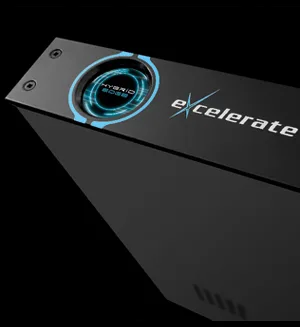
Excell hybrid edge appliances and enhanced cellular solutions for maritime and remote connectivity. Combining satellite, LTE, and smart roaming optimization for reliable hybrid connectivity wherever you operate.


How to Choose a Hybrid Edge Appliance for Maritime and Remote Sites
A hybrid edge appliance exists to make several imperfect bearers behave as one dependable service. Start by listing what the site or vessel actually has: a VSAT terminal, one or more cellular SIMs, occasionally a shore side or port network, and sometimes an L-band backup. The appliance must terminate all of them and choose between them automatically. Then define the traffic policy, because on a vessel that policy is as much commercial as technical. Operational systems, navigation data, engine telemetry and business email usually take priority and stay on the most reliable bearer, while crew welfare traffic is capped, shaped or held for whichever path is cheapest to run at that moment. Check how many WAN interfaces and SIM slots the platform offers, whether it supports dual SIM with automatic profile switching, and what its DC input range and environmental rating are. Bridge deck and equipment room installations demand different mounting from a rack in an office.
4G LTE Antennas for Vessels and Remote Sites: What Actually Matters
The antenna decides how much of the shore network you can reach, and it is routinely the weakest part of an otherwise good installation. Height is the dominant variable over water, since LTE coverage offshore is essentially a line of sight problem: raising the antenna on a mast extends usable range far more than a small increase in gain does. Match the antenna band coverage to the operators you will roam onto, and prefer a MIMO capable antenna where the appliance has multiple ports, because MIMO improves throughput at a given signal level. Watch the cable run. Coaxial loss at cellular frequencies is significant over long lengths, so specify low loss cable, keep the run as short as the layout allows and terminate it properly. Marine installations need a housing rated for salt spray and UV, corrosion resistant mounting hardware and proper surge protection, since a masthead antenna is an obvious lightning path.
Enhanced Cellular Roaming vs VSAT: When Each One Wins
The two technologies win in different places, and a good hybrid design uses that rather than arguing about it. Cellular offers high throughput and low latency, but only within reach of a shore network, which in practice means port approaches, coastal transits, anchorages and inland sites near infrastructure. VSAT offers coverage independent of shore infrastructure and is the only realistic option once a vessel is genuinely offshore or a site is beyond terrestrial reach. Enhanced cellular roaming sits between them, managing which network the vessel attaches to as it moves between countries and operators, so that connectivity continues without manual SIM swapping and without unmanaged data usage. The sensible design uses cellular opportunistically for bulk traffic, updates, crew usage and catch up synchronisation whenever it is available, and reserves the satellite carrier for operational traffic and for the long stretches when nothing else exists.
Key Specifications to Compare Across Hybrid Edge Hardware
Compare the interface count first: WAN ports for the satellite and shore links, LAN ports for the onboard network, SIM slots for cellular, and whether Wi-Fi is included for crew or site access. Throughput figures should be read with the features you intend to run, because routing performance drops once encryption, traffic shaping and inspection are active. Look at how the platform handles failover, and specifically whether it detects degradation as well as outright link loss, since a satellite link that is up but unusable is the harder case. Usage control matters commercially: per user quotas, application blocking, time of day policies and reporting are what stop an unmanaged network consuming a month of capacity in a weekend. Check the DC input range against vessel or site supplies, the operating temperature rating, and the mounting format. Finally, confirm how the fleet is managed remotely, because sending an engineer to a ship is rarely quick.
Buying Excell Hybrid Edge and LTE Solutions in the UAE and Wider GCC
Gulf waters are an unusually good case for hybrid connectivity. Traffic density is high, port calls and anchorage waits are frequent, coastal cellular coverage is generally strong, and voyages routinely cross several national networks in a short passage, which is precisely the scenario enhanced roaming is designed for. Onshore, the same logic applies to remote camps, survey teams and oilfield sites that sit at the edge of terrestrial coverage. Practical considerations for the region include heat in equipment rooms, salt and dust exposure on exposed antennas, and access windows for installation work, which on a vessel usually means fitting the schedule to a port call rather than the other way round. GCCSAT supplies Excell hybrid edge appliances, enhanced cellular roaming solutions and 4G LTE antennas from the UAE across the GCC, MENA and Africa. Send your vessel or site profile, existing bearers and traffic priorities, and GCCSAT will quote on request.
Excelerate Hybrid Connectivity — Frequently Asked Questions
What is a hybrid edge appliance on a vessel or remote site?
A hybrid edge appliance is a router and policy engine that terminates every available connection at a site or on a vessel, typically VSAT, cellular and any shore or terrestrial link, and presents them to users as one service. It monitors each path, moves traffic between them automatically, and applies rules that decide which applications and which users get priority. On ships it also separates operational traffic from crew traffic and applies quotas, so business systems stay usable regardless of what else is running.
How far offshore does 4G LTE reach?
Over open water, usable LTE typically extends somewhere in the region of 20 to 50 km from shore, though the figure varies widely with tower height and siting, transmit power, the band in use, sea state and how high the vessel antenna is mounted. Because water gives an unobstructed path, range is dominated by antenna height at both ends. A masthead antenna will often hold a workable connection well beyond the point at which a handheld device has lost signal entirely.
Do I still need VSAT if the vessel has 4G LTE onboard?
Yes, for any vessel that operates beyond coastal waters. Cellular coverage ends a limited distance from shore, and it cannot be relied on for safety, operational or business critical communications during a passage. The correct model treats cellular as an opportunistic high capacity bearer used in port, at anchor and along the coast, and VSAT as the continuous service that guarantees connectivity everywhere else. A hybrid edge appliance is what makes the handover between the two automatic rather than manual.
What does enhanced cellular roaming do that a normal crew SIM does not?
A standard SIM attaches to whichever network it finds and leaves usage uncontrolled, which produces unpredictable behaviour and unpredictable consumption as a vessel crosses borders. Enhanced cellular roaming manages network selection across countries and operators, keeps the connection stable through those transitions without manual SIM changes, and lets you apply usage policy centrally. Combined with a hybrid edge appliance, it also allows traffic to be steered onto cellular only when the connection quality justifies it, rather than whenever a signal happens to exist.
Where should a 4G LTE antenna be mounted on a ship?
As high as practical, with a clear horizon and away from radar, satellite antennas and other transmitting equipment to avoid interference and blockage. A mast or monkey island position is typical. Keep the coaxial run short and use low loss cable, because cable loss at cellular frequencies will erase the benefit of a good antenna. Use marine grade mounting hardware, seal all connectors against salt spray, and fit surge protection, since an elevated masthead antenna is an exposed lightning path.
Can GCCSAT supply Excell hybrid edge appliances and LTE antennas in the UAE and MENA?
Yes. GCCSAT supplies Excell hybrid edge appliances, enhanced cellular roaming solutions and 4G LTE antennas from the UAE to maritime and remote land customers across the GCC, wider MENA region and Africa. Provide the vessel or site details, the bearers already installed, the number of users to be supported and your priorities between operational and crew traffic, and GCCSAT will recommend a configuration, advise on antenna mounting and cabling, and quote on request.
Product Categories
- VSAT BUC
- VSAT LNB
- VSAT Antennas
- VSAT Fixed Antennas
- VSAT Flyaway Antennas
- VSAT Maritime Antennas
- VSAT KingSat Antennas
- L-Band Satellite Terminals
- Cobham BGAN Terminals
- Thuraya L-Band Terminals
- VSAT Satellite Modems
- Satellite Phones
- Teltonika Products
- Sangfor Firewall & SD-WAN
- Thuraya Accessories
- Excelerate Hybrid Connectivity
- Peplink Products
- VSAT RF Components
- VSAT Hub & Test Equipment
- Remote Site Power Systems
Need a Quote?
Contact our sales team for pricing, availability, and shipping to your location.
Request QuoteWhatsApp