
- Home
- Industries
Industries
Enabling transformation and progress across a wide range of industries globally, fostering innovation and growth in every sector.
Explore all → - Solutions
Connectivity
Connecting industries worldwide with reliable satellite internet solutions, driving innovation, efficiency, and growth across all sectors globally.
Explore all → - Services
Professional VSAT & IT Services
Delivering expert VSAT and IT solutions for seamless connectivity, reliability, and performance across all sectors.
Explore all → - Products
Superior Connectivity, Trusted Solutions
Offering premium Satcom products that guarantee reliable connectivity and boost innovation across industries.
Explore all → - Coverage
WorldWide Coverage
Delivering tailored satellite services that enhance connectivity, foster innovation, and support growth in every industry.
Explore all → - About
- Blog
- Contact

Eutelsat OneWeb Partner
Eutelsat OneWeb LEO Satellite Internet for Land and Sea
Eutelsat OneWeb is a low Earth orbit satellite network designed for enterprise, government, maritime and aviation users and sold through partners rather than directly to consumers. Its satellites fly in near-polar orbits at about 1,200 km, far closer than geostationary satellites at roughly 36,000 km, so latency is low enough for video calls, VoIP and cloud applications, with reach extending to the polar regions. As an authorized Eutelsat OneWeb partner, GCCSAT supplies service and user terminals, installs them and supports them around the clock.
Where one link is not enough, we combine OneWeb with VSAT, Starlink and 4G/5G through Peplink SD-WAN. We also advise on where service is commercially available, because each country must approve OneWeb before it can be used there. Satellite internet services are not sold within the UAE, so our OneWeb projects serve vessels and sites operating in other countries.
At a glance
Low latency from LEO
Orbiting at around 1,200 km, OneWeb avoids much of the delay that makes video meetings, VoIP and interactive cloud applications awkward over geostationary links.
Reach to the poles
Near-polar orbits give the constellation coverage over high latitudes and polar waters, which suits Arctic routes, northern operations and long ocean passages.
Terminals for every platform
Parabolic and flat panel user terminals from Intellian, Hughes and Kymeta cover vessels, fixed sites, vehicles and portable kits, each with different size, power and throughput trade-offs.
Supported end to end
GCCSAT handles activation, installation and commissioning, then monitors OneWeb terminals from our 24/7 NOC and escalates to Eutelsat OneWeb support when needed.
How the OneWeb LEO Network Delivers Connectivity
OneWeb satellites travel in synchronized orbital planes and cross the sky in minutes, so a user terminal hands over from one satellite to the next throughout the day. Each satellite relays traffic between the terminal and a ground gateway, which connects to the internet and to private networks, so service in a country depends on gateway coverage and regulatory approval as well as satellites overhead. Terminals use Ku-band for the user link and need a clear view of the sky. Parabolic models track mechanically, often with two antennas so one holds the link while the other hands over, while flat panels steer their beams electronically.
Choosing a OneWeb User Terminal for Vessels, Sites and Vehicles
Terminal choice depends on platform, available space, power and the throughput you need. On ships, stabilized dual-dome parabolic terminals such as the Intellian OW70M and OW50M handle sea motion, while maritime flat panels such as the Intellian OW11FM and OW10HM or the Kymeta Peregrine u8 suit vessels with limited mast space. Fixed sites can use the Hughes HL1120W or HL1100W electronically steered panels or Intellian parabolic and flat panel models, and vehicles that must stay connected while moving can use land-mobility panels such as the Kymeta Hawk u8.
- Cruise, merchant, energy and ferry vessels: Intellian OW11FM or OW70M
- Fishing and leisure vessels: Intellian OW10HM
- Fixed sites and backup links: Hughes HL1120W or HL1100W
- Vehicles on the move: Kymeta Hawk u8 or Intellian OW11FV
- Government and defense teams: Kymeta Goshawk u8 or Intellian OW7MP manpack
Combining OneWeb with VSAT, Starlink and Cellular
OneWeb performs well on its own, but critical operations rarely rely on a single path. A design we often propose for offshore and remote operations pairs OneWeb with geostationary VSAT for wide-beam continuity, adds Starlink where it is licensed for extra capacity, and uses 4G or 5G near shore, with a Peplink router bonding or prioritizing the links. Our engineers decide which traffic rides on which network, so crew welfare, operational data and voice each get a suitable path and the site stays online if any one link is blocked or out of service.
Deploying OneWeb with GCCSAT, from Survey to 24/7 Support
We start by confirming service availability for your country, route or port calls and agreeing the service plan. A survey then fixes terminal positions with an open view of the sky, away from masts, radar and other antennas, and plans the cable run between the outdoor unit and the indoor or below-deck modem. Installation, activation and commissioning follow, including throughput and handover checks under normal operating conditions. Once live, terminals are monitored by our NOC, which tracks link status, works with Eutelsat OneWeb support and arranges remote or on-site fixes.
OneWeb user terminals
 Intellian Enterprise Flat Panel for Land Mobility OW11FVIntellian OW11FV enterprise flat panel for land mobility OneWeb LEO satellite broadband.
 Intellian Enterprise Flat Panel for Land OW11FLIntellian OW11FL enterprise flat panel for fixed land OneWeb LEO satellite broadband.
 Intellian OW10HL Compact Flat Panel for LandIntellian OW10HL compact flat panel for land OneWeb LEO connectivity in space-limited installations.
 Intellian OW10HL Compact Flat Panel for MobilityIntellian OW10HL compact flat panel for land mobility OneWeb LEO broadband on vehicles.
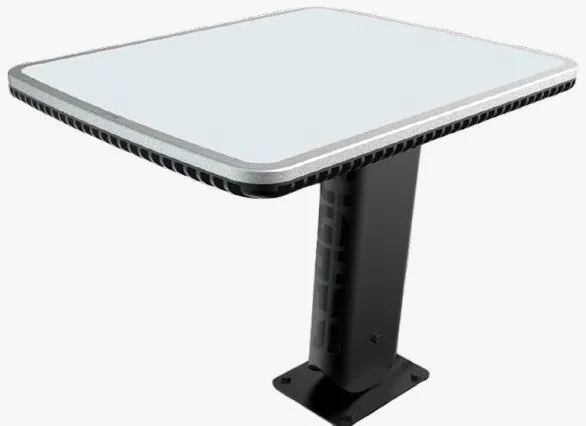 Hughes HL1100W Flat Panel Satellite TerminalCompact flat panel satellite terminal from Hughes with an integrated high-performance modem, delivering broadband internet, VoIP and data connectivity at remote and underserved sites.
 Hughes HL1110W OneWeb LEO User TerminalHughes HL1110W OneWeb LEO user terminal for high-speed broadband via the OneWeb satellite constellation.Hughes HL1120W OneWeb LEO User TerminalHughes HL1120W OneWeb LEO user terminal with enhanced throughput for demanding connectivity requirements.
 Kymeta Hawk U8 LEO Satellite SystemKymeta Hawk U8 LEO satellite system with electronically steered flat panel for high-throughput mobile LEO connectivity.
 OneWeb Inter FoldSAT LEO TerminalOneWeb Inter FoldSAT LEO terminal for compact, portable satellite connectivity in rapid deployment scenarios.
 Intellian Enterprise Flat Panel for Maritime OW11FMIntellian OW11FM enterprise flat panel for maritime OneWeb LEO satellite broadband on large vessels.
 Intellian OneWeb Dual Parabolic Land User Terminal (OW70L-Dac)Intellian OW70L-Dac dual parabolic land user terminal for continuous OneWeb LEO broadband tracking.
 Intellian OneWeb Dual Parabolic User Terminal for Maritime (OW50M)Intellian OW50M dual parabolic maritime terminal for OneWeb LEO broadband on mid-size vessels.
Frequently Asked Questions
How does OneWeb compare with Starlink?
Both are low-latency LEO networks. OneWeb orbits higher, at about 1,200 km, uses near-polar orbits and is sold mainly through partners to enterprise, government and maritime users. Starlink uses a denser constellation at lower altitudes and sells both directly and through resellers. The better fit depends on location, licensing, terminal options and service terms.
Does OneWeb work at sea and in polar regions?
Yes. Near-polar orbits extend OneWeb coverage to high latitudes, and maritime terminals with stabilized or electronically steered antennas hold the link while the vessel moves. Use within a country's territorial waters still depends on that country's approval, so we review the route before activation.
What is a OneWeb user terminal?
A user terminal is the antenna and modem equipment that connects your site or vessel to the OneWeb network. It usually includes an outdoor antenna unit, a cable to an indoor or below-deck modem, and Ethernet or Wi-Fi for your network. Models differ in size, power draw, throughput and how they track satellites.
Is GCCSAT an authorized OneWeb reseller?
Yes. GCCSAT is an authorized Eutelsat OneWeb partner. We supply OneWeb service and user terminals, carry out surveys, installation and commissioning, and provide 24/7 NOC monitoring and support for vessels and sites operating outside the UAE, alongside our VSAT, Starlink and Peplink solutions.
What affects OneWeb performance at my site?
The main factors are a clear view of the sky, the terminal model, the service plan and local blockage from masts, buildings or terrain. Very heavy rain can briefly reduce Ku-band link margins. Our survey identifies these risks early, and a second link through a Peplink router keeps critical traffic moving if the OneWeb path is interrupted.
Related Solutions
Talk to a GCCSAT engineer
Tell us where you operate and what you need to connect. We reply within 24 hours with a recommended design.