
- Home
- Industries
Industries
Enabling transformation and progress across a wide range of industries globally, fostering innovation and growth in every sector.
Explore all → - Solutions
Connectivity
Connecting industries worldwide with reliable satellite internet solutions, driving innovation, efficiency, and growth across all sectors globally.
Explore all → - Services
Professional VSAT & IT Services
Delivering expert VSAT and IT solutions for seamless connectivity, reliability, and performance across all sectors.
Explore all → - Products
Superior Connectivity, Trusted Solutions
Offering premium Satcom products that guarantee reliable connectivity and boost innovation across industries.
Explore all → - Coverage
WorldWide Coverage
Delivering tailored satellite services that enhance connectivity, foster innovation, and support growth in every industry.
Explore all → - About
- Blog
- Contact
Nexgenwave Low Ku-Band G Series BUC 2W-80W Block Upconverter
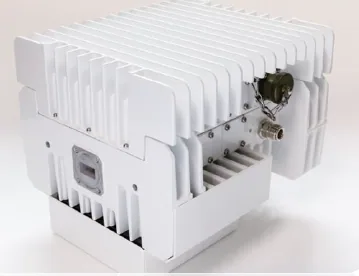
Nexgenwave Low Ku-Band G Series BUC 2W-80W Block Upconverter
The Nexgenwave Low Ku-Band BUC is a compact, high-performance block upconverter built for satellite uplink applications, with power options spanning 2W to 80W. Supplied as the Nexgenwave G Series, the family reaches from low-power portable terminals up to higher-power fixed installations, and includes published models such as the TB39G 8W, TB40G 10W, TB47G 50W and TB49G 80W. A small form factor keeps integration straightforward on compact antennas, while the design is built to deliver stable, robust signal transmission across every power level in the range.
Key Features
- Power range spans 2W to 80W, so one BUC family covers portable and fixed VSAT builds
- Compact G Series housing integrates onto small-aperture flyaway and vehicle-mount antennas
- Mini 3W variant available where mass and stowed volume drive the antenna design
- Stable, robust signal transmission maintained consistently across every power level offered
- Published models include the TB39G 8W, TB40G 10W, TB47G 50W and TB49G 80W units
- Engineered for satellite uplink duty with reliability and efficiency as the core design goals
Technical Specifications
Typical Applications
- Maritime VSAT on stabilised Ku-band antennas for commercial shipping and offshore support vessels
- Portable flyaway and vehicle-mount terminals for satellite news gathering and event uplinks
- Enterprise and cellular backhaul from remote sites across the GCC, Middle East and Africa
- Oil, gas and mining camp connectivity where terrestrial fibre is unavailable
- Government, defence and public safety communications on transportable Ku-band terminals
- Disaster recovery and business continuity links that must be restored at short notice
How the Nexgenwave Low Ku-Band BUC Fits Into a VSAT Terminal
In a VSAT transmit chain the modem produces a modulated intermediate-frequency signal, and the block upconverter translates that entire block up to the Ku-band uplink frequency while amplifying it to the level the antenna needs. The Nexgenwave Low Ku-Band BUC does that work at the feed, mounting directly at the antenna so the amplified Ku-band signal travels the shortest possible waveguide run. Because the G Series is offered from 2W through 80W, the same architecture scales from a small portable terminal to a fixed site without changing how the terminal is cabled or controlled. In most designs the modem supplies DC power and a frequency reference to the BUC over the IF coaxial cable, so confirm the powering and reference requirements of the power class you select against its own datasheet before you specify the cable run.
Choosing an Output Power Between 2W and 80W
Output power selection is a link-budget exercise rather than a preference. The transmit power you need falls out of the antenna aperture, the satellite EIRP and G/T over your coverage point, the modulation and coding scheme, the symbol rate, and the rain-fade margin you want to hold through a Gulf summer. A larger dish lets you use a smaller BUC; a compact flyaway or vehicle-mount antenna usually pushes you up the range. The Nexgenwave Low Ku-Band BUC is offered at 2W, 3W, 4W, 6W, 8W, 10W, 16W, 20W, 25W, 40W, 50W and 80W, which means most link budgets land on a standard part instead of an awkward compromise. Always leave headroom for back-off, because an amplifier driven close to saturation degrades spectral regrowth and intermodulation performance long before it stops transmitting.
Installation and Integration Notes
Mount the BUC at the feed with the correct polarisation orientation for your OMT, and carry its weight on the feed arm rather than on the waveguide flange. Keep the IF coaxial run inside the loss budget that the modem's DC feed and reference will tolerate, use properly weatherproofed connectors, and dress cables so that water drips away from the entry point. Thermal management matters more at the higher power points in the range: leave clearance around the housing, avoid trapping the unit against a radome wall, and keep direct solar loading off the heatsink wherever the mount allows. Before going on air, complete a cross-polarisation and drive-level line-up with the satellite operator. That single step catches feed misalignment and over-drive errors that would otherwise appear as adjacent-carrier interference on a live transponder.
Why Buy Nexgenwave Ku-Band BUCs from GCCSAT in the UAE
GCCSAT supplies satellite ground segment hardware from the UAE into the wider GCC and Middle East market, so a Nexgenwave Low Ku-Band BUC can be sourced regionally instead of being shipped in piecemeal for every project. We work with system integrators, broadcasters, offshore operators, maritime fleets and government end users, and we can advise on the right power point in the 2W to 80W range once you share your antenna size, target satellite and required data rate. Support does not end at the box either: our engineers assist with terminal integration, feed and OMT matching, commissioning and line-up, and spares planning across a deployed fleet. Datasheets for each G Series power class are available on request, and pricing for any configuration is quoted on request.
Frequently Asked Questions
What output power options does the Nexgenwave Low Ku-Band BUC come in?
The Nexgenwave Low Ku-Band BUC is offered across a 2W to 80W range. Published G Series datasheets cover 2W, a Mini 3W, 4W, 6W, 8W, 10W, 16W, 20W, 25W, 40W, 50W and 80W units, including the TB39G 8W, TB40G 10W, TB47G 50W and TB49G 80W models. Which one you need depends entirely on your link budget.
What does a Ku-band BUC actually do?
A block upconverter takes the modulated intermediate-frequency output of a satellite modem, shifts that whole block up to the Ku-band uplink frequency, and amplifies it to the power the antenna needs to close the link. It is normally mounted at the feed so that amplified power is not lost in cable, and it is the transmit counterpart of the LNB on the receive side.
Can the Nexgenwave Low Ku-Band BUC be used on a portable terminal?
Yes. Nexgenwave describes the Low Ku-Band BUC as suitable for both portable and fixed installations, and its small form factor is intended to keep integration simple. The lower power points in the range, including the Mini 3W unit, are the usual choice for flyaway and vehicle-mount antennas where mass and stowed volume are tightly constrained.
How do I choose between an 8W, a 10W and a 50W BUC?
Work the link budget first. Antenna diameter, satellite EIRP and G/T over your coverage point, the modcod and symbol rate you plan to run, and the fade margin you want to hold all set the transmit power required at the feed. Then add back-off so the amplifier is never driven into compression. GCCSAT can run that calculation with you before you commit to a power class.
Does GCCSAT supply Nexgenwave BUCs across the GCC?
GCCSAT is a UAE-based satellite communications integrator and supplies Nexgenwave Ku-band BUCs into the UAE, Saudi Arabia, Oman, Qatar, Kuwait, Bahrain and the wider Middle East and Africa region. Send us your antenna size, target satellite and throughput requirement and we will recommend a suitable G Series power class and quote it on request.
Enquire About Nexgenwave Low Ku-Band G Series BUC 2W-80W Block Upconverter
Our sales team will provide pricing, availability, and shipping details.
Request a QuoteWhatsAppMore VSAT BUC
- Amplus AM-9335 Series 5W Palapa C-Band BUC
- Amplus Series AM-9335 10W Full C-Band BUC
- iDirect 3W Universal BUC Ku-Band
- iDirect 4W Universal BUC Ku-Band
- NJRC NJT8302UF 3W Universal BUC Ku-Band
- NJRC NJT8306UF 6W Universal BUC Ku-Band
- NJRC NJT8318UF 8W Universal BUC Ku-Band
- NJRC NJT8319UF 16W Universal BUC Ku-Band
- NJRC NJT8370UF 25W GaN Universal BUC Ku-Band
- Terrasat 4W to 50W iBUC 2 Ku-Band
- Terrasat 5W to 80W iBUC 2 C-Band
- XMW M-T2940 / M-T29E40 / M-T3040 Ka-Band 40W Mobility BUC
- XMW M-TT2930 Ka Tri-Band 30W BUC
- XMW M-T2920 / M-T29E20 / M-T3020 Ka-Band 20W Mobility BUC
- XMW M-T2916 / M-T29E16 / M-T3016 Ka-Band 16W Mobility BUC
- XMW M-TD3010 Ka Dual-Band 10W Mobility BUC
- XMW M-T2908 / M-T29E08 / M-T3008 Ka-Band 8W Mobility BUC
- XMW T2705 / T2805 Ka-Band 5W Fanless BUC
- XMW TQ3001 Ka-Band Quad-Band 1W BUC
- XMW T13100 / T14100 Ku-Band 100W GaN BUC
- XMW T1380 / T1480 Ku-Band 80W GaN BUC
- XMW T1360 / T1460 Ku-Band 60W BUC
- XMW T1350 / T1450 Ku-Band 50W BUC
- XMW T1240 Ku-Band 40W BUC
- XMW M-T1225 Ku-Band 25W Mobility BUC
- XMW M-T1216 Ku-Band 16W Mobility BUC
- XMW T1208 Ku-Band 8W BUC
- XMW T1306-A Ku-Band 6W BUC
- XMW T1304-A Ku-Band 4W BUC
- XMW T1303-A Ku-Band 3W BUC
- XMW T Series C-Band 100W BUC (T50100 / T51100 / T52100 / T53100)
- XMW C-Band 50W BUC (T5050 / T5150 / T5250 / T5350 / T5450 / T6050)
- XMW C-Band 40W BUC (Block Upconverter)
- XMW M-T5030 Series C-Band 30W Mobility BUC
- XMW M-T5020 Series C-Band 20W Mobility BUC
- XMW T5010 Series C-Band 10W BUC
- Terrasat IBUC G 200W & 400W C-Band GaN BUC
- Terrasat IBUC R 100W-400W C-Band GaAs BUC/SSPA
- Terrasat IBUC G 150W-200W Ku-Band GaN BUC
- Terrasat IBUC R Ku-Band BUC 60W to 200W
- Teledyne Paradise SSPA C-Band and Ku-Band (Indoor and Outdoor)
- Nisshinbo NJT8316L 4W Lower Ku-Band BUC
- Nisshinbo NJT8315L 2W Lower Ku-Band BUC
- Nisshinbo NJT8371 40W Ku-Band BUC
- Nisshinbo NJT8370 25W Ku-Band BUC
- Nisshinbo NJT8319 16W Ku-Band BUC
- Nisshinbo NJT8318 8W Ku-Band BUC
- Nisshinbo NJT8376 6W Ku-Band BUC
- Nisshinbo NJT8304 4W Ku-Band BUC
- Nisshinbo NJT8302 3W Ku-Band BUC
- Nisshinbo NJT5762 10W C-Band BUC
- Nisshinbo NJT5669 5W C-Band BUC
- Nisshinbo NJT8102 2W C-Band BUC
- Amplus 3W-400W C-Band Block Upconverter (BUC)
- Amplus 4W-200W Ku-Band Block Upconverter (BUC)
- Actox 2W-250W Low Ku-Band BUC
- Actox 2W-400W C-Band Block Upconverter (BUC)
- Actox 2W-300W Ku-Band Block Upconverter (BUC)
Product Categories
- VSAT BUC
- VSAT LNB
- VSAT Antennas
- VSAT Fixed Antennas
- VSAT Flyaway Antennas
- VSAT Maritime Antennas
- VSAT KingSat Antennas
- L-Band Satellite Terminals
- Cobham BGAN Terminals
- Thuraya L-Band Terminals
- VSAT Satellite Modems
- Satellite Phones
- Teltonika Products
- Sangfor Firewall & SD-WAN
- Thuraya Accessories
- Excelerate Hybrid Connectivity
- Peplink Products
- VSAT RF Components
- VSAT Hub & Test Equipment
- Remote Site Power Systems