
- Home
- Industries
Industries
Enabling transformation and progress across a wide range of industries globally, fostering innovation and growth in every sector.
Explore all → - Solutions
Connectivity
Connecting industries worldwide with reliable satellite internet solutions, driving innovation, efficiency, and growth across all sectors globally.
Explore all → - Services
Professional VSAT & IT Services
Delivering expert VSAT and IT solutions for seamless connectivity, reliability, and performance across all sectors.
Explore all → - Products
Superior Connectivity, Trusted Solutions
Offering premium Satcom products that guarantee reliable connectivity and boost innovation across industries.
Explore all → - Coverage
WorldWide Coverage
Delivering tailored satellite services that enhance connectivity, foster innovation, and support growth in every industry.
Explore all → - About
- Blog
- Contact
VSAT Fixed Antennas
VSAT Fixed Antennas
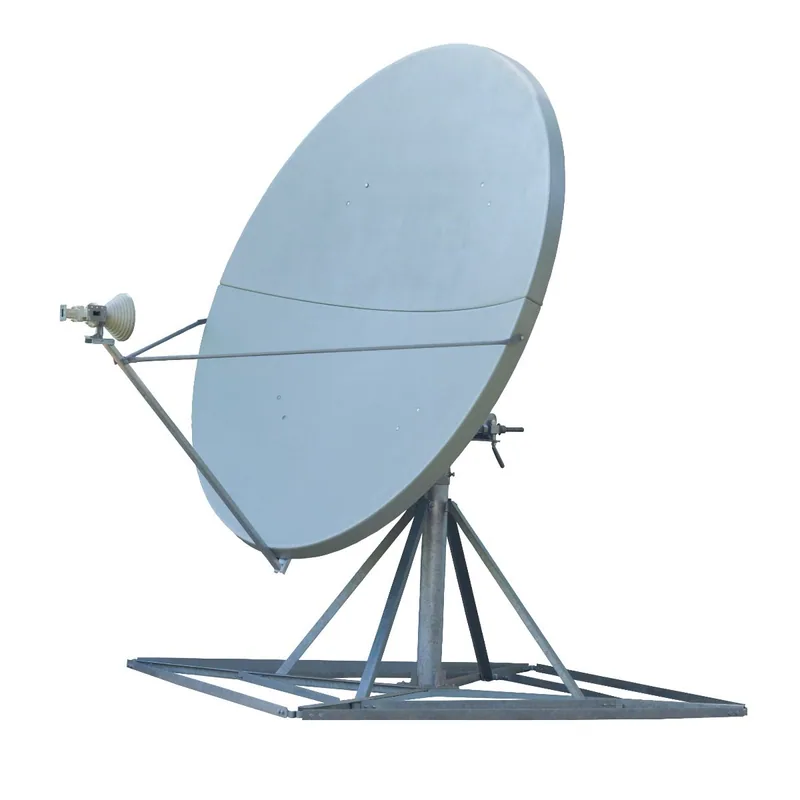
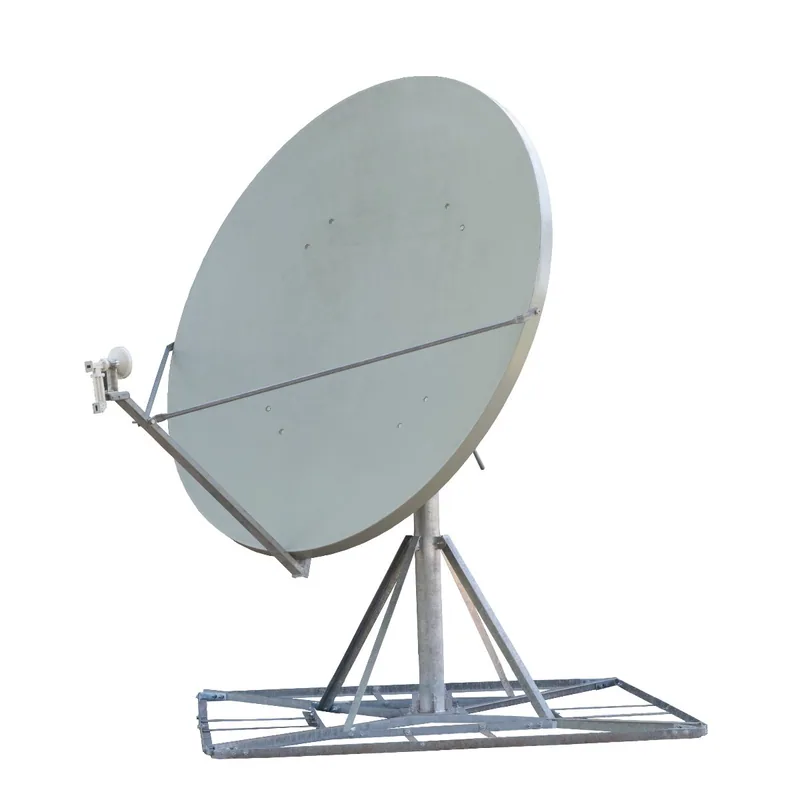
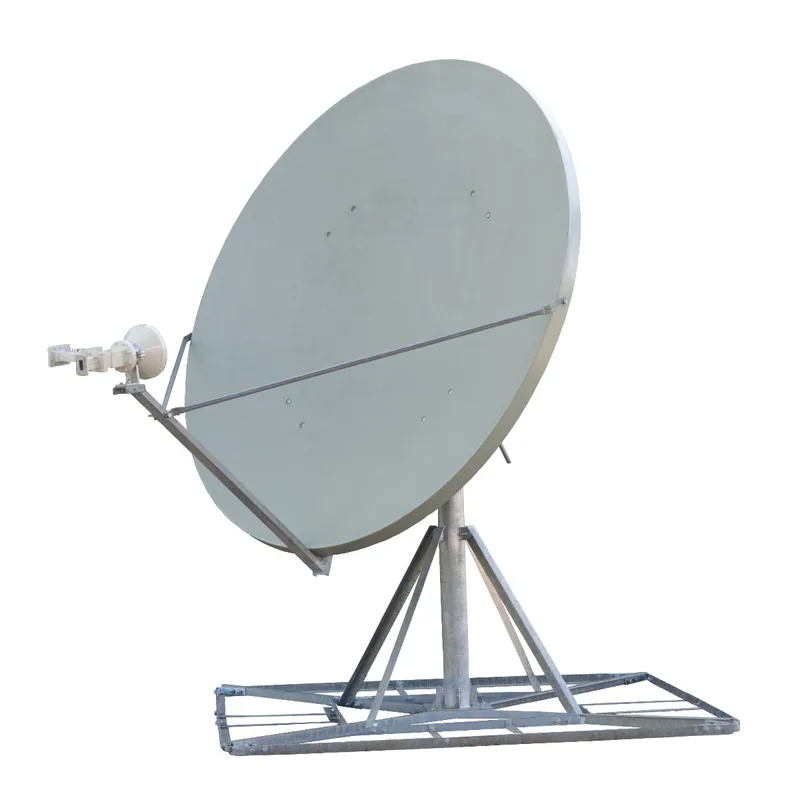
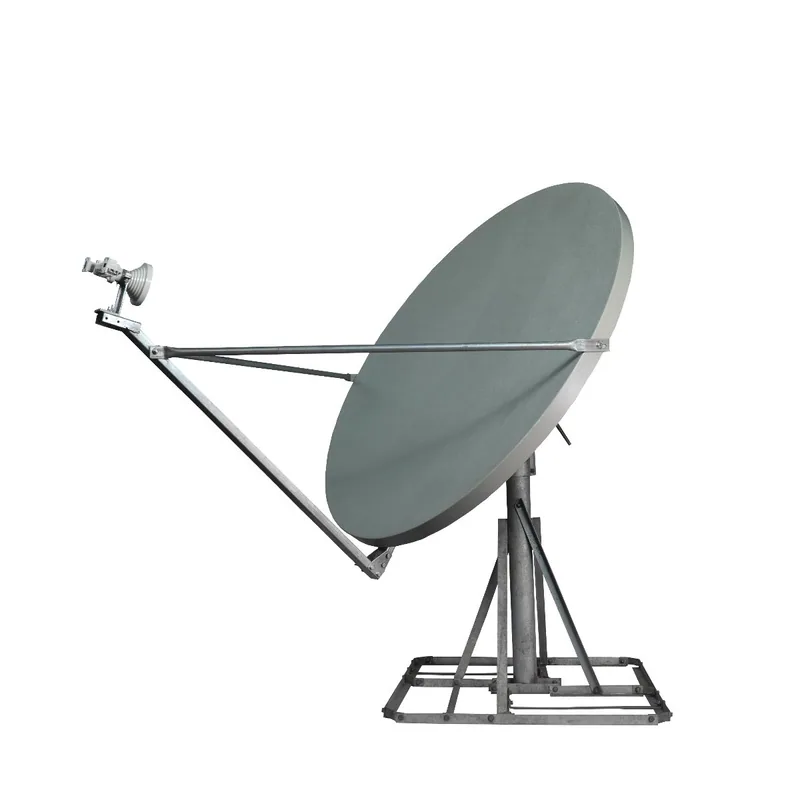
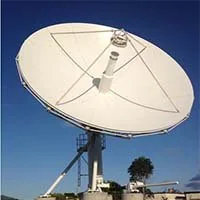
Fixed VSAT satellite antenna systems from leading manufacturers including CPI SATCOM Prodelin, Skyware Global, and Intellian. Available from 1.2m to 2.4m aperture in Ku-Band and C-Band for permanent enterprise and government installations.


How to Choose a Fixed VSAT Antenna
For a permanent site the selection sequence is fairly mechanical. Take the band and beam from your service provider, then take the required EIRP and G/T from the link budget at your latitude, elevation angle and rain zone. That gives you a minimum aperture. Next check that the reflector you are considering meets the sidelobe mask and cross-polarisation isolation the satellite operator enforces, because a dish that cannot pass line-up is no use however attractive its price. Then move to the structure: roof, ground foundation or non-penetrating mount, wind loading at the exposed height, and whether the site will ever need to move to a different orbital slot, which argues for a motorised or at least a coarse and fine adjustable mount. Finally settle the feed configuration, meaning linear or circular polarisation, transmit and receive or receive only, and the interface the BUC and LNB will bolt onto.
Sizing the Reflector: 1.2 m Through 3.8 m and Larger Earth Station Apertures
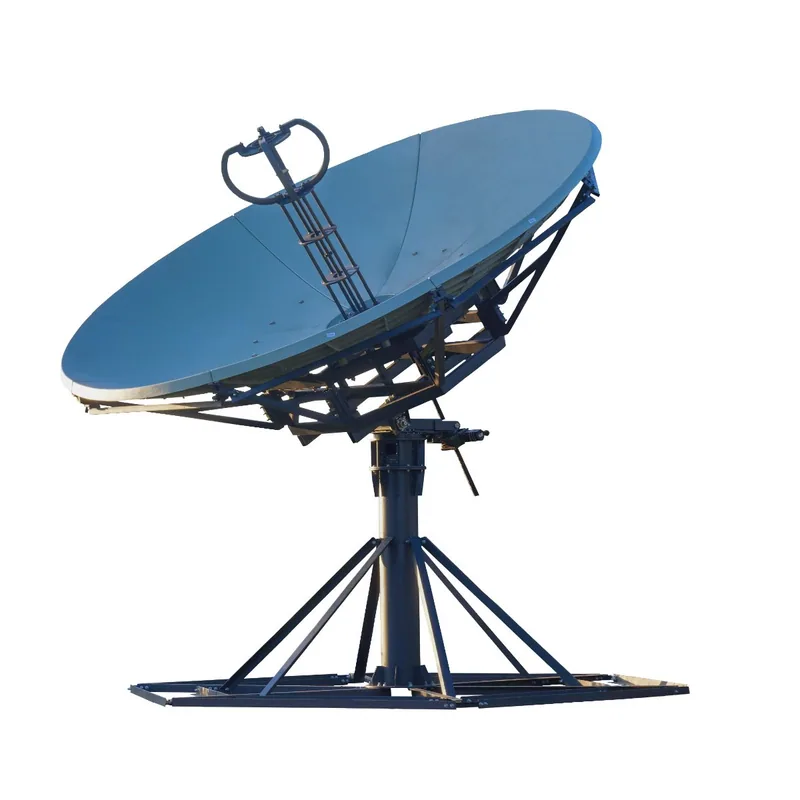
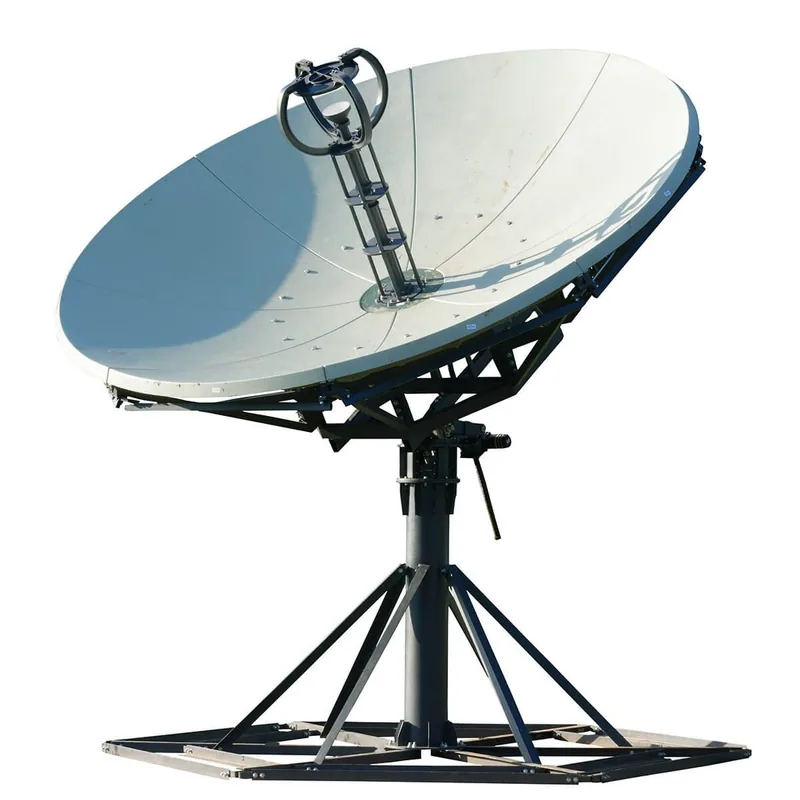
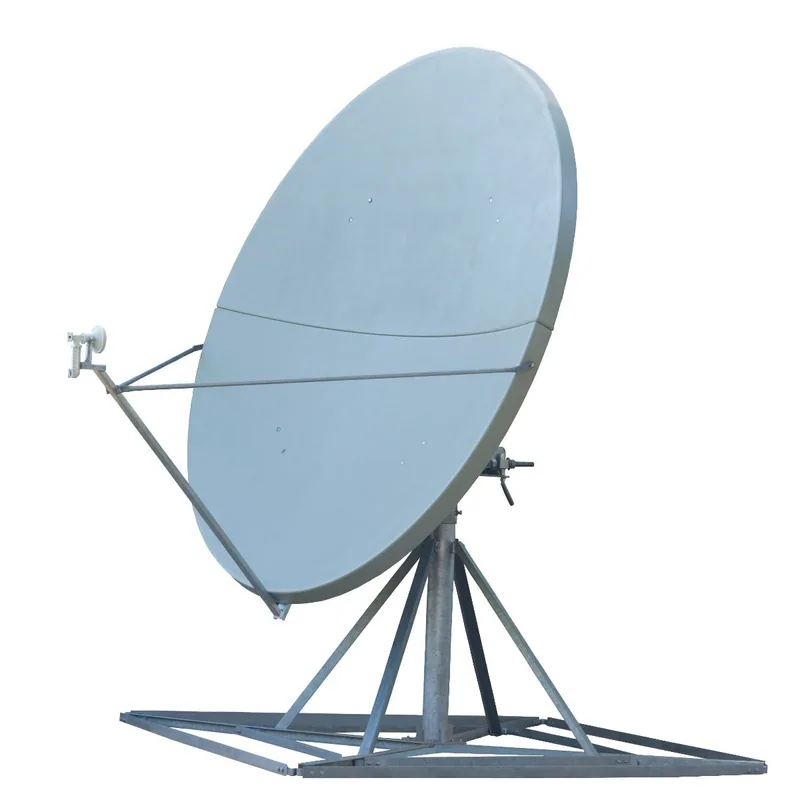
Small Ku-band reflectors of around 1.2 m suit branch offices, retail sites and modest backhaul on a strong beam, and they are the easiest to mount, ship and align. The 1.8 m class is the workhorse for enterprise and government remotes that need better rain margin or a higher committed rate. At 2.4 m you gain enough transmit gain to support demanding SCPC links and to make C-band practical, which is why so many African and maritime shore stations settle there. Apertures of 3.8 m and above move into hub, gateway and earth station territory, where the antenna is a civil engineering item with its own foundation, cable ducts and often a de-icing or drive system. As aperture rises, beamwidth narrows, so pointing tolerance, mount rigidity and surface accuracy become progressively more critical. Buy the smallest aperture that closes the link with margin, then add allowance for growth in data rate.
Parabolic Reflectors versus Flat Panel Terminals
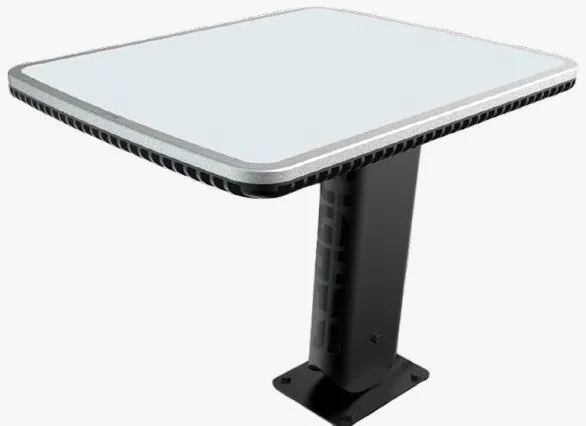
A parabolic reflector remains the highest gain per unit cost and the default for fixed sites with space and a clear line of sight. Its limitations are physical: it is bulky, it presents significant wind area, and repointing to a different satellite means physically moving the structure. Flat panel terminals trade raw aperture efficiency for a low profile, simple mounting and, in electronically steered designs, the ability to track without moving parts. That makes them attractive where planning or aesthetics forbid a dish, where roof loading is limited, or where the service uses a non-geostationary constellation that requires continuous tracking and satellite handover. The trade is usually gain, power consumption and cost per bit at a given data rate. For a static site on a geostationary beam with adequate space, a reflector is normally the better engineering answer; for constrained rooftops, vehicles and constellation services, a flat panel earns its place.
Mounts, Foundations and Installation in Gulf Conditions
Most fixed antenna failures trace back to the mount rather than the electronics. A reflector needs a base that stays rigid under the survival wind speed for the site, whether that is a concrete foundation, a structural roof penetration or a ballasted non-penetrating frame sized correctly for the exposure. Level the mount properly, because an out-of-level azimuth axis makes fine elevation adjustment frustrating and drifts alignment over time. In the Gulf, allow for thermal expansion, ultraviolet degradation of any exposed cabling, blowing sand in exposed jackscrew threads and salt-laden air at coastal and offshore sites, all of which argue for correctly rated hardware and sealed connectors. Ground the structure and fit surge protection at the cable entry. Once the mechanical work is right, commissioning is straightforward: peak on the beacon or a reference carrier, optimise cross-polarisation with the operator, and record the final azimuth, elevation and polarisation settings for future service visits.
Buying Fixed VSAT Antennas in the UAE and Wider GCC
GCCSAT supplies fixed VSAT antenna systems from the UAE across the GCC, the Levant, North and Sub-Saharan Africa and further afield, with ranges including CPI SATCOM Prodelin, Skyware Global, Intellian, Hughes Network Systems, Sumeru Microwave and Probecom Microwave. Two things are worth settling before an aperture is committed. The first is the site survey: confirm a clear line of sight to the orbital slot at the elevation your beam demands, look at what surrounding structures and reflective surfaces will do to the sidelobe environment, and establish whether the chosen mounting point can carry the load. The second is handling, because a large reflector is a freight item long before it is an RF item, so crate dimensions, vehicle access, lifting equipment and the route from the gate to the pad all need confirming. Send the band, beam, required aperture or link budget, polarisation, mount type and site conditions, and GCCSAT will specify a complete transmit and receive terminal and quote on request.
VSAT Fixed Antennas — Frequently Asked Questions
What is a fixed VSAT antenna?
A fixed VSAT antenna is a satellite dish installed permanently at one location and aimed at a single satellite, usually on an azimuth and elevation mount fastened to a foundation, roof structure or ballasted frame. It carries the feed, BUC and LNB and stays pointed once commissioned. Fixed antennas offer the best gain for the money because they do not carry stabilisation or tracking hardware, and they support the widest range of apertures.
Should I choose a 1.2 m, 1.8 m or 2.4 m VSAT antenna?
Let the link budget decide. A 1.2 m Ku-band dish suits branch sites and modest data rates on a strong beam. A 1.8 m adds gain and rain margin for enterprise and government remotes, or for sites at low elevation angles. A 2.4 m supports demanding SCPC links and makes C-band viable. Larger apertures cost more to ship, mount and align, so buy the smallest that closes the link with sensible margin for growth.
What does antenna class mean on a VSAT dish datasheet?
Manufacturers grade reflectors into performance classes that indicate which regulatory sidelobe envelope and cross-polarisation performance the antenna is built to meet. The class matters because satellite operators enforce a sidelobe mask during type approval and line-up, and a reflector in the wrong class will fail that test regardless of its boresight gain. Ask which mask the class corresponds to and confirm it against the requirements of the network you intend to join.
Is a flat panel terminal better than a parabolic dish?
Not inherently; they solve different problems. A parabolic reflector gives more gain per unit cost and is the usual choice for a static site with space and clear line of sight. A flat panel terminal is low profile, simpler to mount and, in electronically steered form, can track moving satellites without mechanical motion, which suits constrained rooftops, vehicles and non-geostationary services. Compare them on delivered gain, mounting constraints, power draw and the constellation you are joining.
What mount and foundation does a fixed VSAT antenna need?
That depends on aperture and exposure. Smaller reflectors are commonly installed on a ballasted non-penetrating roof frame or a wall or pole mount, while larger apertures need a designed concrete foundation. Size the mount against the survival wind speed for the site rather than the operational figure, level it accurately, and ground the structure with surge protection at the cable entry. In coastal and desert locations, specify hardware rated for salt and ultraviolet exposure.
Can GCCSAT supply fixed VSAT antennas complete with BUC and LNB?
Yes. GCCSAT supplies fixed VSAT antenna systems in the UAE and across the wider GCC, MENA and Africa, and can specify the reflector together with the feed, BUC, LNB and modem so the interfaces, polarisation and reference arrangements are consistent. Send the band and satellite beam, the aperture your link budget requires, polarisation, mount type and site conditions. GCCSAT quotes on request against the specification you provide.
Product Categories
- VSAT BUC
- VSAT LNB
- VSAT Antennas
- VSAT Fixed Antennas
- VSAT Flyaway Antennas
- VSAT Maritime Antennas
- VSAT KingSat Antennas
- L-Band Satellite Terminals
- Cobham BGAN Terminals
- Thuraya L-Band Terminals
- VSAT Satellite Modems
- Satellite Phones
- Teltonika Products
- Sangfor Firewall & SD-WAN
- Thuraya Accessories
- Excelerate Hybrid Connectivity
- Peplink Products
- VSAT RF Components
- VSAT Hub & Test Equipment
- Remote Site Power Systems
Need a Quote?
Contact our sales team for pricing, availability, and shipping to your location.
Request QuoteWhatsApp