
- Home
- Industries
Industries
Enabling transformation and progress across a wide range of industries globally, fostering innovation and growth in every sector.
Explore all → - Solutions
Connectivity
Connecting industries worldwide with reliable satellite internet solutions, driving innovation, efficiency, and growth across all sectors globally.
Explore all → - Services
Professional VSAT & IT Services
Delivering expert VSAT and IT solutions for seamless connectivity, reliability, and performance across all sectors.
Explore all → - Products
Superior Connectivity, Trusted Solutions
Offering premium Satcom products that guarantee reliable connectivity and boost innovation across industries.
Explore all → - Coverage
WorldWide Coverage
Delivering tailored satellite services that enhance connectivity, foster innovation, and support growth in every industry.
Explore all → - About
- Blog
- Contact
VSAT Flyaway Antennas
VSAT Flyaway Antennas
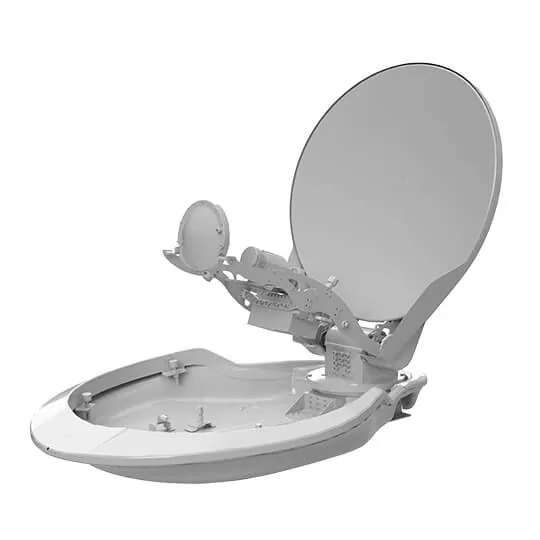
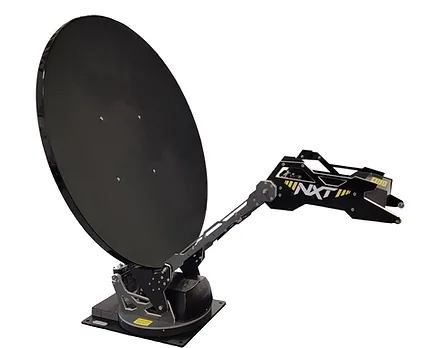
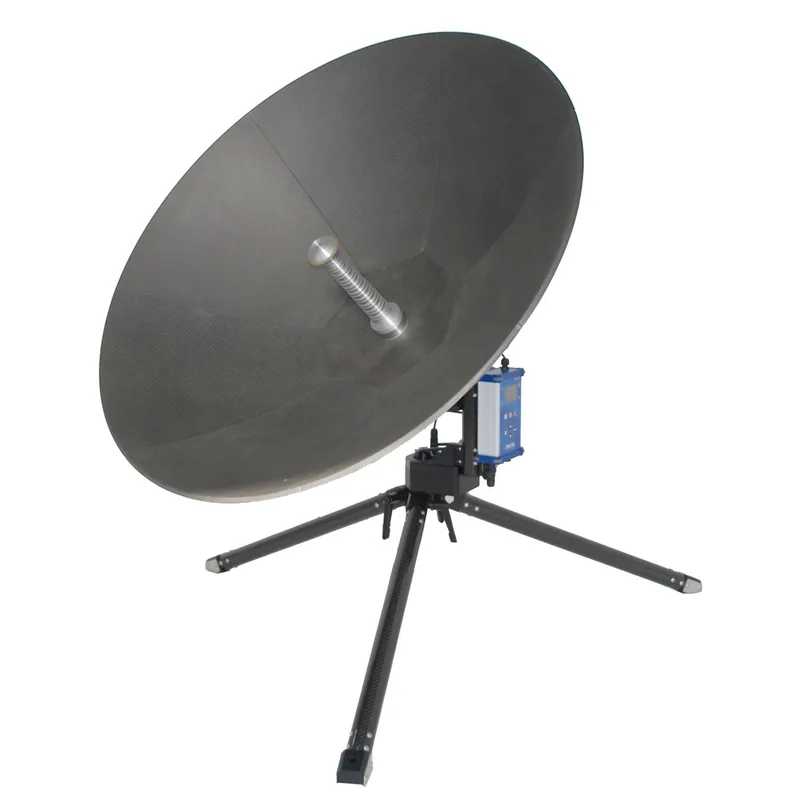
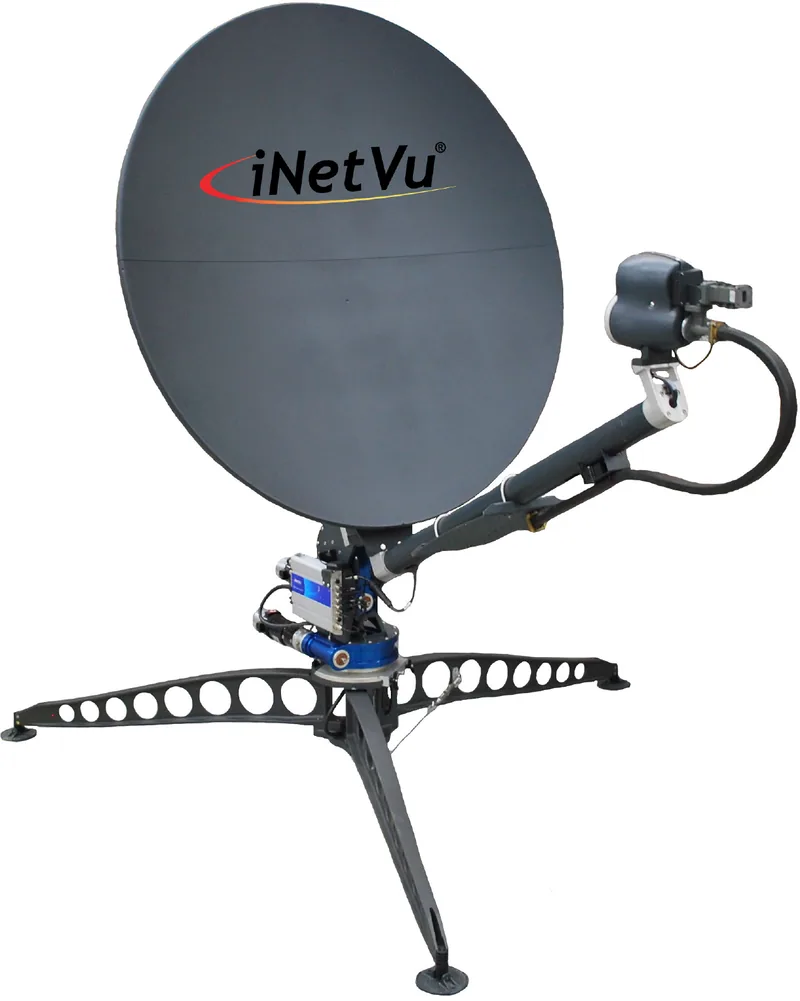
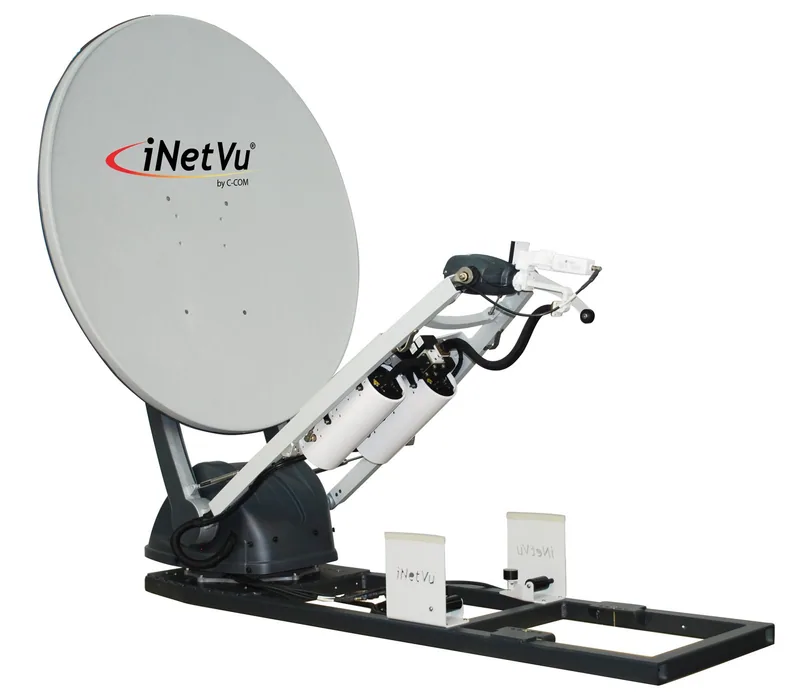
Rapidly deployable flyaway and drive-away VSAT antennas for emergency, military, news gathering, and mobile satellite operations. Includes iNetVu drive-away systems, Kymeta electronically steered antennas, and Hughes/OneWeb LEO user terminals.



How to Choose a VSAT Flyaway Antenna
Start with the mission profile rather than with the dish. Ask how the system travels, who assembles it, and how quickly the link has to come up. A two-person news crew crossing an airline check-in desk has very different constraints from a convoy that can carry a drive-away system on a vehicle roof. Once the transport method is fixed, size the aperture against the satellite and service you will actually use. A smaller reflector inside a strong Ku-band spot beam can easily outperform a larger dish pointed at a weak edge-of-coverage footprint, so obtain the operator link budget before you choose. Then confirm band and polarisation, the BUC power your return carrier needs, and the prime power available on site, because generator and battery capacity often set the practical ceiling on transmit power. Finally, decide who commissions the terminal, how the auto-acquisition controller is configured, and whether local staff can be trained to point the antenna unaided.
Manpack, Flyaway and Drive-Away Systems Compared
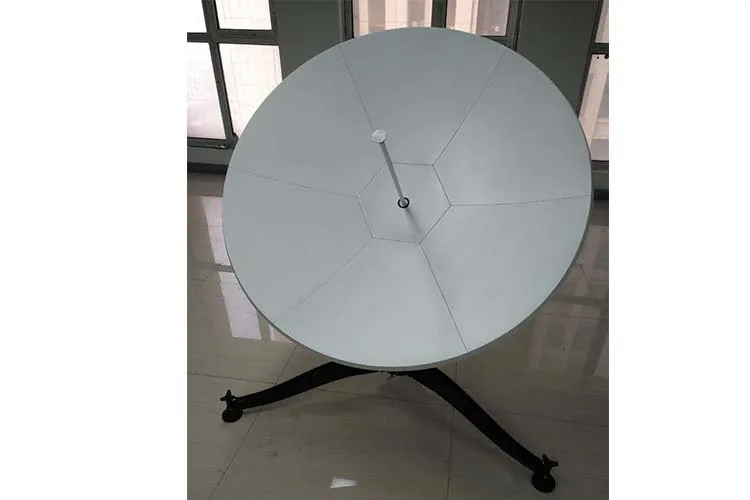
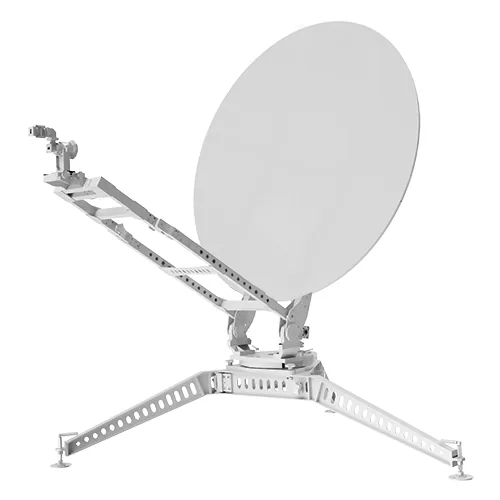
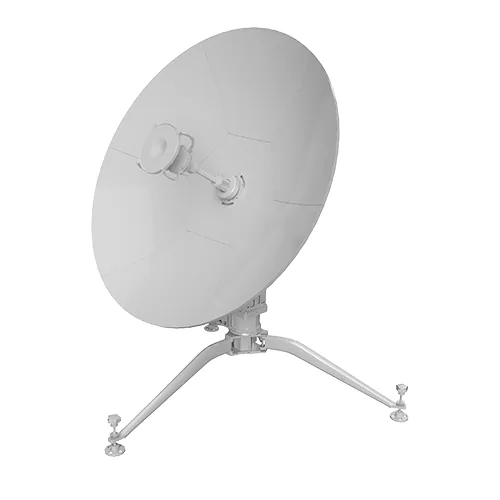
The three portable formats solve different problems. A manpack antenna breaks into segmented petals and packs into rucksacks or small cases, typically in the 60cm to 130cm class, so a small team can carry it on foot and build it without lifting gear; it trades transmit power and wind tolerance for portability. A flyaway is the classic case-packed system, commonly 74cm to 1.8m, built around ruggedised transit cases sized to survive airline handling and to be assembled on a hard standing in minutes. A drive-away is mounted permanently on a vehicle roof, stows flat for transit and deploys under motor control, which removes assembly error entirely and suits repeated moves between sites. As a rule of thumb, choose manpack when the last mile is on foot, flyaway when the system flies commercially, and drive-away when a vehicle is always available and setup time matters more than mass.
Key Specifications to Compare on a Portable VSAT Datasheet
Transmit and receive performance, quoted as EIRP and G/T at the operating frequency, decides whether the terminal closes the link at all, so compare those figures at the band you will use rather than at the datasheet best case. Pointing accuracy and tracking resolution matter more as aperture grows, because a small reflector has a wide, forgiving beam while a 1.8m Ku-band dish does not. Read the operational and survival wind ratings separately; many sites lose service long before the antenna is at any risk. Check packed dimensions and weight per case against airline and helicopter limits, the ingress protection and operating temperature range for desert or coastal work, and the input voltage range and peak current drawn while the motors drive. Finally, confirm what the antenna control unit offers: GPS and compass aided acquisition, stored satellite profiles, remote control over IP, and the cross-polarisation routines the satellite operator will ask for during line-up.
Parabolic GEO, Flat Panel and LEO Portable Terminals
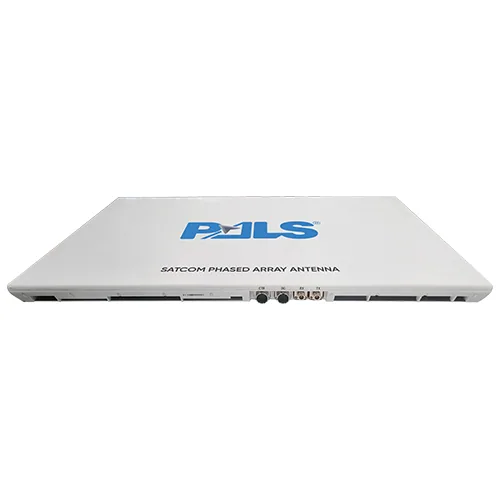
Portable connectivity now splits three ways. A parabolic GEO flyaway still offers the most capacity for the hardware involved, gives you a free choice of operators and transponder plans, and can be re-pointed at any visible satellite, but it needs assembly, clear line of sight to a fixed orbital slot and careful pointing. Electronically steered flat panels such as the Kymeta terminals have no moving reflector, deploy in minutes and tolerate motion, which suits vehicles on the move and constrained rooftops, although aperture efficiency and available capacity differ from a like-sized dish. LEO user terminals of the OneWeb class track fast-moving spacecraft and deliver noticeably lower latency, which changes how interactive applications and VPNs behave, at the cost of subscription-based capacity and constellation coverage boundaries. Many deployments now carry a GEO terminal and a LEO terminal together and route traffic by application rather than choosing one.
Buying Flyaway VSAT Antennas in the UAE and Wider GCC
Regional procurement usually fails on paperwork rather than on hardware. Satellite terminals are subject to national type approval and operating licences in most GCC and African markets, and approval attaches to the terminal and the service together, so agree early with your bandwidth provider which teleport, satellite and terminal combination will be registered. Plan freight as carefully as the specification: transit cases are heavy, lithium batteries in accessory kits are regulated as dangerous goods, and clearing radio transmitting equipment through customs can require an import permit. GCCSAT supplies flyaway, manpack and drive-away VSAT antennas from the UAE into MENA, Africa and further afield, either as a bare antenna and mount or as a configured kit with modem, BUC, LNB, cabling and cases. Send your satellite, band, required carrier size, deployment format and destination country, and the system will be quoted on request.
VSAT Flyaway Antennas — Frequently Asked Questions
What is a flyaway VSAT antenna?
A flyaway VSAT antenna is a satellite terminal that packs into transit cases, travels with an operator and is assembled on site to create a two-way satellite link. The reflector is normally segmented, the mount folds, and the electronics, cabling and modem travel in the same case set. Flyaway systems are used for disaster response, broadcast contribution, military and government communications, oil and gas mobilisation, and any site that needs connectivity before terrestrial infrastructure exists.
What is the difference between a flyaway antenna and a drive-away antenna?
A flyaway is carried in cases and assembled by hand, while a drive-away is mounted on a vehicle roof and deploys automatically under motor control. Flyaway systems travel by air and reach sites a vehicle cannot, but they take longer to build and depend on the operator assembling them correctly. Drive-away systems remove assembly error and acquire the satellite quickly, at the cost of needing a suitable vehicle and a permanent roof installation.
How long does it take to deploy a flyaway antenna and acquire the satellite?
Deployment time depends on aperture and crew rather than on brand. A manpack or 74cm class flyaway is typically built by two people in a short site visit, while a 1.8m system takes longer and benefits from a third pair of hands. Acquisition itself is fast once the antenna control unit has GPS and heading, since modern controllers sweep, peak and confirm the satellite automatically. Allow extra time for the cross-polarisation line-up call with the satellite operator.
Can a flyaway VSAT antenna be carried as airline baggage?
Most flyaway systems are designed around airline carriage, with cases sized to fit standard hold dimensions and each case kept to a manageable single-piece weight. Whether a set travels as checked baggage or as air cargo depends on the airline, the route and the number of cases. Lithium batteries, and on some routes the BUC, are treated as regulated items. Confirm packed weights and dimensions against your carrier's rules before you commit to a configuration.
What flyaway antenna size do I need: 74cm, 98cm, 1.2m or 1.8m?
Size follows the link budget, not the application label. Ask the satellite operator for EIRP and G/T at your location on the beam you will use, then work backwards from the data rate and availability you require. Larger apertures buy margin against rain fade and allow a smaller BUC for the same carrier, while smaller reflectors win on portability and setup time. Inside a strong Ku-band spot beam, a 74cm or 98cm antenna often carries useful capacity.
Can GCCSAT supply flyaway VSAT systems across MENA and Africa?
Yes. GCCSAT supplies portable and vehicle-mounted VSAT antennas from the UAE into the wider GCC, North and Sub-Saharan Africa and other international destinations, either as bare antennas or as complete configured kits with modem, BUC, LNB, GPS and transit cases. Tell us the satellite and band, the carrier size, the deployment format and the destination country so that type approval and freight can be planned. Availability is confirmed and pricing provided by quotation on request.
Product Categories
- VSAT BUC
- VSAT LNB
- VSAT Antennas
- VSAT Fixed Antennas
- VSAT Flyaway Antennas
- VSAT Maritime Antennas
- VSAT KingSat Antennas
- L-Band Satellite Terminals
- Cobham BGAN Terminals
- Thuraya L-Band Terminals
- VSAT Satellite Modems
- Satellite Phones
- Teltonika Products
- Sangfor Firewall & SD-WAN
- Thuraya Accessories
- Excelerate Hybrid Connectivity
- Peplink Products
- VSAT RF Components
- VSAT Hub & Test Equipment
- Remote Site Power Systems
Need a Quote?
Contact our sales team for pricing, availability, and shipping to your location.
Request QuoteWhatsApp