
- Home
- Industries
Industries
Enabling transformation and progress across a wide range of industries globally, fostering innovation and growth in every sector.
Explore all → - Solutions
Connectivity
Connecting industries worldwide with reliable satellite internet solutions, driving innovation, efficiency, and growth across all sectors globally.
Explore all → - Services
Professional VSAT & IT Services
Delivering expert VSAT and IT solutions for seamless connectivity, reliability, and performance across all sectors.
Explore all → - Products
Superior Connectivity, Trusted Solutions
Offering premium Satcom products that guarantee reliable connectivity and boost innovation across industries.
Explore all → - Coverage
WorldWide Coverage
Delivering tailored satellite services that enhance connectivity, foster innovation, and support growth in every industry.
Explore all → - About
- Blog
- Contact
Nisshinbo NJT8302 3W Ku-Band BUC
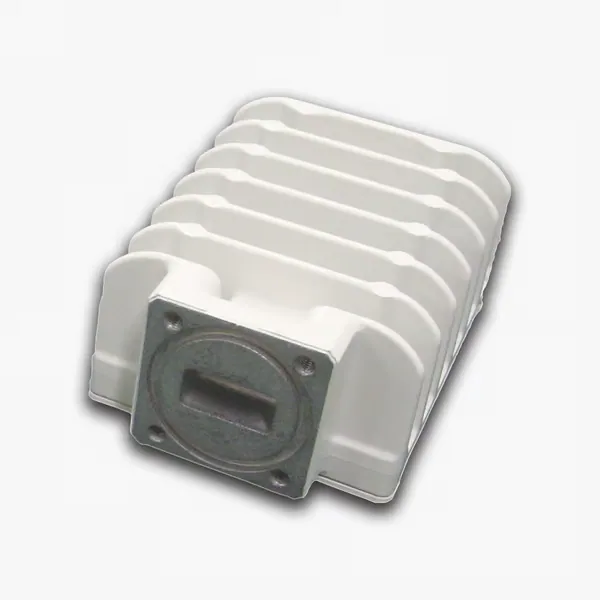
Nisshinbo NJT8302 3W Ku-Band BUC
The Nisshinbo NJT8302 is a 3 W Ku-band block upconverter designed for terminals where size and power draw are the governing constraints. It converts a 950 to 1,450 MHz L-band IF to the 14.0 to 14.5 GHz uplink with a 13.05 GHz local oscillator, delivering +34 dBm minimum P1dB over temperature at -26 dBc ACPR. Consuming only 18 W and weighing 350 g, the NJT8302 is a practical transmit stage for portable, battery-powered and small-aperture Ku-band VSAT installations.
Key Features
- Very light 350 g housing ideal for portable and man-portable terminal builds
- Only 18 W power consumption for battery and solar-backed installations
- +34 dBm minimum P1dB output held over the operating temperature range
- Linearity of -26 dBc ACPR specified at +34 dBm output level
- Complete 14.0 to 14.5 GHz Ku-band uplink coverage from L-band IF input
- Fixed 13.05 GHz local oscillator simplifies carrier frequency planning
- RoHS compliant construction for international supply and tender compliance
Technical Specifications
Typical Applications
- Battery and solar-powered remote VSAT sites
- Backpack and rapid-deploy portable terminals
- Small-aperture enterprise and branch office remotes
- Remote sensing, SCADA and telemetry backhaul
- Humanitarian and disaster response communications kits
- Small vessel and inland maritime satellite antennas
When a 3 W Ku-Band BUC Is the Right Choice
The smallest BUC classes exist because many VSAT remotes are power-limited long before they are RF-limited. A site running on a solar panel and battery, or a terminal carried in a backpack, has a hard ceiling on what it can supply to the outdoor unit. The NJT8302 answers that constraint with 18 W consumption and 350 g of mass while still producing +34 dBm minimum P1dB over temperature. On networks designed around efficient waveforms and adaptive coding, that is often sufficient for the return link from a small antenna. The decision should always come from the link budget rather than instinct: if the required EIRP is achievable with a 3 W unit, choosing a larger amplifier only adds heat, weight and DC load without improving throughput on that carrier.
Power Budgeting Around the NJT8302
Designing an off-grid VSAT site starts with a daily energy figure, not a peak wattage. The 18 W consumption of the NJT8302 is only part of the picture, because the modem, router, tracking electronics and any environmental equipment all draw from the same battery. What a low-consumption BUC buys you is headroom: smaller panels, a smaller battery bank, or more autonomy through cloudy periods with the same hardware. It also reduces waste heat inside sealed enclosures, which matters in Gulf summers where internal temperatures climb rapidly. When you build the budget, allow for the fact that transmit power draw varies with drive level and duty cycle, and size the supply against realistic worst-case operation rather than an average day.
Integration and Commissioning Notes for the NJT8302
The NJT8302 uses the conventional Ku-band plan: 950 to 1,450 MHz in, 14.0 to 14.5 GHz out, with a 13.05 GHz local oscillator. Enter that LO value into the modem so the terminal can display and command absolute RF frequencies, then set transmit level using a spectrum analyser at line-up rather than relying on nominal figures. Because the unit is small and light it can be fitted at the feed of compact antennas with minimal bracing, but the waveguide interface still deserves care. Keep the run short, torque the flange evenly, and weatherproof the joint and all outdoor connectors thoroughly. Confirm reference and DC feed arrangements against the NJT8302 datasheet before the interfacility cable is assembled and terminated.
Sourcing Nisshinbo Ku-Band BUCs from GCCSAT in the UAE
GCCSAT supplies Nisshinbo Ku-band BUCs including the NJT8302 from the UAE to customers across the Emirates, Saudi Arabia, Oman, Qatar, Kuwait, Bahrain and further afield in the Middle East and Africa. Beyond the hardware itself, our team helps confirm that the chosen BUC class matches the link budget, that modem drive level and BUC gain are compatible, and that the antenna, LNB and cabling form a coherent terminal. We provide bench testing, integration support, commissioning assistance and spares planning for deployed fleets. Pricing is quoted on request. Tell us the antenna aperture, target service and deployment environment, and we will return a configuration recommendation with a formal quotation.
Frequently Asked Questions
What is the output power of the NJT8302 Ku-band BUC?
Nisshinbo specifies +34 dBm minimum at the 1 dB compression point, held over temperature, which corresponds to the 3 W class. ACPR is quoted at -26 dBc at +34 dBm output. In service you will normally operate below P1dB to preserve linearity, particularly on multi-carrier links, so treat that figure as a ceiling rather than a nominal working point.
How much DC power does the NJT8302 consume?
Power consumption is 18 W, one of the lowest in the Ku-band BUC range. That makes the NJT8302 well suited to solar and battery-powered remote sites, portable kits and vehicles where every watt counts. Low consumption also means less heat inside sealed outdoor enclosures, which is an advantage in high ambient temperatures across the Gulf.
What IF and LO does the NJT8302 use?
The NJT8302 accepts a 950 to 1,450 MHz L-band IF and uses a fixed 13.05 GHz local oscillator to produce output across 14.0 to 14.5 GHz. Enter the LO value into your modem so it can calculate and display absolute uplink frequencies. The relationship is linear across the band, so carrier planning is simple arithmetic.
Is the NJT8302 suitable for portable satellite terminals?
Yes. At 350 g and 18 W it is one of the easier BUCs to accommodate in a flyaway case or backpack terminal, where both mass and DC supply are strictly limited. Whether the 3 W class provides enough EIRP depends on antenna gain and the service required, so confirm with a link budget for your specific network.
Can GCCSAT quote the NJT8302 for a multi-site rollout?
Yes. GCCSAT regularly supports multi-site VSAT rollouts across the GCC and wider region, supplying BUCs alongside antennas, LNBs, modems and cabling with consistent configurations across the fleet. We can also advise on spares holdings and commissioning workflow. Contact us with site counts and technical requirements, and pricing will be quoted on request.
Enquire About Nisshinbo NJT8302 3W Ku-Band BUC
Our sales team will provide pricing, availability, and shipping details.
Request a QuoteWhatsAppMore VSAT BUC
- Amplus AM-9335 Series 5W Palapa C-Band BUC
- Amplus Series AM-9335 10W Full C-Band BUC
- iDirect 3W Universal BUC Ku-Band
- iDirect 4W Universal BUC Ku-Band
- NJRC NJT8302UF 3W Universal BUC Ku-Band
- NJRC NJT8306UF 6W Universal BUC Ku-Band
- NJRC NJT8318UF 8W Universal BUC Ku-Band
- NJRC NJT8319UF 16W Universal BUC Ku-Band
- NJRC NJT8370UF 25W GaN Universal BUC Ku-Band
- Terrasat 4W to 50W iBUC 2 Ku-Band
- Terrasat 5W to 80W iBUC 2 C-Band
- XMW M-T2940 / M-T29E40 / M-T3040 Ka-Band 40W Mobility BUC
- XMW M-TT2930 Ka Tri-Band 30W BUC
- XMW M-T2920 / M-T29E20 / M-T3020 Ka-Band 20W Mobility BUC
- XMW M-T2916 / M-T29E16 / M-T3016 Ka-Band 16W Mobility BUC
- XMW M-TD3010 Ka Dual-Band 10W Mobility BUC
- XMW M-T2908 / M-T29E08 / M-T3008 Ka-Band 8W Mobility BUC
- XMW T2705 / T2805 Ka-Band 5W Fanless BUC
- XMW TQ3001 Ka-Band Quad-Band 1W BUC
- XMW T13100 / T14100 Ku-Band 100W GaN BUC
- XMW T1380 / T1480 Ku-Band 80W GaN BUC
- XMW T1360 / T1460 Ku-Band 60W BUC
- XMW T1350 / T1450 Ku-Band 50W BUC
- XMW T1240 Ku-Band 40W BUC
- XMW M-T1225 Ku-Band 25W Mobility BUC
- XMW M-T1216 Ku-Band 16W Mobility BUC
- XMW T1208 Ku-Band 8W BUC
- XMW T1306-A Ku-Band 6W BUC
- XMW T1304-A Ku-Band 4W BUC
- XMW T1303-A Ku-Band 3W BUC
- XMW T Series C-Band 100W BUC (T50100 / T51100 / T52100 / T53100)
- XMW C-Band 50W BUC (T5050 / T5150 / T5250 / T5350 / T5450 / T6050)
- XMW C-Band 40W BUC (Block Upconverter)
- XMW M-T5030 Series C-Band 30W Mobility BUC
- XMW M-T5020 Series C-Band 20W Mobility BUC
- XMW T5010 Series C-Band 10W BUC
- Terrasat IBUC G 200W & 400W C-Band GaN BUC
- Terrasat IBUC R 100W-400W C-Band GaAs BUC/SSPA
- Terrasat IBUC G 150W-200W Ku-Band GaN BUC
- Terrasat IBUC R Ku-Band BUC 60W to 200W
- Teledyne Paradise SSPA C-Band and Ku-Band (Indoor and Outdoor)
- Nisshinbo NJT8316L 4W Lower Ku-Band BUC
- Nisshinbo NJT8315L 2W Lower Ku-Band BUC
- Nisshinbo NJT8371 40W Ku-Band BUC
- Nisshinbo NJT8370 25W Ku-Band BUC
- Nisshinbo NJT8319 16W Ku-Band BUC
- Nisshinbo NJT8318 8W Ku-Band BUC
- Nisshinbo NJT8376 6W Ku-Band BUC
- Nisshinbo NJT8304 4W Ku-Band BUC
- Nisshinbo NJT5762 10W C-Band BUC
- Nisshinbo NJT5669 5W C-Band BUC
- Nisshinbo NJT8102 2W C-Band BUC
- Nexgenwave Low Ku-Band G Series BUC 2W-80W Block Upconverter
- Amplus 3W-400W C-Band Block Upconverter (BUC)
- Amplus 4W-200W Ku-Band Block Upconverter (BUC)
- Actox 2W-250W Low Ku-Band BUC
- Actox 2W-400W C-Band Block Upconverter (BUC)
- Actox 2W-300W Ku-Band Block Upconverter (BUC)
Product Categories
- VSAT BUC
- VSAT LNB
- VSAT Antennas
- VSAT Fixed Antennas
- VSAT Flyaway Antennas
- VSAT Maritime Antennas
- VSAT KingSat Antennas
- L-Band Satellite Terminals
- Cobham BGAN Terminals
- Thuraya L-Band Terminals
- VSAT Satellite Modems
- Satellite Phones
- Teltonika Products
- Sangfor Firewall & SD-WAN
- Thuraya Accessories
- Excelerate Hybrid Connectivity
- Peplink Products
- VSAT RF Components
- VSAT Hub & Test Equipment
- Remote Site Power Systems