
- Home
- Industries
Industries
Enabling transformation and progress across a wide range of industries globally, fostering innovation and growth in every sector.
Explore all → - Solutions
Connectivity
Connecting industries worldwide with reliable satellite internet solutions, driving innovation, efficiency, and growth across all sectors globally.
Explore all → - Services
Professional VSAT & IT Services
Delivering expert VSAT and IT solutions for seamless connectivity, reliability, and performance across all sectors.
Explore all → - Products
Superior Connectivity, Trusted Solutions
Offering premium Satcom products that guarantee reliable connectivity and boost innovation across industries.
Explore all → - Coverage
WorldWide Coverage
Delivering tailored satellite services that enhance connectivity, foster innovation, and support growth in every industry.
Explore all → - About
- Blog
- Contact
VSAT Hub & Test Equipment
VSAT Hub & Test Equipment
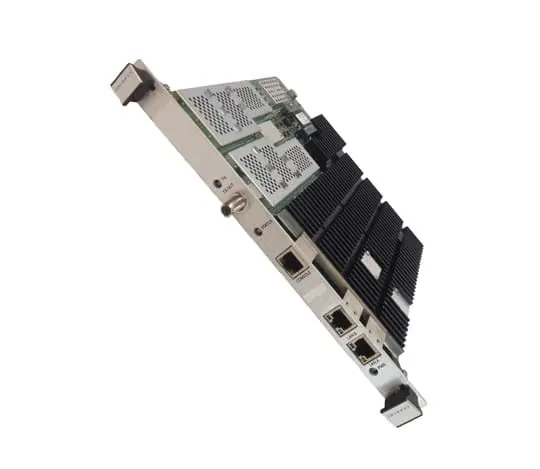
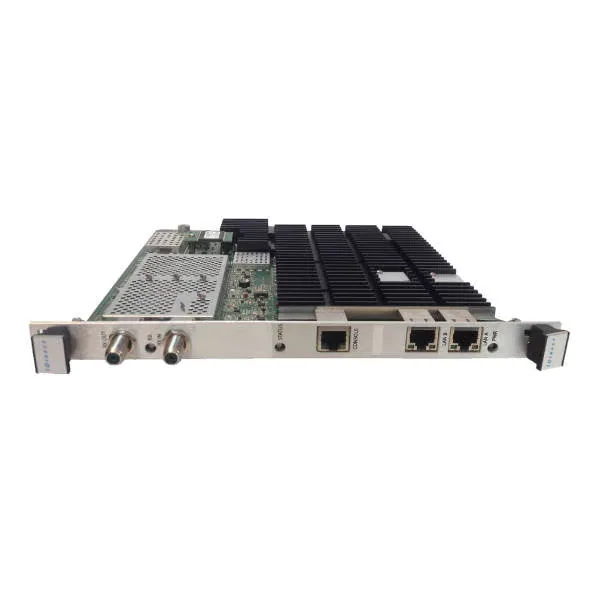
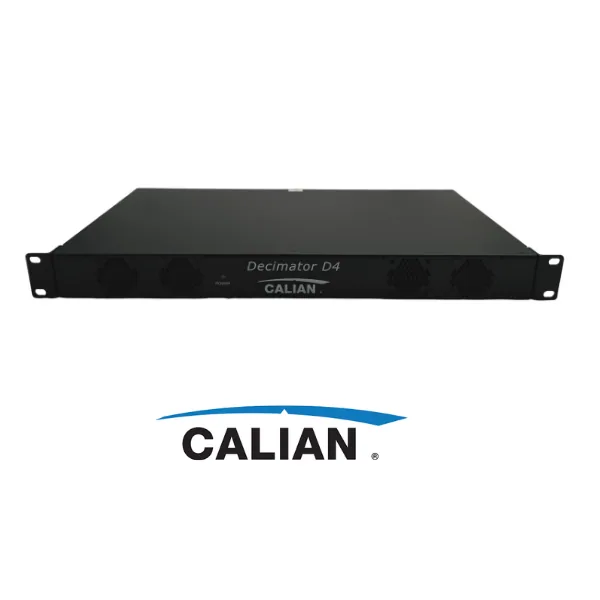
Teleport-side hardware: universal transmit and receive line cards that build out an ST Engineering iDirect hub, and RF spectrum and signal analysers used to monitor carriers, verify link budgets and troubleshoot interference across a satellite network.
How to Choose Hub Line Cards and Test Equipment
Start with the network you are building rather than the slot you have free. Count the outbound carriers you need to broadcast and the return carriers you need to demodulate, because those two numbers decide the mix of transmit and receive line cards long before anything else. Check the chassis: which generation it is, how many slots remain, and what the power and cooling budget allows once the new cards are fitted. Confirm software compatibility, since hub line cards are tied to a network management release and mixing generations usually forces an upgrade window across the whole platform. Then decide on resilience. A card carrying your only outbound carrier is a single point of failure for every remote in the network, so many operators fit a spare in a protected configuration. Finally, budget for the test side. Commissioning carriers, verifying link budgets and chasing interference all require spectrum measurement at the hub, not only at the remote terminal.
Universal Transmit and Receive Line Cards Explained
In an ST Engineering iDirect hub, the outbound and the return are handled by different cards. A universal transmit line card generates the DVB-S2X outbound carrier that every remote in the network listens to, applying adaptive coding and modulation so each site receives the highest modulation and coding scheme its conditions allow. A universal receive line card demodulates the return traffic from those remotes, which in most networks is a shared multi-frequency TDMA channel where bursts from many terminals arrive in assigned timeslots. Because the outbound is one carrier to many and the return is many bursts to one, the two card types scale differently. Receive capacity generally grows with terminal count and upstream demand, while the outbound is sized by the broadcast bandwidth and the service plan. Universal here refers to the range of carrier types and network configurations one card family covers, which keeps the number of distinct spares a teleport must hold to a minimum.
Line Card and Analyser Specifications to Compare
For line cards, the numbers that decide the purchase are the aggregate symbol rate or throughput the card supports, how many carriers it can handle at once, and which modulation and coding schemes it covers, since higher order DVB-S2X modcods only help if both ends support them. Check the IF or L-band interface and the reference clock arrangement so the card matches your hub RF distribution. Confirm the network management version required, and whether capacity is licensed separately from the hardware. For a teleport spectrum analyser, the useful specifications are frequency coverage against your IF and L-band plan, resolution bandwidth fine enough to resolve a narrow carrier and its shoulders, dynamic range and displayed noise floor, and remote operation over IP. Rack mounting and the ability to leave the instrument permanently connected to a monitor port matter far more in a teleport than portability or a large front panel display.
RF Monitoring, Carrier Verification and Interference Hunting
A hub without permanent spectrum monitoring is diagnosed by guesswork. A rack-mounted analyser connected to a monitor port on the RF distribution lets you see the outbound carrier shape, confirm the return channel is clean, and compare measured levels against the values in your link budget. That single view separates three failures that look identical from the network management system: a remote transmitting off frequency or at the wrong power, an adjacent carrier encroaching, and an external interferer. Baseline the spectrum while the network is healthy and keep the traces, because interference is far easier to identify against a known good reference. Remote access matters just as much. Pulling a trace from the teleport without dispatching an engineer turns a multi-hour site visit into a short check, and it lets a support team compare what the hub is actually transmitting with what a remote reports receiving during a fault call.
Hub Expansion, Commissioning and Supply in the UAE and Region
Hub work is scheduled work. Adding line cards means a maintenance window, a configuration change on the network management system, and often a software alignment across the platform, so plan the change with the teleport operator rather than treating it as a simple hardware swap. Commissioning a new carrier then involves line-up with the satellite operator, verification of transmit power and spectral shape, and a check that adaptive coding behaves as expected under fade. Budget engineering time for that, not just for delivery. For teleports in the UAE and across the region, the practical constraints are planning delivery around maintenance windows and holding the right spares on the shelf, given how disruptive a failed card is to every remote in the network. GCCSAT supplies iDirect universal transmit and receive line cards and teleport RF test equipment across the UAE and the wider GCC, and quotes on request against your chassis, software version and carrier plan.
VSAT Hub & Test Equipment — Frequently Asked Questions
What is a VSAT hub line card?
A hub line card is the modem hardware inside a teleport chassis that creates or receives the carriers a satellite network runs on. Transmit cards generate the outbound carrier broadcast to every remote terminal; receive cards demodulate the return bursts coming back from those terminals. The cards slot into a hub chassis that supplies power, timing and network connectivity, and they are configured from the network management system rather than individually. Network capacity is scaled by adding cards or by moving to higher capacity ones.
What is the difference between the ULC-T and the ULC-R?
The ULC-T is a universal transmit line card and the ULC-R is a universal receive line card. The transmit card produces the outbound DVB-S2X carrier that all remotes in the network receive, so a network needs at least one. The receive card demodulates return channel traffic from those remotes, and networks typically need more receive capacity as terminal counts and upstream demand grow. They are ordered separately, and the ratio between them follows your traffic profile rather than any fixed rule.
How many hub line cards does my network need?
It depends on your carrier plan, not on terminal count alone. Each outbound carrier needs transmit capacity and each return carrier group needs receive capacity, so start from the bandwidth you have leased and how you have divided it. Networks with heavy upstream traffic, many small remotes or several beams need proportionally more receive capacity. Add at least one spare card where a network-wide outage would be unacceptable, since a single transmit failure takes every remote offline until it is replaced.
Why do teleports use a rack-mounted spectrum analyser instead of a portable one?
Because monitoring is continuous rather than occasional. A rack-mounted analyser stays connected to a monitor port in the RF distribution chain and can be polled over IP, so an operator anywhere can pull a trace during a fault call without dispatching anyone. Portable analysers remain useful for antenna work and site visits, but they are not connected at the moment a carrier degrades in the middle of the night. Permanent instruments also let you keep baseline traces, which is what makes interference identifiable.
Can I mix hub line cards from different generations in the same chassis?
Only within the limits set by the chassis and the network management software release. Hub hardware, chassis backplane and management software are tightly coupled, so mixing generations often forces an upgrade that affects the whole platform and every remote configured on it. Before ordering, confirm the chassis model, the current software release and the supported upgrade path with your network operator. That check costs very little compared with discovering an incompatibility during a maintenance window.
Can GCCSAT supply iDirect hub equipment and test gear in the UAE and Africa?
Yes. GCCSAT supplies ST Engineering iDirect universal transmit and receive line cards and teleport RF spectrum and signal analysers across the UAE, the wider GCC, MENA and Africa. To quote accurately, provide the hub chassis model, the current network management software release, the carrier plan you are building towards and the number of cards required, plus the IF or L-band frequency range the analyser must cover. All items in this category are quoted on request.
Product Categories
- VSAT BUC
- VSAT LNB
- VSAT Antennas
- VSAT Fixed Antennas
- VSAT Flyaway Antennas
- VSAT Maritime Antennas
- VSAT KingSat Antennas
- L-Band Satellite Terminals
- Cobham BGAN Terminals
- Thuraya L-Band Terminals
- VSAT Satellite Modems
- Satellite Phones
- Teltonika Products
- Sangfor Firewall & SD-WAN
- Thuraya Accessories
- Excelerate Hybrid Connectivity
- Peplink Products
- VSAT RF Components
- VSAT Hub & Test Equipment
- Remote Site Power Systems
Need a Quote?
Contact our sales team for pricing, availability, and shipping to your location.
Request QuoteWhatsApp