
- Home
- Industries
Industries
Enabling transformation and progress across a wide range of industries globally, fostering innovation and growth in every sector.
Explore all → - Solutions
Connectivity
Connecting industries worldwide with reliable satellite internet solutions, driving innovation, efficiency, and growth across all sectors globally.
Explore all → - Services
Professional VSAT & IT Services
Delivering expert VSAT and IT solutions for seamless connectivity, reliability, and performance across all sectors.
Explore all → - Products
Superior Connectivity, Trusted Solutions
Offering premium Satcom products that guarantee reliable connectivity and boost innovation across industries.
Explore all → - Coverage
WorldWide Coverage
Delivering tailored satellite services that enhance connectivity, foster innovation, and support growth in every industry.
Explore all → - About
- Blog
- Contact
XMW M-T1225 Ku-Band 25W Mobility BUC
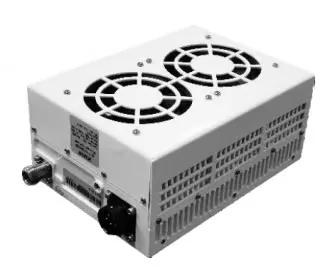
XMW M-T1225 Ku-Band 25W Mobility BUC
The XMW M-T1225 is a Ku-band 25 W block upconverter engineered for mobility applications. It converts a 950-1450 MHz L-band input to a 12.75-13.25 GHz output using an 11.80 GHz local oscillator, delivering +44 dBm of transmit power with 70 dB of gain and plus or minus 15 dB of adjustment in 1 dB steps. Phase noise is -73 dBc at 1 kHz and the unit runs from +48 VDC at 220 W. The M-T1225 targets vehicle-mount, maritime and transportable Ku-band terminals where power and size are constrained.
Key Features
- Engineered for mobility, with 25 W (+44 dBm) Ku-band output in a compact package
- Covers 12.75-13.25 GHz output from an 11.80 GHz local oscillator
- 950-1450 MHz L-band input interfaces directly with standard satellite modems
- 70 dB gain with +/-15 dB adjustment in 1 dB steps for accurate carrier levelling
- -73 dBc phase noise at 1 kHz for stable modem lock on moving platforms
- Modest +48 VDC, 220 W draw suits vehicle, vessel and generator power budgets
Technical Specifications
Typical Applications
- Communications-on-the-move vehicles and command posts
- Maritime VSAT on stabilised marine antennas
- Flyaway and manpack transportable terminals
- Broadcast news gathering and event production vehicles
- Emergency response and disaster recovery deployments
- Government, security and field operations connectivity
What Makes a Ku-Band BUC a Mobility BUC
Mobility terminals ask different things of a block upconverter than fixed earth stations do. The unit lives on a moving platform, so it must survive vibration and shock, tolerate a wide range of ambient conditions and fit into a stabilised antenna assembly where every kilogram and every watt is contested. Prime power is usually limited to what a vehicle alternator, vessel supply or portable generator can spare. The M-T1225 is XMW's answer for the 25 W class in this environment, delivering +44 dBm across 12.75-13.25 GHz while drawing 220 W from a +48 VDC rail. That combination of usable transmit power and modest consumption is what makes a mobility BUC practical on a vehicle or a compact marine antenna.
Choosing the Right Power Class for Comms-on-the-Move
On a mobile platform the antenna is small by necessity, and a small aperture limits both gain and pointing accuracy. That pushes the link budget toward more transmit power, while the platform pushes back with weight and power limits. Twenty-five watts, as provided by the M-T1225, is a widely used compromise for vehicle and marine terminals carrying voice, video contribution and data traffic on a well-designed network. Work the numbers properly: aperture, target data rate, modulation and coding, the operator's spectral density limits and the availability you need. Note also that mobile terminals often face off-axis emission constraints, so the achievable transmit level may be governed by regulatory limits rather than by the amplifier itself.
Installation and Integration Notes for the M-T1225
Plan the mechanical fit first. On a stabilised antenna the BUC adds mass at the moving assembly, so confirm the pedestal's payload allowance and balance the assembly after fitting. Secure every cable against vibration, use strain relief at the connectors, and lock fasteners where the platform will shake them loose. The M-T1225 requires +48 VDC at up to 220 W: verify the vehicle or vessel supply holds voltage under load and that the cable run is sized for the current without excessive drop. Check that the modem's L-band drive, after cable loss, places the BUC at the intended operating point within its 70 dB gain and plus or minus 15 dB adjustment. Finally, protect outdoor connectors thoroughly against salt spray, rain and dust.
Why Buy the XMW M-T1225 Mobility BUC from GCCSAT in the UAE
GCCSAT is a UAE-based satellite communications integrator supplying XMW BUCs and complete mobile and fixed VSAT terminals across the Emirates, the GCC and the wider Middle East. Mobility projects rarely come down to a single component, and our engineers can help you match the M-T1225 to a stabilised antenna, feed, modem and power arrangement that works on your specific platform, whether that is a vessel, a broadcast vehicle or a rapid-deployment case. We support specification review, system design, installation assistance, commissioning and regional after-sales technical help, and can supply the manufacturer datasheet for verification. Describe your platform, frequency plan and traffic profile, and pricing for the XMW M-T1225 will be quoted on request.
Frequently Asked Questions
What frequency range does the XMW M-T1225 cover?
The M-T1225 accepts a 950-1450 MHz L-band input and, using an 11.80 GHz local oscillator, produces an output across 12.75-13.25 GHz. That is the lower Ku-band uplink segment rather than the common 14.00-14.50 GHz range, so check your satellite operator's transmit assignment before ordering to confirm the M-T1225 is the correct band variant for the service you intend to run.
How much output power does the M-T1225 deliver?
XMW rates the M-T1225 at +44 dBm, corresponding to its 25 W class, with 70 dB of gain and plus or minus 15 dB of adjustment in 1 dB steps. Phase noise is -73 dBc at 1 kHz. Whether 25 W closes your link depends on antenna aperture, data rate, modulation and coding and required margin, so confirm with a link budget for the specific satellite and platform.
What makes this BUC suitable for mobile terminals?
XMW specifies the M-T1225 as a mobility BUC, combining a useful 25 W transmit capability with a modest +48 VDC, 220 W power requirement. On vehicles, vessels and transportable terminals the constraints are weight, prime power and mechanical robustness rather than absolute power, so a unit designed for this class of application generally integrates onto a stabilised antenna assembly more easily than a heavier fixed-site amplifier.
What power supply does the M-T1225 require?
The M-T1225 operates from +48 VDC and consumes up to 220 W. On a vehicle or vessel, verify that the supply holds its voltage under load and that the cable run to the antenna is sized to avoid excessive drop, since the BUC sits at the far end of that run. On generator-fed deployments, allow for the BUC load in addition to the modem, antenna control unit and ancillary equipment.
Does GCCSAT supply mobility VSAT equipment across the Middle East?
Yes. GCCSAT supplies XMW BUCs including the M-T1225, along with stabilised antennas, feeds, modems and full mobility terminal packages, across the UAE, the GCC and the wider Middle East. Our team can help with platform integration, installation support and commissioning as well as supply. Contact us with your platform and frequency plan and we will advise on the right terminal build.
Enquire About XMW M-T1225 Ku-Band 25W Mobility BUC
Our sales team will provide pricing, availability, and shipping details.
Request a QuoteWhatsAppMore VSAT BUC
- Amplus AM-9335 Series 5W Palapa C-Band BUC
- Amplus Series AM-9335 10W Full C-Band BUC
- iDirect 3W Universal BUC Ku-Band
- iDirect 4W Universal BUC Ku-Band
- NJRC NJT8302UF 3W Universal BUC Ku-Band
- NJRC NJT8306UF 6W Universal BUC Ku-Band
- NJRC NJT8318UF 8W Universal BUC Ku-Band
- NJRC NJT8319UF 16W Universal BUC Ku-Band
- NJRC NJT8370UF 25W GaN Universal BUC Ku-Band
- Terrasat 4W to 50W iBUC 2 Ku-Band
- Terrasat 5W to 80W iBUC 2 C-Band
- XMW M-T2940 / M-T29E40 / M-T3040 Ka-Band 40W Mobility BUC
- XMW M-TT2930 Ka Tri-Band 30W BUC
- XMW M-T2920 / M-T29E20 / M-T3020 Ka-Band 20W Mobility BUC
- XMW M-T2916 / M-T29E16 / M-T3016 Ka-Band 16W Mobility BUC
- XMW M-TD3010 Ka Dual-Band 10W Mobility BUC
- XMW M-T2908 / M-T29E08 / M-T3008 Ka-Band 8W Mobility BUC
- XMW T2705 / T2805 Ka-Band 5W Fanless BUC
- XMW TQ3001 Ka-Band Quad-Band 1W BUC
- XMW T13100 / T14100 Ku-Band 100W GaN BUC
- XMW T1380 / T1480 Ku-Band 80W GaN BUC
- XMW T1360 / T1460 Ku-Band 60W BUC
- XMW T1350 / T1450 Ku-Band 50W BUC
- XMW T1240 Ku-Band 40W BUC
- XMW M-T1216 Ku-Band 16W Mobility BUC
- XMW T1208 Ku-Band 8W BUC
- XMW T1306-A Ku-Band 6W BUC
- XMW T1304-A Ku-Band 4W BUC
- XMW T1303-A Ku-Band 3W BUC
- XMW T Series C-Band 100W BUC (T50100 / T51100 / T52100 / T53100)
- XMW C-Band 50W BUC (T5050 / T5150 / T5250 / T5350 / T5450 / T6050)
- XMW C-Band 40W BUC (Block Upconverter)
- XMW M-T5030 Series C-Band 30W Mobility BUC
- XMW M-T5020 Series C-Band 20W Mobility BUC
- XMW T5010 Series C-Band 10W BUC
- Terrasat IBUC G 200W & 400W C-Band GaN BUC
- Terrasat IBUC R 100W-400W C-Band GaAs BUC/SSPA
- Terrasat IBUC G 150W-200W Ku-Band GaN BUC
- Terrasat IBUC R Ku-Band BUC 60W to 200W
- Teledyne Paradise SSPA C-Band and Ku-Band (Indoor and Outdoor)
- Nisshinbo NJT8316L 4W Lower Ku-Band BUC
- Nisshinbo NJT8315L 2W Lower Ku-Band BUC
- Nisshinbo NJT8371 40W Ku-Band BUC
- Nisshinbo NJT8370 25W Ku-Band BUC
- Nisshinbo NJT8319 16W Ku-Band BUC
- Nisshinbo NJT8318 8W Ku-Band BUC
- Nisshinbo NJT8376 6W Ku-Band BUC
- Nisshinbo NJT8304 4W Ku-Band BUC
- Nisshinbo NJT8302 3W Ku-Band BUC
- Nisshinbo NJT5762 10W C-Band BUC
- Nisshinbo NJT5669 5W C-Band BUC
- Nisshinbo NJT8102 2W C-Band BUC
- Nexgenwave Low Ku-Band G Series BUC 2W-80W Block Upconverter
- Amplus 3W-400W C-Band Block Upconverter (BUC)
- Amplus 4W-200W Ku-Band Block Upconverter (BUC)
- Actox 2W-250W Low Ku-Band BUC
- Actox 2W-400W C-Band Block Upconverter (BUC)
- Actox 2W-300W Ku-Band Block Upconverter (BUC)
Product Categories
- VSAT BUC
- VSAT LNB
- VSAT Antennas
- VSAT Fixed Antennas
- VSAT Flyaway Antennas
- VSAT Maritime Antennas
- VSAT KingSat Antennas
- L-Band Satellite Terminals
- Cobham BGAN Terminals
- Thuraya L-Band Terminals
- VSAT Satellite Modems
- Satellite Phones
- Teltonika Products
- Sangfor Firewall & SD-WAN
- Thuraya Accessories
- Excelerate Hybrid Connectivity
- Peplink Products
- VSAT RF Components
- VSAT Hub & Test Equipment
- Remote Site Power Systems