
- Home
- Industries
Industries
Enabling transformation and progress across a wide range of industries globally, fostering innovation and growth in every sector.
Explore all → - Solutions
Connectivity
Connecting industries worldwide with reliable satellite internet solutions, driving innovation, efficiency, and growth across all sectors globally.
Explore all → - Services
Professional VSAT & IT Services
Delivering expert VSAT and IT solutions for seamless connectivity, reliability, and performance across all sectors.
Explore all → - Products
Superior Connectivity, Trusted Solutions
Offering premium Satcom products that guarantee reliable connectivity and boost innovation across industries.
Explore all → - Coverage
WorldWide Coverage
Delivering tailored satellite services that enhance connectivity, foster innovation, and support growth in every industry.
Explore all → - About
- Blog
- Contact
Nexgenwave Low Ku-Band Waveguide Rejection Filter
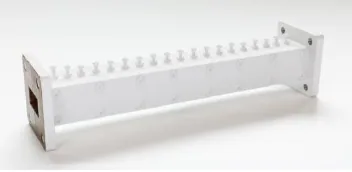
Nexgenwave Low Ku-Band Waveguide Rejection Filter
The Nexgenwave Low Ku-Reject Filter is a waveguide band rejection filter built to keep transmit energy out of the Ku-band receive path. It rejects 12.75 to 13.25 GHz while passing 11.7 to 12.25 GHz, so a co-located BUC or nearby transmit carrier does not desensitise the LNB behind it. Housed in a compact 165 x 38 x 38 mm waveguide body, the Low Ku-Reject Filter drops into fixed, transportable and maritime Ku-band feed assemblies where transmit and receive hardware share tight mechanical space and isolation has to be engineered rather than assumed.
Key Features
- Waveguide band rejection filter dedicated to protecting the Ku-band receive path
- Rejection band covers 12.75 to 13.25 GHz to suppress transmit energy
- Pass band of 11.7 to 12.25 GHz keeps the low Ku receive range intact
- Compact 165 x 38 x 38 mm waveguide body suits tight feed assemblies
- Waveguide construction avoids the loss and leakage of coaxial alternatives
- Suitable for fixed, transportable and stabilised maritime Ku-band terminals
Technical Specifications
Typical Applications
- Ku-band VSAT terminals with co-located BUC and LNB
- Maritime and offshore stabilised Ku-band antenna systems
- Broadcast, SNG and outside-broadcast uplink trucks
- Transportable and flyaway government terminals
- Teleport antennas operating close to other transmit systems
- Enterprise and backhaul remote sites in dense RF environments
How the Low Ku-Band Waveguide Rejection Filter Protects a Receive Path
On a two-way Ku-band terminal, the transmit chain and the receive chain live centimetres apart. A BUC pushing power into the feed radiates and leaks, and some of that energy inevitably finds its way toward the LNB input. Because the received satellite signal is vanishingly small by comparison, even modest transmit leakage can compress the LNB front end, raise its effective noise figure and pull carriers into error. The Nexgenwave Low Ku-Reject Filter is a waveguide band rejection filter that attacks this problem directly, rejecting 12.75 to 13.25 GHz while passing 11.7 to 12.25 GHz. Fitted ahead of the receive amplifier, it removes the offending transmit band before it can be amplified, letting the terminal transmit at full power without the downlink degrading.
Reading the Rejection Band and Pass Band Figures
Two numbers define this filter and both should be checked against your frequency plan before ordering. The rejection band is 12.75 to 13.25 GHz, which is the range the filter is designed to attenuate. The pass band is 11.7 to 12.25 GHz, which is the range it lets through with minimal effect. If every downlink carrier you need sits inside 11.7 to 12.25 GHz and the transmit energy you want gone sits inside 12.75 to 13.25 GHz, this filter matches your problem. If part of your receive plan sits above the stated pass band, or your uplink falls outside the stated rejection band, request the Waveguide Band Rejection Filter datasheet and confirm the response curve before committing to the design.
Mechanical Integration of a 165 mm Waveguide Filter
Waveguide filters are as much a mechanical component as an electrical one. This unit measures 165 mm long by 38 mm wide by 38 mm high, so plan the space behind the feed before you specify it, particularly on a stabilised maritime pedestal or inside a compact flyaway assembly where every millimetre of swing clearance is spoken for. Support the filter so its weight and that of the surrounding waveguide is not carried on a single flange, and use flexible waveguide where an interface has to accommodate movement or slight misalignment. Keep flange faces clean and seals correctly seated, since a poor waveguide joint undoes the isolation the filter was bought to provide. Verify receive performance with the filter in circuit during commissioning.
Why Buy Nexgenwave Ku-Band Waveguide Filters from GCCSAT in the UAE
GCCSAT supplies Ku-band waveguide components, filters, LNBs and complete terminals to integrators, maritime operators, broadcasters and government users across the UAE, the GCC and the wider Middle East. Filters like this one are rarely bought in isolation: they belong to a feed assembly, and the value of a regional supplier is having engineers who will check the rejection band and pass band against your actual transmit and receive plan before anything ships. We support component supply as well as integration, feed assembly and commissioning, including isolation verification on site. The Waveguide Band Rejection Filter datasheet is available with your enquiry, and pricing for the Nexgenwave Low Ku-Reject Filter is quoted on request.
Frequently Asked Questions
What frequencies does the Nexgenwave Low Ku-Reject Filter reject?
The rejection band is 12.75 to 13.25 GHz and the pass band is 11.7 to 12.25 GHz. In other words, the filter attenuates energy in the 12.75 to 13.25 GHz range while allowing signals between 11.7 and 12.25 GHz through. Check both figures against your terminal's transmit and receive frequency plan before specifying the filter for a feed design.
How large is the Low Ku-Reject Filter?
The filter measures 165 mm long by 38 mm wide by 38 mm high. That compact waveguide body matters when the unit has to sit behind a feed on a stabilised maritime pedestal or inside a transportable assembly, where swing clearance and mounting space are limited. Plan the mechanical layout and support arrangement around those dimensions before ordering.
Why fit a Ku-band rejection filter in front of an LNB?
In a two-way terminal the BUC transmits at high power only centimetres from an extremely sensitive receiver. Leakage from the transmit band can compress the LNB front end and raise its effective noise floor, degrading the downlink whenever the terminal is transmitting. A band rejection filter attenuates that transmit energy before it reaches the amplifier, so receive performance stays stable during transmission.
What is the difference between a band rejection filter and a band pass filter?
A band rejection filter, sometimes called a notch or reject filter, passes most of the spectrum but strongly attenuates one specified range, which is how this Nexgenwave unit suppresses 12.75 to 13.25 GHz. A band pass filter does the opposite, passing one defined range and attenuating everything outside it. Reject filters are the usual choice for blocking a known co-located transmit band.
Does GCCSAT supply Nexgenwave waveguide filters in the UAE?
Yes. GCCSAT is a UAE-based satellite communications integrator supplying waveguide components, filters and Ku-band terminal hardware across the Emirates, the GCC and the wider Middle East. We can review the rejection band and pass band against your frequency plan, quote the surrounding feed components, and support installation and commissioning.
Enquire About Nexgenwave Low Ku-Band Waveguide Rejection Filter
Our sales team will provide pricing, availability, and shipping details.
Request a QuoteWhatsAppMore VSAT RF Components
- XMW BPF-1219-400 L-Band Bandpass Filter
- XMW BPF-3423-36 C-Band Bandpass Filter
- XMW BPF-1000-30 L-Band Bandpass Filter
- XMW BPF-CX-CF-BW C-Band Bandpass Filter Series
- XMW BPF-CF-BW (BPF-C-1 to BPF-C-6) C-Band Bandpass Filters
- XMW BPF-7500-500 X-Band Bandpass Filter
- XMW BPF-11600-1800 Ku-Band Bandpass Filter
- Times Microwave N-Type and F-Type Coaxial Connectors
- Times Microwave LMR400, LMR600, RG6 and RG11 Coaxial Cables
- Norsat OMT-KUE Ku-Band Extended OMT Transmit Reject Filter
- Norsat C-Band Band Pass Filter (BPF)
- Jupiter Microwave Flexible Waveguide (C-Band and Ku-Band)
- ELT Systems Passive Combiner-Splitter (L-Band and S-Band)
- ELT Systems TEEL1-4007 Bias Tee
- ELT Systems XX-435000 RF Attenuator (3, 6, 10 and 20 dB)
- ELT Systems L-Band and IF-Band Active Splitter (2 to 16-Way)
- ELT Systems L-Band Active Combiner (2, 4, 8 and 16-Way)
- Actox Bias-T DC Power Injector (ABT6AN, ABT6AON, ABT6ARS)
Product Categories
- VSAT BUC
- VSAT LNB
- VSAT Antennas
- VSAT Fixed Antennas
- VSAT Flyaway Antennas
- VSAT Maritime Antennas
- VSAT KingSat Antennas
- L-Band Satellite Terminals
- Cobham BGAN Terminals
- Thuraya L-Band Terminals
- VSAT Satellite Modems
- Satellite Phones
- Teltonika Products
- Sangfor Firewall & SD-WAN
- Thuraya Accessories
- Excelerate Hybrid Connectivity
- Peplink Products
- VSAT RF Components
- VSAT Hub & Test Equipment
- Remote Site Power Systems