
- Home
- Industries
Industries
Enabling transformation and progress across a wide range of industries globally, fostering innovation and growth in every sector.
Explore all → - Solutions
Connectivity
Connecting industries worldwide with reliable satellite internet solutions, driving innovation, efficiency, and growth across all sectors globally.
Explore all → - Services
Professional VSAT & IT Services
Delivering expert VSAT and IT solutions for seamless connectivity, reliability, and performance across all sectors.
Explore all → - Products
Superior Connectivity, Trusted Solutions
Offering premium Satcom products that guarantee reliable connectivity and boost innovation across industries.
Explore all → - Coverage
WorldWide Coverage
Delivering tailored satellite services that enhance connectivity, foster innovation, and support growth in every industry.
Explore all → - About
- Blog
- Contact
ELT Systems XX-435000 RF Attenuator (3, 6, 10 and 20 dB)
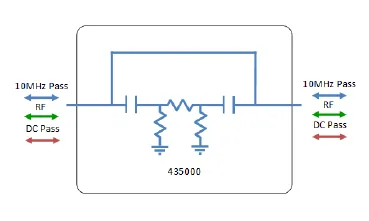
ELT Systems XX-435000 RF Attenuator (3, 6, 10 and 20 dB)
The ELT Systems Attenuator is a high-performance RF attenuator that reduces signal power while maintaining signal integrity across a wide frequency range. It is supplied in discrete 3 dB, 6 dB, 10 dB and 20 dB values under the XX-435000 datasheet series, and the 3 dB version is available with 10 MHz pass and DC pass so reference and supply continue down the line. Integrators use the ELT Systems Attenuator to trim levels into modems, amplifiers and test equipment in satellite communications and other critical RF applications.
Key Features
- Supplied in 3 dB, 6 dB, 10 dB and 20 dB attenuation values
- 3 dB version available with 10 MHz reference pass and DC pass
- Precise level control for fine-tuning and balancing RF chains
- Maintains signal integrity while reducing power across a wide frequency range
- Robust construction for reliable service in demanding installations
- Documented across the ELT Systems XX-435000 V1.3 datasheet family
Technical Specifications
Typical Applications
- Trimming modem and receiver input levels in teleport and hub racks
- Maritime and offshore VSAT terminals with short cable runs and hot signals
- Broadcast, SNG and outside-broadcast RF chains requiring balanced levels
- Government and defence satellite terminals during alignment and acceptance
- Laboratory and field test benches protecting analysers and power meters
- Enterprise backhaul sites balancing multiple carriers across a distribution network
Why RF Attenuators Matter in a Satellite Link
Every receiver, modem and amplifier has an input window it performs best in. Drive it too hard and you compress the stage, raise intermodulation and lose the very margin you were trying to protect; drive it too softly and noise takes over. An attenuator is the simplest, most repeatable way to place a signal inside that window. Short cable runs, high-gain LNBs and hot test sources all tend to deliver more level than the next stage wants, and a fixed pad solves it without touching gain settings elsewhere. The ELT Systems Attenuator is built for this task, giving precise control over signal levels while maintaining signal integrity, so a level correction stays a level correction rather than becoming a new source of distortion in the chain.
Choosing Between 3 dB, 6 dB, 10 dB and 20 dB Attenuation
Start from measurement, not habit. Compare the level arriving at the stage input against the level that stage is specified to receive, then choose the value nearest that difference. As a working method, 3 dB and 6 dB pads are the usual choice for small corrections and for improving return loss at an interface, 10 dB handles a clear overdrive, and 20 dB suits protecting sensitive test equipment or taming a strong local source. Two pads can be cascaded when an intermediate value is needed, and the total is simply the sum of the two. Because the ELT Systems Attenuator is offered as discrete 3 dB, 6 dB, 10 dB and 20 dB models, it is worth holding a small range on site so commissioning is not delayed by a missing value.
DC Pass and 10 MHz Pass: What to Check Before You Order
In VSAT distribution the coaxial cable often carries more than traffic. A DC supply may be feeding an LNB or BUC, and a 10 MHz reference may be riding the same line to discipline the outdoor unit. Insert an ordinary pad in that path and you can silently interrupt both. ELT Systems addresses this with a 3 dB attenuator variant offering 10 MHz pass and DC pass, so the pad attenuates the signal without cutting the supply or the reference. Before ordering, map exactly what your cable run carries at the point where the pad will sit, and note whether DC and reference must continue past it. Confirm the requirement against the relevant XX-435000 V1.3 datasheet, and check connector type and impedance so the pad matches the rest of the chain.
Buying ELT Systems RF Attenuators From GCCSAT in the UAE
GCCSAT supplies ELT Systems RF components across the UAE, the GCC and the wider Middle East, serving satellite operators, teleports, integrators, broadcasters and government users. Attenuators are small parts with an outsized effect on commissioning schedules, so we look at the whole level plan with you rather than quoting a single value in isolation. Our team assists with regional sourcing and logistics, integration and commissioning support, and repeat supply for sites already in service. Tell us the attenuation values you need, whether DC and a 10 MHz reference must pass, and the connector standard used across your installation, and we will confirm the correct ELT Systems Attenuator configuration and provide pricing on request.
Frequently Asked Questions
What attenuation values does the ELT Systems Attenuator come in?
ELT Systems publishes the attenuator in 3 dB, 6 dB, 10 dB and 20 dB versions, each documented in its own XX-435000 V1.3 datasheet. That spread covers most practical level corrections in a VSAT rack, and values can be cascaded when an intermediate figure is required, since attenuation in decibels simply adds along the path.
Does the ELT Systems Attenuator pass DC and a 10 MHz reference?
One variant does. The 3 dB attenuator is offered with 10 MHz pass and DC pass, so it can be fitted in a run that is also carrying a reference signal and a DC supply to an outdoor unit. If your pad sits in such a path, specify that variant explicitly and confirm the arrangement against the relevant datasheet before installation.
How do I choose the right attenuator value for my VSAT link?
Measure the level arriving at the input of the next stage, compare it with the input level that stage is specified for, and pick the value closest to the difference. Where several pads are involved, place attenuation where it improves the interface rather than where it is convenient, and re-measure afterwards. GCCSAT engineers can review your level plan and recommend suitable values.
What is the difference between a fixed attenuator and a variable attenuator?
A fixed attenuator provides one nominal value and is valued for repeatability, stability and simplicity, which is why permanent installations favour it. A variable or step attenuator lets an operator adjust level on the bench or during testing, at the cost of more complexity and more parts to drift or be knocked out of position. Most production VSAT racks use fixed pads.
Can GCCSAT supply ELT Systems attenuators in the UAE and GCC?
Yes. GCCSAT supplies ELT Systems RF components including the XX-435000 series attenuators throughout the UAE, the GCC and the wider Middle East, and can support integration into new builds or existing terminals. Send us the values you need, your connector standard and whether DC or reference must pass, and we will confirm the correct models for your installation.
Enquire About ELT Systems XX-435000 RF Attenuator (3, 6, 10 and 20 dB)
Our sales team will provide pricing, availability, and shipping details.
Request a QuoteWhatsAppMore VSAT RF Components
- XMW BPF-1219-400 L-Band Bandpass Filter
- XMW BPF-3423-36 C-Band Bandpass Filter
- XMW BPF-1000-30 L-Band Bandpass Filter
- XMW BPF-CX-CF-BW C-Band Bandpass Filter Series
- XMW BPF-CF-BW (BPF-C-1 to BPF-C-6) C-Band Bandpass Filters
- XMW BPF-7500-500 X-Band Bandpass Filter
- XMW BPF-11600-1800 Ku-Band Bandpass Filter
- Times Microwave N-Type and F-Type Coaxial Connectors
- Times Microwave LMR400, LMR600, RG6 and RG11 Coaxial Cables
- Norsat OMT-KUE Ku-Band Extended OMT Transmit Reject Filter
- Norsat C-Band Band Pass Filter (BPF)
- Nexgenwave Low Ku-Band Waveguide Rejection Filter
- Jupiter Microwave Flexible Waveguide (C-Band and Ku-Band)
- ELT Systems Passive Combiner-Splitter (L-Band and S-Band)
- ELT Systems TEEL1-4007 Bias Tee
- ELT Systems L-Band and IF-Band Active Splitter (2 to 16-Way)
- ELT Systems L-Band Active Combiner (2, 4, 8 and 16-Way)
- Actox Bias-T DC Power Injector (ABT6AN, ABT6AON, ABT6ARS)
Product Categories
- VSAT BUC
- VSAT LNB
- VSAT Antennas
- VSAT Fixed Antennas
- VSAT Flyaway Antennas
- VSAT Maritime Antennas
- VSAT KingSat Antennas
- L-Band Satellite Terminals
- Cobham BGAN Terminals
- Thuraya L-Band Terminals
- VSAT Satellite Modems
- Satellite Phones
- Teltonika Products
- Sangfor Firewall & SD-WAN
- Thuraya Accessories
- Excelerate Hybrid Connectivity
- Peplink Products
- VSAT RF Components
- VSAT Hub & Test Equipment
- Remote Site Power Systems