
- Home
- Industries
Industries
Enabling transformation and progress across a wide range of industries globally, fostering innovation and growth in every sector.
Explore all → - Solutions
Connectivity
Connecting industries worldwide with reliable satellite internet solutions, driving innovation, efficiency, and growth across all sectors globally.
Explore all → - Services
Professional VSAT & IT Services
Delivering expert VSAT and IT solutions for seamless connectivity, reliability, and performance across all sectors.
Explore all → - Products
Superior Connectivity, Trusted Solutions
Offering premium Satcom products that guarantee reliable connectivity and boost innovation across industries.
Explore all → - Coverage
WorldWide Coverage
Delivering tailored satellite services that enhance connectivity, foster innovation, and support growth in every industry.
Explore all → - About
- Blog
- Contact
Jupiter Microwave Flexible Waveguide (C-Band and Ku-Band)
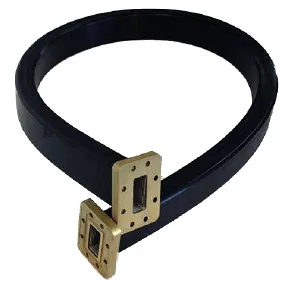
Jupiter Microwave Flexible Waveguide (C-Band and Ku-Band)
The Jupiter Microwave Flexible Wave Guide is a high-performance, durable waveguide for C-band and Ku-band frequencies. Its flexible structure allows easy routing in tight spaces while maintaining low loss and high efficiency, which makes it the standard way to link a BUC, feed, OMT or filter without forcing rigid alignment across the assembly. Ideal for satellite communications, radar and other high-frequency applications, the Jupiter Microwave Flexible Wave Guide ensures reliable signal transmission across a wide range of conditions, from fixed teleport antennas to stabilised maritime pedestals and transportable terminals.
Key Features
- Flexible structure allows easy routing through tight spaces behind a feed
- Designed for use across both C-band and Ku-band frequency systems
- Maintains low loss and high efficiency compared with poorly aligned rigid runs
- Durable, high-performance construction for demanding operating conditions
- Absorbs slight misalignment between flanges without stressing the joint
- Suited to satellite communications, radar and other high-frequency applications
Technical Specifications
Typical Applications
- C-band and Ku-band VSAT terminal feed and BUC interconnect
- Maritime and offshore stabilised antenna pedestals
- Broadcast, SNG and outside-broadcast uplink systems
- Radar and other high-frequency microwave installations
- Transportable, flyaway and rapid-deployment terminals
- Teleport antenna hubs with congested waveguide routing
Where Flexible Waveguide Fits in a C-Band or Ku-Band Terminal
Behind the reflector of any transmit-capable satellite antenna sits a short, crowded run of waveguide connecting the BUC or SSPA output to the feed, usually by way of an OMT and often a filter. Getting rigid waveguide to span that gap with perfect flange alignment is difficult on a bench and close to impossible on a pedestal that moves. The Jupiter Microwave Flexible Wave Guide solves this by providing a flexible structure that routes easily through tight spaces while maintaining low loss and high efficiency. Designed for C-band and Ku-band frequencies, it lets the mechanical design breathe: the amplifier can be mounted where the thermal and weight considerations dictate, and the flexible section takes up the difference without stressing either flange.
Why Flexible Waveguide Beats Rigid Runs on Moving Antennas
Rigid waveguide is unforgiving. It transmits every vibration, every thermal expansion cycle and every millimetre of installation error straight into the flanges at either end, and on a stabilised maritime mount or a vehicle-borne terminal that constant working eventually shows up as a leaking joint or a cracked flange. A flexible section absorbs that movement. The Jupiter Microwave Flexible Wave Guide is a high-performance, durable waveguide whose flexible structure is designed exactly for this kind of service, ensuring reliable signal transmission across a wide range of conditions. Practically, integrators use it wherever two waveguide interfaces cannot be guaranteed to stay perfectly aligned: between a pedestal and a rotating feed, across an anti-vibration mount, or between subassemblies built by different suppliers.
Handling, Bend Radius and Installation Notes
Flexible waveguide is tolerant but not indestructible, and most field failures come from installation rather than service. Route it in a smooth, generous curve rather than a sharp corner, and never twist a section to make up for an interface rotation it was not sized for. Observe the minimum bend radius stated in the Jupiter Microwave datasheet for the size you are fitting, and support both ends so the section is guiding the signal rather than carrying the weight of an amplifier. Keep flange faces clean and gaskets correctly seated, and weatherproof any joint that is exposed. Where the run is outdoors, dress the covering so water drains away from the flange. Sweep the assembly and confirm return loss before the antenna is handed over.
Why Buy Jupiter Microwave Flexible Waveguide from GCCSAT in the UAE
GCCSAT supplies waveguide components, RF hardware and complete satellite terminals to integrators, offshore energy operators, broadcasters and government customers across the UAE, the GCC and the wider Middle East. Flexible waveguide is one of those parts that is trivial until it is missing, and having a regional supplier who understands the feed assembly it belongs to saves an aborted installation trip. Because we integrate and commission terminals ourselves, we can quote the flexible section alongside the OMT, filters, BUC and feed hardware it connects, and confirm the band and interface arrangement before anything ships. The Jupiter Microwave flexible waveguide datasheet is available with your enquiry, and pricing is quoted on request.
Frequently Asked Questions
Which frequency bands does the Jupiter Microwave Flexible Wave Guide support?
It is designed for use at C-band and Ku-band frequencies. The exact waveguide sizes, interfaces and performance figures for each band are given in the Jupiter Microwave flexible waveguide datasheet, so confirm the specific size against your feed, OMT and amplifier interfaces before ordering. GCCSAT can supply the datasheet with your enquiry and check the interfaces with you.
Why use flexible waveguide instead of rigid waveguide?
Rigid waveguide transfers vibration, thermal movement and installation misalignment directly into its flanges, which is a problem on stabilised maritime mounts, vehicle-borne terminals and any assembly that cannot be aligned perfectly. A flexible section routes easily in tight spaces and absorbs that movement while maintaining low loss and high efficiency, so the joint stays sound and the signal path stays reliable.
Where is flexible waveguide typically used in a satellite terminal?
Most commonly in the short run behind the reflector, connecting the BUC or SSPA output to the OMT, filter or feed. It is also used across anti-vibration mounts, between subassemblies from different suppliers, and anywhere a rotating or moving interface prevents a fixed rigid run. Beyond satcom, it serves radar and other high-frequency microwave applications.
How should flexible waveguide be installed?
Route it in a smooth curve rather than a sharp bend, avoid twisting it to correct an interface rotation, and observe the minimum bend radius stated in the datasheet for the size you are fitting. Support both ends so the section is not carrying amplifier weight, keep flange faces clean with gaskets correctly seated, and weatherproof any exposed joint before commissioning.
Does GCCSAT supply Jupiter Microwave waveguide in the UAE and GCC?
Yes. GCCSAT is a UAE-based satellite communications integrator supplying waveguide, RF components and complete terminals across the Emirates, the GCC and the wider Middle East. We can quote flexible waveguide alongside the OMT, filters, BUC and feed hardware it connects to, and support integration and commissioning on site.
Enquire About Jupiter Microwave Flexible Waveguide (C-Band and Ku-Band)
Our sales team will provide pricing, availability, and shipping details.
Request a QuoteWhatsAppMore VSAT RF Components
- XMW BPF-1219-400 L-Band Bandpass Filter
- XMW BPF-3423-36 C-Band Bandpass Filter
- XMW BPF-1000-30 L-Band Bandpass Filter
- XMW BPF-CX-CF-BW C-Band Bandpass Filter Series
- XMW BPF-CF-BW (BPF-C-1 to BPF-C-6) C-Band Bandpass Filters
- XMW BPF-7500-500 X-Band Bandpass Filter
- XMW BPF-11600-1800 Ku-Band Bandpass Filter
- Times Microwave N-Type and F-Type Coaxial Connectors
- Times Microwave LMR400, LMR600, RG6 and RG11 Coaxial Cables
- Norsat OMT-KUE Ku-Band Extended OMT Transmit Reject Filter
- Norsat C-Band Band Pass Filter (BPF)
- Nexgenwave Low Ku-Band Waveguide Rejection Filter
- ELT Systems Passive Combiner-Splitter (L-Band and S-Band)
- ELT Systems TEEL1-4007 Bias Tee
- ELT Systems XX-435000 RF Attenuator (3, 6, 10 and 20 dB)
- ELT Systems L-Band and IF-Band Active Splitter (2 to 16-Way)
- ELT Systems L-Band Active Combiner (2, 4, 8 and 16-Way)
- Actox Bias-T DC Power Injector (ABT6AN, ABT6AON, ABT6ARS)
Product Categories
- VSAT BUC
- VSAT LNB
- VSAT Antennas
- VSAT Fixed Antennas
- VSAT Flyaway Antennas
- VSAT Maritime Antennas
- VSAT KingSat Antennas
- L-Band Satellite Terminals
- Cobham BGAN Terminals
- Thuraya L-Band Terminals
- VSAT Satellite Modems
- Satellite Phones
- Teltonika Products
- Sangfor Firewall & SD-WAN
- Thuraya Accessories
- Excelerate Hybrid Connectivity
- Peplink Products
- VSAT RF Components
- VSAT Hub & Test Equipment
- Remote Site Power Systems