
- Home
- Industries
Industries
Enabling transformation and progress across a wide range of industries globally, fostering innovation and growth in every sector.
Explore all → - Solutions
Connectivity
Connecting industries worldwide with reliable satellite internet solutions, driving innovation, efficiency, and growth across all sectors globally.
Explore all → - Services
Professional VSAT & IT Services
Delivering expert VSAT and IT solutions for seamless connectivity, reliability, and performance across all sectors.
Explore all → - Products
Superior Connectivity, Trusted Solutions
Offering premium Satcom products that guarantee reliable connectivity and boost innovation across industries.
Explore all → - Coverage
WorldWide Coverage
Delivering tailored satellite services that enhance connectivity, foster innovation, and support growth in every industry.
Explore all → - About
- Blog
- Contact
ST Engineering iDirect ULC-R Universal Receive Line Card
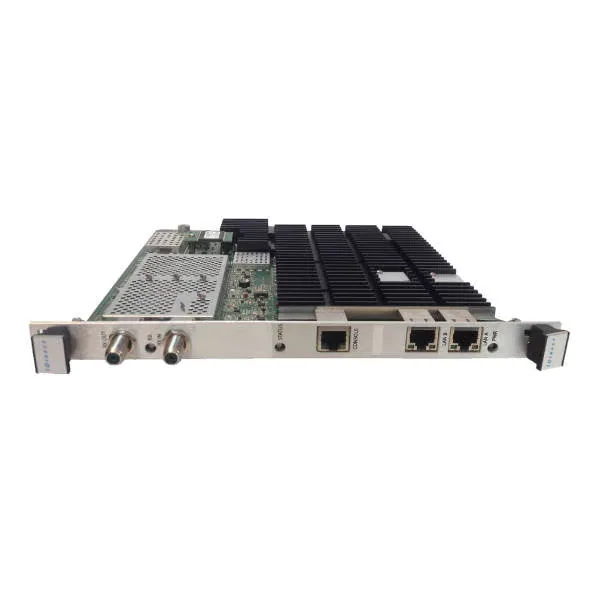
ST Engineering iDirect ULC-R Universal Receive Line Card
The ST Engineering iDirect ULC-R is a universal receive line card for VSAT hubs, providing multi-channel Adaptive TDMA demodulation of inbound traffic at an aggregate symbol and chip rate of up to 29 Msps/Mcps. Efficient inbound forward error correction using 2D 16-State coding keeps the return link robust, and when it is paired with a modulator line card such as the ULC-T it supports voice, video and data across enterprise and mobility VSAT networks on both the ST Engineering iDirect Evolution and Velocity platforms.
Key Features
- Multi-channel Adaptive TDMA demodulation handles inbound traffic from many remotes at once
- Aggregate symbol and chip rate of up to 29 Msps/Mcps per receive line card
- Efficient inbound forward error correction using 2D 16-State coding
- Pairs with a modulator line card such as the ULC-T for full two-way service
- Supported on both the ST Engineering iDirect Evolution and Velocity hub platforms
- Optional proprietary BPSK spread spectrum waveform for low data rate IoT links
- Suited to voice, video and data over enterprise and mobility VSAT networks
Technical Specifications
Typical Applications
- Enterprise VSAT networks aggregating return traffic from many branch and remote sites
- Maritime and land-mobility fleets sending voice, video and data back to a teleport
- Offshore energy platforms and remote industrial sites with continuous return-link demand
- Government and emergency-response networks needing resilient inbound connectivity
- IoT and telemetry collection from fixed and dynamic remote terminals
- Broadcast contribution and remote production feeds returning to a central facility
How the ULC-R Receive Line Card Handles Inbound VSAT Traffic
The return direction of a VSAT network is the harder engineering problem. Instead of one continuous carrier, the hub has to recover bursts arriving from many remote terminals that differ in antenna size, transmit power, elevation angle and local weather. It is the universal receive line card built for that job, performing multi-channel Adaptive TDMA demodulation of inbound traffic and supporting an aggregate symbol and chip rate of up to 29 Msps/Mcps. Sizing a hub therefore means matching that aggregate figure against the total contended return capacity you expect to carry, then adding receive cards as the network grows. The card is intended to be used with a modulator line card such as the ULC-T, which supplies the outbound carrier the same remotes track.
Adaptive TDMA and 2D 16-State FEC on the Return Link
Adaptive TDMA lets the network assign burst slots dynamically rather than fixing them in advance, so capacity follows demand across the remote population instead of sitting idle in reserved timeslots. Combined with adaptive operation, efficient inbound forward error correction using 2D 16-State coding keeps bursts recoverable when a remote is operating with limited margin, which in the Gulf usually means small mobile antennas, low elevation angles or short but intense rain events. For a network operator the practical outcome is a return link that degrades gracefully rather than dropping sites, and a better usable throughput figure from the same leased megahertz. That efficiency is why this receive card suits mixed voice, video and data traffic in enterprise and mobility VSAT networks, where bursty interactive sessions and steady streams share the same inbound pool.
Ku-Band and Ka-Band IoT Support on the ULC-R Universal Receive Line Card
The ULC-R can also be configured for a proprietary BPSK spread spectrum waveform, enabling low data rate communication with the ST Engineering iDirect portfolio of Fixed and Dynamic IoT terminals, available in Ku-band and Ka-band variants. Spread spectrum is the standard technique for pulling small, low-power terminal transmissions out of the noise, which is what allows compact IoT antennas to work on capacity that would otherwise demand a much larger dish. For operators this means a single hub can serve two very different businesses at once: broadband VSAT subscribers on one side, and dispersed telemetry, tracking or monitoring devices on the other, without standing up a separate platform for the low data rate estate.
Why Source ST Engineering iDirect Line Cards from GCCSAT in the UAE
GCCSAT is a UAE-based VSAT and satellite communications integrator supplying ST Engineering iDirect hub and remote equipment across the UAE, the GCC and the wider Middle East. Buying hub line cards regionally means the technical conversation happens before the purchase order, not after delivery: our team can help confirm chassis and platform compatibility, size the number of receive cards against your expected inbound load, and match them with the transmit line cards that complete the network. We support integration, configuration and commissioning, and we manage regional logistics and documentation for teleport and customer-site deliveries. Pricing for the line card and for complete hub build-outs is quoted on request; share your platform, remote count and traffic profile and we will put a configuration together.
Frequently Asked Questions
What inbound symbol rate does the ULC-R support?
The ULC-R provides multi-channel Adaptive TDMA demodulation with an aggregate symbol and chip rate of up to 29 Msps/Mcps. That aggregate figure is what you size a hub against: it represents the total inbound capacity a single receive line card can demodulate across the remote terminals it serves, so larger networks are built by adding further ULC-R cards to the chassis.
What is the difference between the ULC-R and the ULC-T line card?
The ULC-R is the universal receive line card and demodulates inbound return traffic from remote terminals using multi-channel Adaptive TDMA. The ULC-T is the universal transmit line card and generates the DVB-S2 or DVB-S2X outbound carrier. They are complementary rather than alternatives: the receive card is designed to be used together with a modulator line card such as the ULC-T to deliver a complete two-way VSAT service.
Is the ULC-R compatible with iDirect Evolution and Velocity?
Yes. It is supported on both the ST Engineering iDirect Evolution and Velocity platforms, which allows an operator to keep a common receive line card across either architecture. Exact chassis, slot and software release requirements should be verified against the product sheet and your existing hub build before ordering, and GCCSAT can review that alongside your network design.
What forward error correction does the ULC-R use on the inbound?
The card provides efficient inbound forward error correction using 2D 16-State coding. Strong inbound FEC matters because return-link bursts come from small terminals with limited transmit power and variable link margin. Better coding on the inbound recovers those bursts reliably, which improves usable throughput from the same leased bandwidth and helps keep remote sites connected during rain fade or low-elevation operation.
Does GCCSAT ship the ULC-R line card to the GCC and Middle East?
Yes. GCCSAT supplies ST Engineering iDirect hub equipment, including the ULC-R universal receive line card, across the UAE, the GCC and the wider Middle East, with support for integration, configuration and commissioning of hub expansions. Send us your platform, expected inbound capacity and remote terminal count, and we will scope the configuration and provide a quotation on request.
Enquire About ST Engineering iDirect ULC-R Universal Receive Line Card
Our sales team will provide pricing, availability, and shipping details.
Request a QuoteWhatsAppMore VSAT Hub & Test Equipment
Product Categories
- VSAT BUC
- VSAT LNB
- VSAT Antennas
- VSAT Fixed Antennas
- VSAT Flyaway Antennas
- VSAT Maritime Antennas
- VSAT KingSat Antennas
- L-Band Satellite Terminals
- Cobham BGAN Terminals
- Thuraya L-Band Terminals
- VSAT Satellite Modems
- Satellite Phones
- Teltonika Products
- Sangfor Firewall & SD-WAN
- Thuraya Accessories
- Excelerate Hybrid Connectivity
- Peplink Products
- VSAT RF Components
- VSAT Hub & Test Equipment
- Remote Site Power Systems